< Back
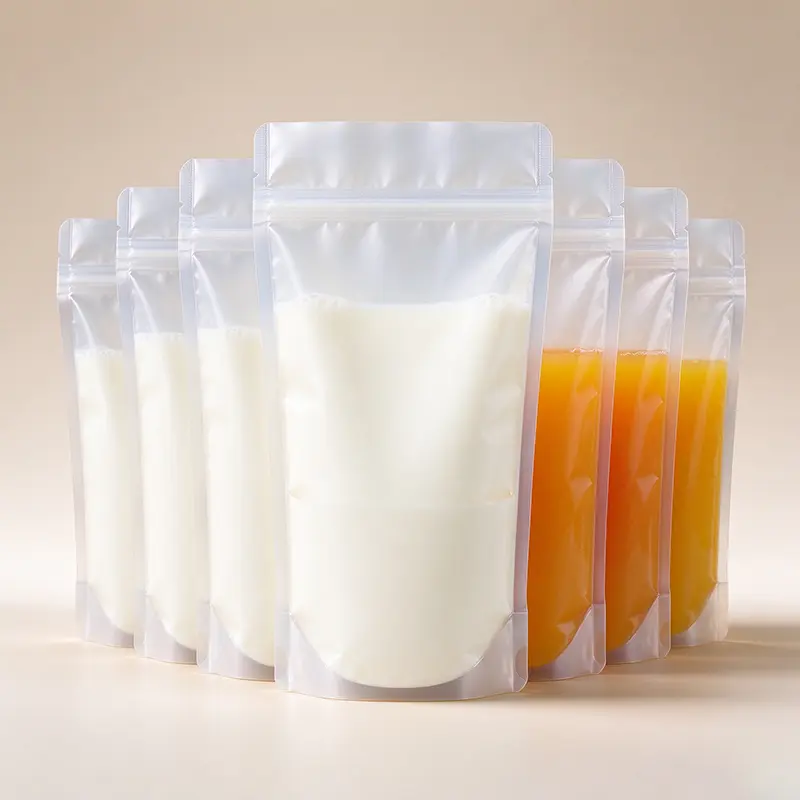
Pasteurization heats packaged food to a moderate temperature to reduce harmful microbes while protecting taste, color and nutrients. Our low-temperature pasteurization bags are made for this process, with a working range of 60-85°C.
Unlike bags built for high-heat sterilization, they focus on three jobs:
• Heat resistance: the film and seals stay stable at 60-85°C, with no material breakdown or seal failure.
• Microbe barrier: multi-layer films help prevent recontamination after pasteurization.
• Product protection: low oxygen and moisture transfer helps preserve flavor, texture and nutrients.
These features make the pasteurized packaging bag a practical choice for heat-sensitive products such as yogurt, milk, fresh juice and prepared meals.
After pasteurization, the bag keeps working. It limits oxygen and moisture entering the pack, so your product holds its flavor and quality through storage and distribution.
Materials are food-grade. Our product page states compliance with GB food contact material regulations. If you sell in the USA, the EU or another regulated market, tell us early so we can review your documentation needs.
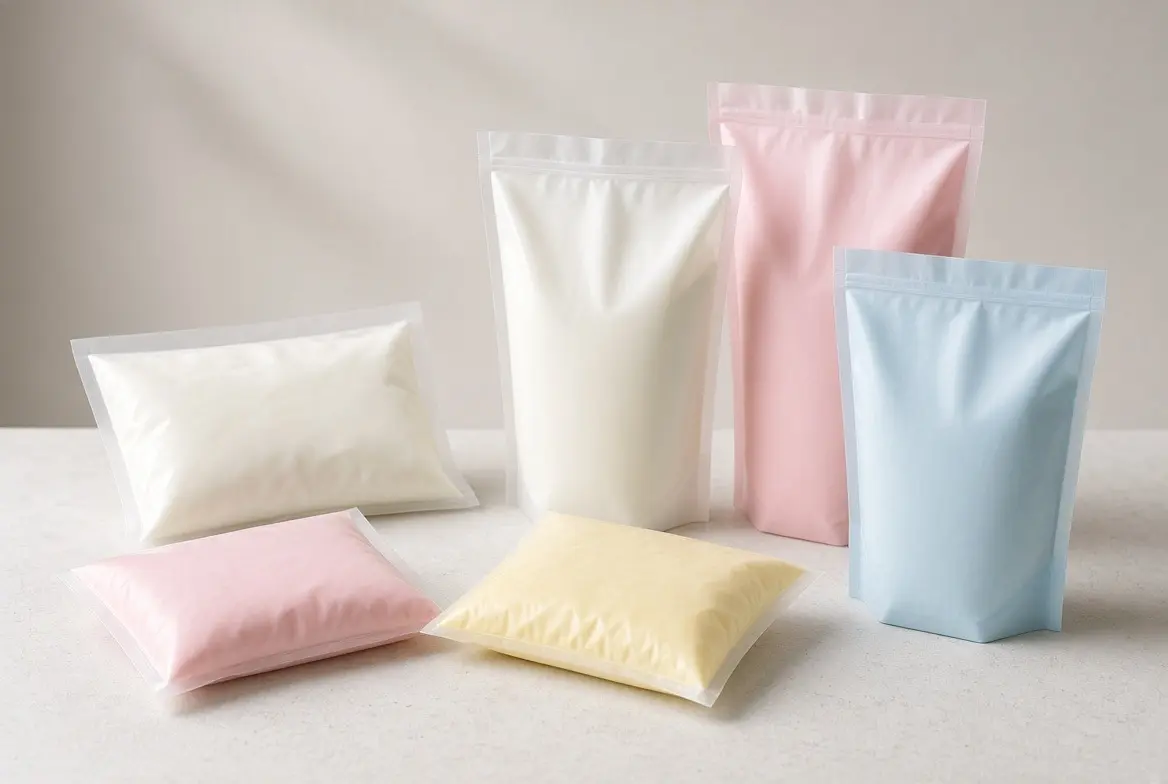
Our OEM service covers custom sizes, brand colors, logo printing and your choice of film structure. The minimum order is 500 units. That suits trial orders, new product launches and smaller dairy or juice brands that want to test a market before scaling.
Please note that we print from your finished artwork. We can make minor text changes, but we do not create designs from scratch.
Pasteurization is gentler than retort sterilization. It reduces microbes, but it does not make most products shelf-stable at room temperature. Many pasteurized foods, such as milk, yogurt and fresh juice, still need chilled storage. The bag supports that cold chain by staying leak-proof and shielding the product from oxygen and moisture.
Common applications include:
• Dairy: yogurt, milk and similar chilled products
• Beverages: fresh juices and other heat-sensitive liquids
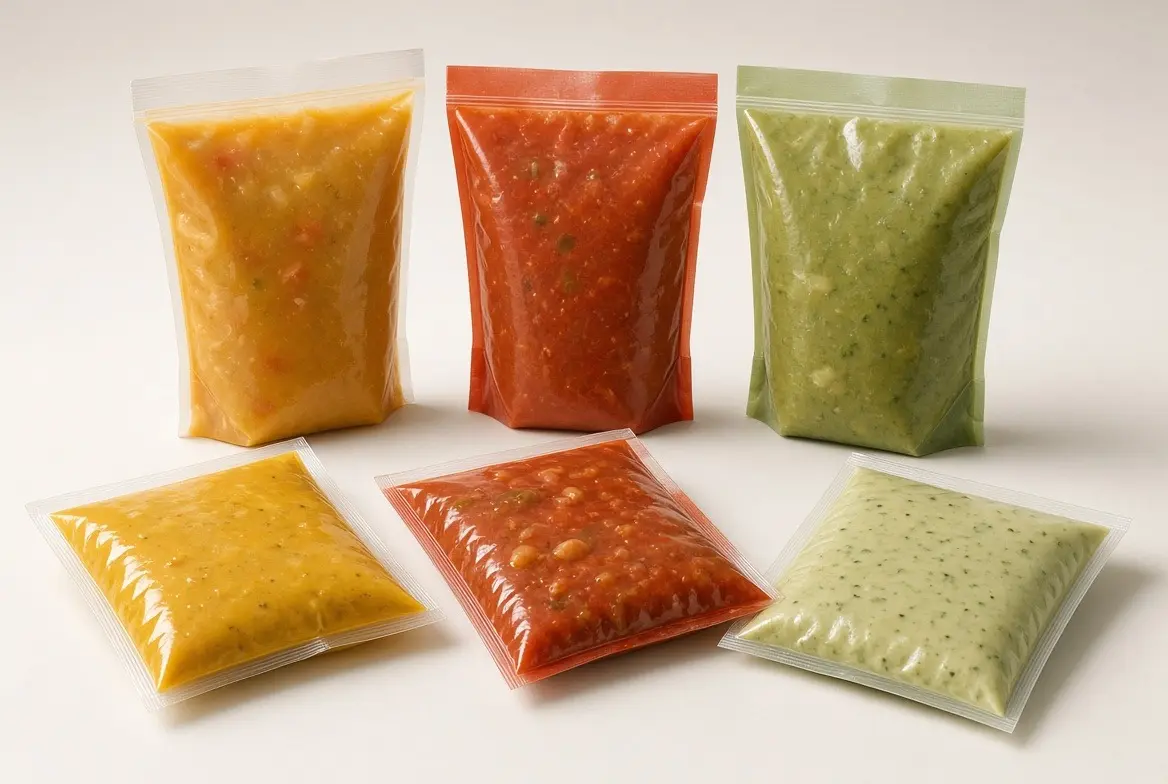
• Prepared foods: soups, sauces and ready-to-eat meals
Do not use a pasteurization bag in a retort process. The film and seals are not built for that heat and pressure. For high-temperature sterilization, see our Steaming Heated Packaging Bag, which is designed for retort and steam processing.
• Gentle heat tolerance: the bag handles 60-85°C pasteurization without deforming.
• Reliable seals: strong heat seals reduce leakage during handling and transport.
• Barrier protection: multi-layer films limit oxygen and moisture, which protects taste and texture.
• Line compatibility: roll stock and pre-made bags work with automated filling and sealing equipment.
Tell us your product, fill temperature and pasteurization time. We will recommend a structure that fits your process.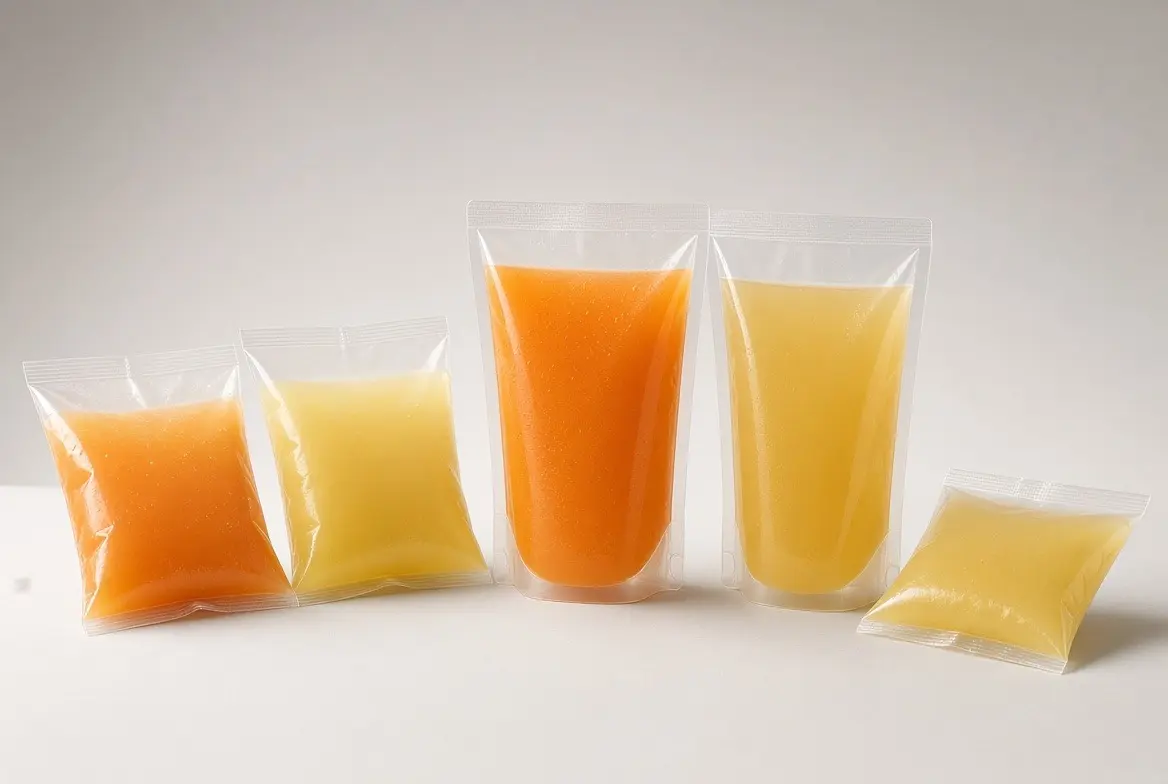
Fresh juice loses color, flavor and vitamins when oxygen gets in. For these products, we recommend PA/PE laminates. The PA layer adds flexibility and gas resistance, which helps slow oxidation after pasteurization.
Juice is a liquid, so seal quality matters even more. Weak seals leak, and leaks spoil whole cartons. We can supply flat bags, stand-up pouches or spouted designs for liquid products. Share your volume and filling method, and our team will suggest the right format.
• Whether the product contains particles, bones, spices or sharp pieces
• Fat or oil content, which can affect seal quality
• Fill temperature, and whether you fill hot or cold
• Portion size, from small retail pouches to bulk industrial bags
With this information, we can match film structure and thickness to your product. PA/PE laminates are a sensible starting point when puncture resistance matters.
• Choose PA/PE when oxygen sensitivity or puncture risk is higher.
• Ask for a sample test if you are unsure. Results on your own line are more reliable than any datasheet.
We reduce this risk by selecting films with strong heat-seal layers and by inspecting seal integrity, material strength and print clarity during and after production.
You can add your own checks:
• Run samples through your actual pasteurization cycle.
• Check seals for leaks, delamination and wrinkles after cooling.
• Test filled bags during transport and stacking.
• Keep the seal area clean when filling oily or powdery products.
• Flat bags: simple designs for many liquid and semi-solid products.
• Stand-up pouches: better shelf presence for retail products. See our Standup Pouch page for the general format.
• Roll stock: film for automated filling and sealing lines, suited to higher production volumes.
Pick the format by your filling equipment, retail needs and portion size. If you are unsure, send us your filling method and we will advise.
• Size: from small retail pouches to bulk industrial bags
• Material: PET/PE or PA/PE film structure
• Printing: your logo, brand colors and product information
• Bag type: flat bag, stand-up pouch or roll stock
Our ordering process has six stages: needs communication, solution design, sample production, mass production, quality inspection and delivery, and after-sales service. You can read the full steps on our How To Order page.
To start, send your product details, target size, estimated quantity and finished artwork.
Import rules differ by country. Before you order, confirm what your market requires, for example food contact declarations or test reports. Send us your destination market and requirements, and our team will confirm what documentation is available.
When you compare suppliers, ask for these items:
• The film structure and material specification for your bag
• Food contact compliance documents that match your destination market
• Sample inspection results, including seal and leak checks
2. Check product sensitivity: consider oxygen, light, oil and solid particles.
3. Choose the structure: PET/PE or PA/PE.
4. Choose format and size: flat bag, stand-up pouch or roll stock.
5. Test samples: run them on your own line before bulk production.
• Ask how they check seal integrity and material strength.
• Clarify MOQ, lead time, payment terms and trade terms such as FOB or CIF in the quotation.
• Review samples carefully before approving production.
• Note how fast and clearly they answer technical questions. It is a good sign of future service.
Yutop supports overseas buyers with custom pasteurized packaging bags for dairy, juice and prepared foods. To receive product details, a quotation, sample information or technical support, visit our Contact Us page or email yutoppack@163.com. Share your product type, pasteurization temperature, bag size and estimated quantity, and our team will reply with suitable options.
Custom Pasteurized Packaging Bags for Dairy, Juice & Food
Choosing a pasteurized packaging bag is not the same as choosing a standard food pouch. The bag must hold its seal at 60-85°C, limit oxygen and moisture, and stay safe for direct food contact. If a seal leaks or the film delaminates after heat treatment, you lose product and customer trust.
Yutop makes custom pasteurized packaging bags for dairy, juice, soups, sauces and ready-to-eat meals. This guide explains how these bags work, how they differ from retort pouches, which film structures to choose, and what to check before you request a quotation. It is written for importers, brand owners, OEM buyers and procurement teams who need a dependable pasteurized packaging bag manufacturer.
Low-Temperature Pasteurization Bags Built for 60-85°C Food Processing
Pasteurization heats packaged food to a moderate temperature to reduce harmful microbes while protecting taste, color and nutrients. Our low-temperature pasteurization bags are made for this process, with a working range of 60-85°C.
Unlike bags built for high-heat sterilization, they focus on three jobs:
• Heat resistance: the film and seals stay stable at 60-85°C, with no material breakdown or seal failure.
• Microbe barrier: multi-layer films help prevent recontamination after pasteurization.
• Product protection: low oxygen and moisture transfer helps preserve flavor, texture and nutrients.
These features make the pasteurized packaging bag a practical choice for heat-sensitive products such as yogurt, milk, fresh juice and prepared meals.
Food-Grade PET/PE and PA/PE Pouches That Protect Freshness After Pasteurization
Our pasteurized packaging bags use two main laminate structures: PET/PE and PA/PE. In both, the inner PE layer touches the food and forms the heat seal. The outer layer adds strength and a surface for printing.After pasteurization, the bag keeps working. It limits oxygen and moisture entering the pack, so your product holds its flavor and quality through storage and distribution.
Materials are food-grade. Our product page states compliance with GB food contact material regulations. If you sell in the USA, the EU or another regulated market, tell us early so we can review your documentation needs.
OEM Pasteurized Packaging Bags from a Direct Manufacturer, MOQ 500 Units
Yutop is a packaging factory with more than 20 years of experience in custom processing. You deal with the manufacturer directly, which keeps communication short and gives you control over specifications.Our OEM service covers custom sizes, brand colors, logo printing and your choice of film structure. The minimum order is 500 units. That suits trial orders, new product launches and smaller dairy or juice brands that want to test a market before scaling.
Please note that we print from your finished artwork. We can make minor text changes, but we do not create designs from scratch.
What Is a Pasteurized Packaging Bag?
A pasteurized packaging bag is a multi-layer food pouch that withstands low-temperature heat treatment, usually 60-85°C, after the product is filled and sealed. It keeps the seal intact, blocks recontamination and protects product quality.Pasteurization is gentler than retort sterilization. It reduces microbes, but it does not make most products shelf-stable at room temperature. Many pasteurized foods, such as milk, yogurt and fresh juice, still need chilled storage. The bag supports that cold chain by staying leak-proof and shielding the product from oxygen and moisture.
Common applications include:
• Dairy: yogurt, milk and similar chilled products
• Beverages: fresh juices and other heat-sensitive liquids
• Prepared foods: soups, sauces and ready-to-eat meals
Pasteurization Bags vs Retort Pouches: What’s the Difference?
Buyers often confuse the two. The main difference is process temperature. A pasteurization bag is designed for 60-85°C. A retort pouch is designed for 121-135°C steam or retort sterilization, and it normally includes an aluminum layer.| Feature | Pasteurized Packaging Bag | Retort Pouch |
| Process temperature | 60-85°C | 121-135°C |
| Typical structure | PET/PE or PA/PE | PET/AL/PA/PE |
| Typical products | Dairy, fresh juice, soups, prepared meals | Ready meals, meat, seafood, shelf-stable foods |
| Storage after processing | Often chilled, depending on the product | Shelf-stable |
| Main buyer check | Seal strength and oxygen barrier | Heat resistance and delamination |
| Best for | Heat-sensitive foods | Fully sterilized, long-life foods |
Do not use a pasteurization bag in a retort process. The film and seals are not built for that heat and pressure. For high-temperature sterilization, see our Steaming Heated Packaging Bag, which is designed for retort and steam processing.
Why Dairy Producers Choose Our Pasteurized Packaging Bags
Dairy products are sensitive to heat, oxygen and contamination. Yogurt, milk and similar products need packaging that protects them without adding risk. A well-made pasteurized packaging bag addresses the main concerns:• Gentle heat tolerance: the bag handles 60-85°C pasteurization without deforming.
• Reliable seals: strong heat seals reduce leakage during handling and transport.
• Barrier protection: multi-layer films limit oxygen and moisture, which protects taste and texture.
• Line compatibility: roll stock and pre-made bags work with automated filling and sealing equipment.
Tell us your product, fill temperature and pasteurization time. We will recommend a structure that fits your process.
Pasteurized Juice Packaging Bags with High Oxygen Barrier
Fresh juice loses color, flavor and vitamins when oxygen gets in. For these products, we recommend PA/PE laminates. The PA layer adds flexibility and gas resistance, which helps slow oxidation after pasteurization.
Juice is a liquid, so seal quality matters even more. Weak seals leak, and leaks spoil whole cartons. We can supply flat bags, stand-up pouches or spouted designs for liquid products. Share your volume and filling method, and our team will suggest the right format.
Pasteurized Packaging for Ready-to-Eat Meals, Soups and Sauces
Prepared foods add another challenge: solid pieces, oil and thick textures. These can stress seals and puncture thin films. When you request a quotation, tell us:• Whether the product contains particles, bones, spices or sharp pieces
• Fat or oil content, which can affect seal quality
• Fill temperature, and whether you fill hot or cold
• Portion size, from small retail pouches to bulk industrial bags
With this information, we can match film structure and thickness to your product. PA/PE laminates are a sensible starting point when puncture resistance matters.
Multi-Layer Film Structures: PET/PE vs PA/PE for Pasteurization
PET/PE Structure
PET gives rigidity, clarity and strong print quality. PE gives heat-seal strength and food-contact safety. This is a common choice for dairy and general pasteurized foods where moderate barrier performance is enough.PA/PE Structure
PA adds flexibility, puncture resistance and gas resistance. Choose it for oxygen-sensitive juice, soups with solid pieces and products that need extra protection during handling.How to Choose
• Choose PET/PE when print appearance and moderate barrier performance are enough.• Choose PA/PE when oxygen sensitivity or puncture risk is higher.
• Ask for a sample test if you are unsure. Results on your own line are more reliable than any datasheet.
Seal Strength and Leak-Proof Performance at 60-85°C
A key risk with any pasteurized pouch is seal failure. It usually comes from three causes: a film that softens too much, a seal contaminated by product, or a seal made at the wrong settings.We reduce this risk by selecting films with strong heat-seal layers and by inspecting seal integrity, material strength and print clarity during and after production.
You can add your own checks:
• Run samples through your actual pasteurization cycle.
• Check seals for leaks, delamination and wrinkles after cooling.
• Test filled bags during transport and stacking.
• Keep the seal area clean when filling oily or powdery products.
Available Formats: Flat Bags, Stand-Up Pouches and Roll Stock
We supply pasteurized packaging bags in three formats:• Flat bags: simple designs for many liquid and semi-solid products.
• Stand-up pouches: better shelf presence for retail products. See our Standup Pouch page for the general format.
• Roll stock: film for automated filling and sealing lines, suited to higher production volumes.
Pick the format by your filling equipment, retail needs and portion size. If you are unsure, send us your filling method and we will advise.
Custom Sizes, Printing and Branding for Pasteurized Food Bags
Every order is made to your specification. You can customize:• Size: from small retail pouches to bulk industrial bags
• Material: PET/PE or PA/PE film structure
• Printing: your logo, brand colors and product information
• Bag type: flat bag, stand-up pouch or roll stock
Our ordering process has six stages: needs communication, solution design, sample production, mass production, quality inspection and delivery, and after-sales service. You can read the full steps on our How To Order page.
To start, send your product details, target size, estimated quantity and finished artwork.
Food-Grade Safety and Compliance for Pasteurized Packaging
Food packaging must be safe for direct contact. Our pasteurized packaging bags use food-grade materials and, according to our product specification, comply with GB regulations for food contact materials.Import rules differ by country. Before you order, confirm what your market requires, for example food contact declarations or test reports. Send us your destination market and requirements, and our team will confirm what documentation is available.
When you compare suppliers, ask for these items:
• The film structure and material specification for your bag
• Food contact compliance documents that match your destination market
• Sample inspection results, including seal and leak checks
How to Choose the Right Pasteurized Packaging Bag for Your Product
Product Checklist
1. Define the process: note your pasteurization temperature and time.2. Check product sensitivity: consider oxygen, light, oil and solid particles.
3. Choose the structure: PET/PE or PA/PE.
4. Choose format and size: flat bag, stand-up pouch or roll stock.
5. Test samples: run them on your own line before bulk production.
Supplier Selection Tips
• Confirm the supplier is a manufacturer, not only a trader.• Ask how they check seal integrity and material strength.
• Clarify MOQ, lead time, payment terms and trade terms such as FOB or CIF in the quotation.
• Review samples carefully before approving production.
• Note how fast and clearly they answer technical questions. It is a good sign of future service.
Pasteurized Packaging Bag FAQ: Temperature, Shelf Life, MOQ and Samples
What temperature can a pasteurized packaging bag withstand?
Our pasteurized packaging bags are designed for low-temperature pasteurization at 60-85°C. For higher temperatures such as 121-135°C, you need a retort-grade bag.Can I use a pasteurization bag for retort sterilization?
No. Retort sterilization uses far more heat and pressure than a pasteurization bag is built to handle. Use a retort-grade structure for that process.Which materials do you use?
We use multi-layer food-grade films, mainly PET/PE and PA/PE. PET/PE suits general dairy and food use. PA/PE adds gas and puncture resistance for sensitive or heavier products.What is the minimum order quantity?
The minimum order is 500 units. Final MOQ can depend on bag size, structure and printing, so please confirm it when you request a quotation.How long will my product last in the bag?
Shelf life depends on your product, hygiene, pasteurization process and storage conditions. The bag helps by limiting oxygen and moisture, but we do not promise a fixed shelf life. Test filled samples under your own conditions.Can I get samples, and do you create the artwork?
Sample production is part of our order process, and you can ask our team about sample terms. We print from your finished artwork and can make minor text changes, but we do not design from scratch.Conclusion
A reliable pasteurized packaging bag protects your product, your brand and your margins. Choose the right film structure, test samples on your own line, and work with a manufacturer that understands low-temperature processing.Yutop supports overseas buyers with custom pasteurized packaging bags for dairy, juice and prepared foods. To receive product details, a quotation, sample information or technical support, visit our Contact Us page or email yutoppack@163.com. Share your product type, pasteurization temperature, bag size and estimated quantity, and our team will reply with suitable options.