Custom Three Side Seal Vacuum Bags – Factory Wholesale | Yutop
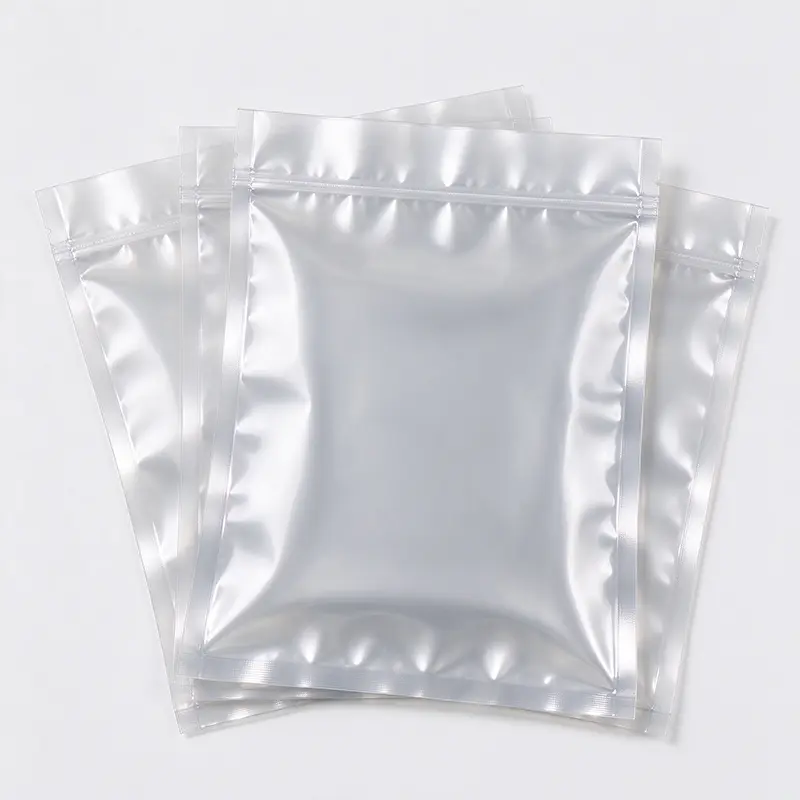
Food brands, importers and distributors often ask the same question: which pouch protects the product, ships well and keeps costs under control? For many dry, frozen and processed foods, vacuum bags three side seal are a practical answer. The format is simple, the seals are strong, and the film structure can be matched to the product.
Shanghai Yutop Plastic Packaging Co., Ltd. is a flexible packaging manufacturer in China. Our factory has over 20 years of experience in custom processing. We make plastic packaging bags, roll films, paper bags and composite packaging for food, pet food, beauty and daily necessities. This guide explains how custom three side seal vacuum bags work, which options matter, and what to check before you send an inquiry.
What Are Three Side Seal Vacuum Bags?
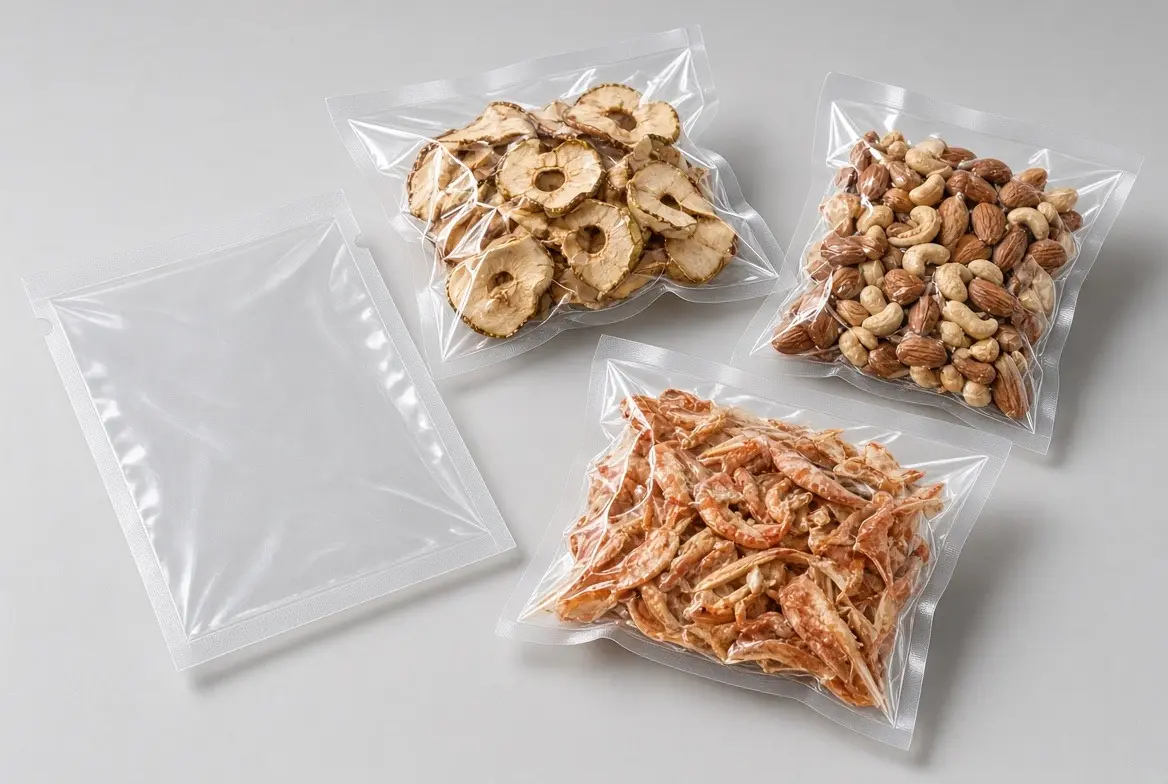
A three side seal bag is a flat pouch made from two layers of film. The left edge, right edge and bottom are sealed at the factory. The top stays open so your team can fill the bag. After filling, air is removed and the open side is heat sealed. The result is a flat, airtight pouch.These three side seal vacuum bags are also called vacuum pouches or flat vacuum pouches. They are made from multilayer film, so the structure can be adjusted for strength, clarity, barrier level and heat resistance.
Key features buyers look for:
• Flat shape that saves storage and shipping space
• Strong side and bottom seals made in the factory
• Multilayer film that blocks oxygen and moisture
• Custom size, printing and finish
• Optional tear notch, zipper and hang hole
One practical note: smooth-film pouches are normally packed on chamber vacuum machines. Home suction sealers usually need embossed bags. Please tell us which machine you use, so we can suggest the right film
 .
Why Choose Custom Three Side Seal Vacuum Bags from a Factory?
Buying direct from a manufacturer gives you control over the details that decide pack quality and unit cost. With a factory supplier, you can:• Set the exact size, film structure and thickness for your product
• Print your brand artwork instead of buying a plain stock bag
• Work with OEM and private-label projects from the start
Material Structure Options: PET/PA/PE, PET/AL/PE and More
Material choice is the most important decision for vacuum bags three side seal. The outer layer gives print quality and stiffness. Middle layers add barrier and strength. The inner layer seals the bag. Common options include:• PET/PE: clear, cost-effective, suitable for dry goods with a shorter shelf-life target
• PA/PE (nylon/PE): good puncture resistance and flexibility, widely used for meat, seafood and cheese
• PET/PA/PE: combines print-friendly PET with strong nylon, often used for frozen and chilled food
• PET/AL/PE (aluminum foil): opaque, with a very high barrier to light, oxygen and moisture
• PET/PA/CPP or PET/AL/CPP: heat-resistant structures for cooked or heat-treated food
The final structure depends on your product, storage temperature, shelf-life target and filling process. Send us these details and our team will suggest a suitable option.
High Barrier Vacuum Bags for Oxygen and Moisture Protection
Oxygen, moisture and light cause most quality problems in packed food. Oxygen speeds up fat oxidation and supports mold growth. Moisture makes powders clump and snacks go soft. Light can fade color and flavor.A high barrier vacuum bag works in two steps. The vacuum process removes most of the air from the pouch. The barrier film then limits new air and water vapor from getting back in. For light-sensitive products, a foil layer adds protection. For products buyers want to see, a clear PA-based structure is often better.
Shelf life depends on more than the bag. Product moisture, vacuum level, seal quality and storage temperature all matter, so we recommend a short storage test with samples.
Available Sizes, Thickness and Custom Printing Options
Sizes
Width and length can be made to your specification. When you choose a size, allow space for the product, the head space and the seal area. Give us the inner dimensions and the product weight, and we can check whether the size is practical.Thickness
Many vacuum pouches fall roughly between 70 and 120 microns, but the right figure depends on the product. Heavy items and products with sharp edges, such as bone-in meat, usually need thicker or tougher film. Light dry goods can often use thinner film. Thickness also affects cost, so test before bulk production.Custom Printing
We can print your logo, product information and brand artwork on the film. You can choose a matte or glossy finish and add a clear window if you want customers to see the product. Send your artwork or dieline, and we will confirm a proof before production.Vacuum Bag Features: Tear Notch, Zipper, Hang Hole and Matte or Glossy Finish
Small features can make a big difference in how your end customer uses the pack. Popular options include:• Tear notch: lets users open the bag without scissors
• Zipper: allows the pouch to be resealed after opening, useful for snacks and dried food
• Hang hole: supports retail display on hooks and pegs
• Matte finish: gives a soft, premium look and reduces glare
• Glossy finish: gives bright colors and a clean, clear surface
• Clear window: shows the product while the rest of the bag stays printed
Some features change the packing method. For example, a zipper must be placed so it does not interfere with the vacuum seal. Tell us how you fill and seal the bag, and we will advise.
Three Side Seal Vacuum Bags for Food Packaging (Meat, Seafood, Snacks, Rice)
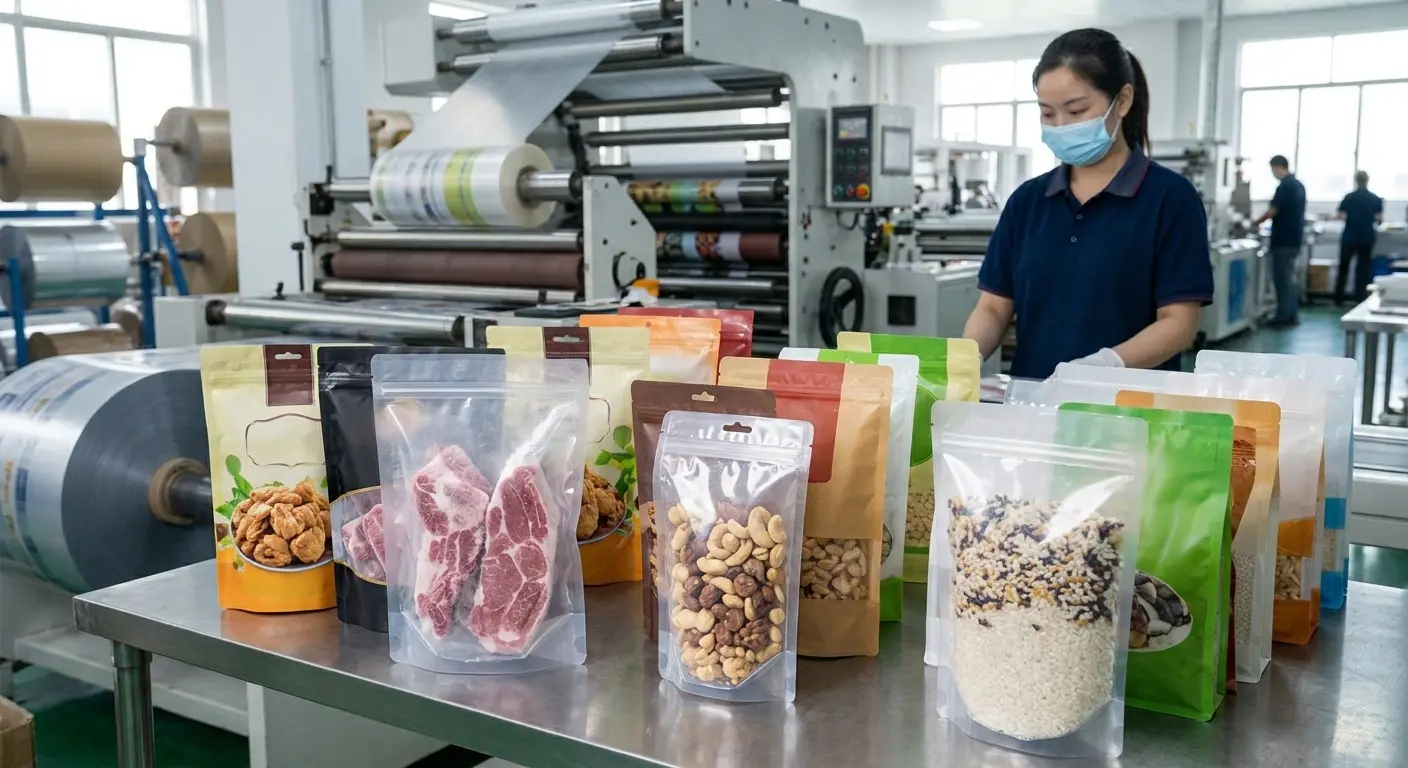
Food is the largest use for three side seal vacuum bags. The most common applications are listed below.
Meat and Seafood
Fresh, chilled and frozen meat and fish need puncture resistance and a good oxygen barrier. PA/PE and PET/PA/PE structures are common choices because they stay flexible at low temperature.Snacks and Dried Food
Nuts, dried fruit, jerky and other dry snacks need moisture and oxygen protection. A zipper and tear notch add convenience. A foil or metallized layer helps with light-sensitive products.Rice, Grains and Beans
Vacuum packing keeps grains compact and limits insect and moisture problems during storage.Cooked and Ready-to-Eat Food
Cooked food may need heat resistance for pasteurizing or reheating. This needs a different film structure, covered in the retort section below.Other Uses: Medical, Electronics, Pet Food and Daily Necessities
Flat vacuum pouches are useful outside the food industry too.• Pet food: treats, freeze-dried food and raw food portions. Our site also offers a dedicated pet food packaging solution.
• Daily necessities: small household goods and accessories that need protection from dust and moisture.
• Garments: vacuum packing reduces carton volume and can lower shipping cost.
• Electronics: small parts and components that need protection from humidity during storage and transport.
• Medical-related supplies: flat pouches are used for some supplies and accessories.
For electronics and medical-related uses, please check the rules that apply to your product and market. We supply the packaging film and bag. Final regulatory responsibility stays with the product owner.
Three Side Seal vs Four Side Seal vs Stand-Up Pouch: Which Is Better?
No single format wins in every case. The right choice depends on your product, display needs and filling line. The table below gives a quick comparison.| Feature | Three Side Seal Bag | Four Side Seal Bag | Stand-Up Pouch |
| Seal layout | Left, right and bottom sealed; top open for filling | All four edges sealed after filling | Bottom gusset with side seals; top open for filling |
| Shape | Flat | Flat | Stands upright on the shelf |
| Vacuum packing | Very common | Possible, depends on the filling method | Possible with suitable film and machine |
| Best for | Meat, seafood, snacks, grains, frozen food | Small sachets and single-serve packs | Retail display, dry food, liquids, pet food |
| Cost level | Usually lower | Usually similar to three side seal | Usually higher |
If your priority is low cost, flat storage and strong vacuum performance, a three side seal pouch is often the logical choice. If shelf presence matters more, look at our Standup Pouch range. If you need small, fully sealed packs, see our Four Side Seal Bag page. We can also compare the options with you when you send your product details.
Are Three Side Seal Vacuum Bags Heat Sealable and Retort Safe?
Yes, these bags are heat sealable. The inner layer is made from a sealant material such as PE or CPP. It melts under heat and pressure to form a tight seal after filling.Retort safety is different. A standard PE-based vacuum pouch is not designed for boiling, steam sterilization or high-temperature cooking. Heat-treated food needs a structure with a heat-resistant inner layer, usually CPP, plus suitable barrier layers. The bag must also be tested at your real temperature and time.
Before you order, tell us:
• The processing method: pasteurizing, boiling, steaming or retort
•The temperature and holding time
•Whether the end user reheats the bag
With this information, we can suggest a suitable structure. You can also view our Steaming Heated Packaging Bag page for heat-resistant packaging options.
Food Safety Standards and Quality Certifications
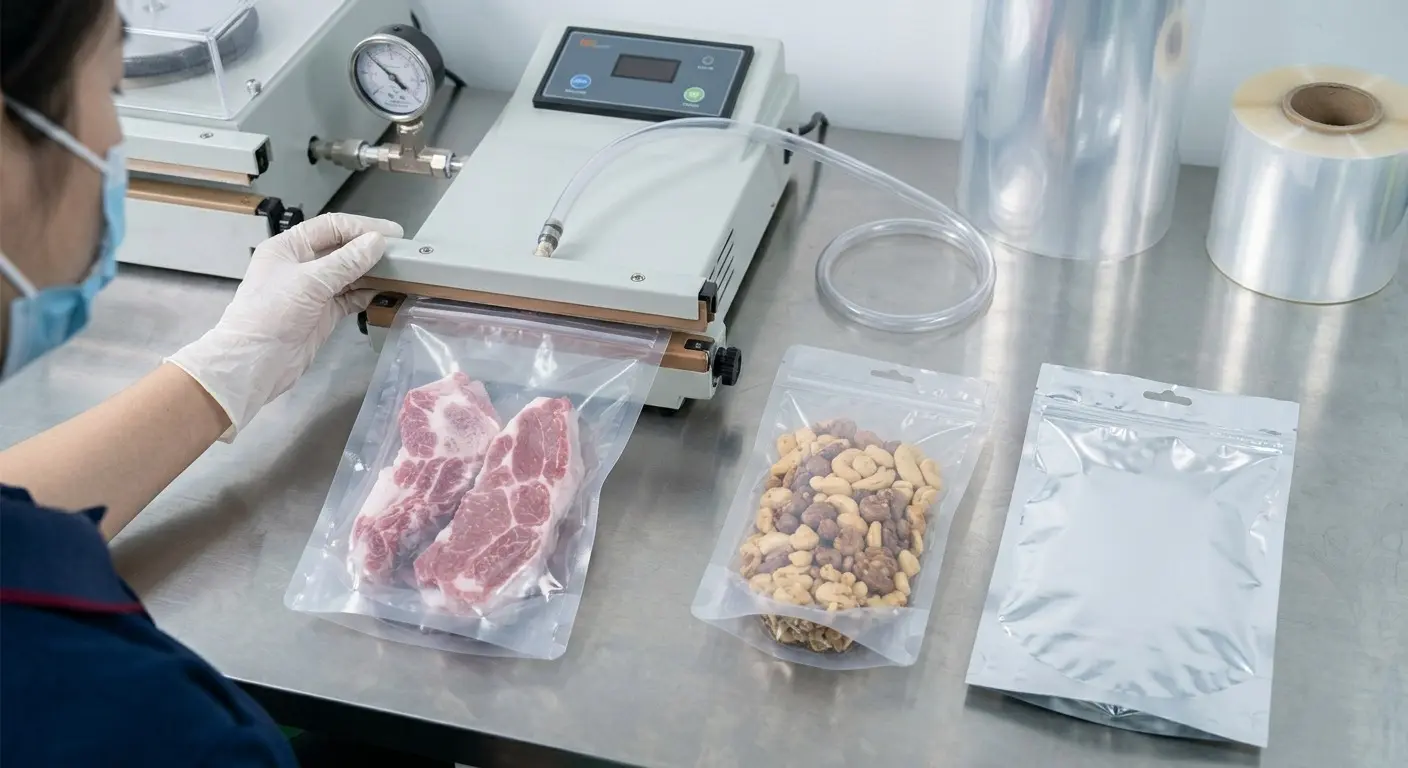
Packaging that touches food must follow the rules of the country where the food is sold. For example, buyers in the United States often refer to FDA food contact rules, while buyers in the European Union refer to Regulation (EC) No 1935/2004 and related plastic rules. Other markets have their own requirements.
Because requirements differ, we recommend this approach:
•Tell us the food type and your target market
•Ask which documents and test reports you need, such as material declarations or migration test reports
•Ask how the factory checks quality during production
A reliable supplier should be able to explain its inspection steps clearly. Typical checks for vacuum pouches include film inspection, print and color check, size check, seal strength, leak testing and carton inspection. Please contact us to discuss the documents and quality checks for your project.
MOQ, Pricing and Wholesale Order Process
MOQ and price depend on the bag size, film structure, thickness, number of print colors and order quantity. Printed bags need printing plates or cylinders, so a first order usually costs more per bag than a repeat order.These factors affect price most:
•Film structure and thickness
•Bag size and quantity
•Number of colors and print coverage
•Special features such as zippers, windows or special finishes
•Packing method and shipping terms
A typical wholesale order follows these steps:
1. Send your product details, bag size and target quantity
2. Receive a structure suggestion and quotation
3. Confirm artwork and approve a sample or proof
4. Start production
5. Complete inspection and export packing
6. Ship to your port or warehouse
You can find more details on our How To Order page.
Production Lead Time, Sampling and Packing Details
Lead time depends on the film structure, printing, quantity and current production schedule. We confirm the schedule in the quotation, so you can plan your launch or restock with clear dates.Sampling is a smart step before bulk production. Use samples to check fit with your product, performance on your vacuum machine, seal strength, print quality and storage results over your target shelf life.
For packing, bags are usually packed in cartons, labeled by item and loaded on pallets when needed. Tell us your carton limits, labeling needs and shipping method, and we will plan the export packing around them.
How to Choose the Right Three Side Seal Vacuum Bag for Your Product
Use this short checklist when you compare suppliers and samples.Buyer Checklist
1. Define the product: weight, shape, moisture, fat content and sharp edges2. Define the storage condition: ambient, chilled or frozen
3. Define the process: vacuum only, or heat treatment after sealing
4. Choose the barrier level based on shelf life and light sensitivity
5. Check your vacuum machine type and seal width
6. Decide on features: tear notch, zipper, hang hole, window and finish
7. Check food contact rules for your target market
Frequently Asked Questions About Three Side Seal Vacuum Bags
Q1. What are vacuum bags three side seal used for?
They are used to pack food and non-food products that need protection from air and moisture. Common uses are meat, seafood, snacks, dried food, grains, pet food, garments and small parts.Q2. Can I print my brand on custom three side seal vacuum bags?
Yes. We can print your logo and product information on the outer film, with a matte or glossy finish. We confirm a proof with you before production.Q3. Which material suits frozen meat or seafood?
PA/PE and PET/PA/PE are common choices. Nylon gives puncture resistance and stays flexible in cold storage.Q4. Are three side seal vacuum bags suitable for boiling or retort?
Only with the right structure. Standard PE-based vacuum pouches are not made for high-temperature cooking. For boiling, steaming or retort, we select heat-resistant materials after we know your temperature and time.Q5. What information do I need to send for a quotation?
Please send the product type, bag size, film structure if known, thickness, print requirements, special features, order quantity and destination country.Q6. Can I get samples before placing a bulk order?
Samples are a good idea, and we encourage buyers to test them. Contact us with your requirements and we will discuss the sample options for your project.Conclusion
Choosing the right vacuum bags three side seal comes down to a few clear decisions: film structure, barrier level, size, features and the rules of your target market.Shanghai Yutop Plastic Packaging Co., Ltd. offers custom flexible packaging for international importers, distributors and brand owners. If you would like product details, a quotation, customization advice or technical support for custom three side seal vacuum bags, please send us your requirements by email at yutoppack@163.com. Our team will be glad to help you find a packaging solution that fits your product.