Flexible Packaging Film Types Guide: Materials, Uses & How to Choose
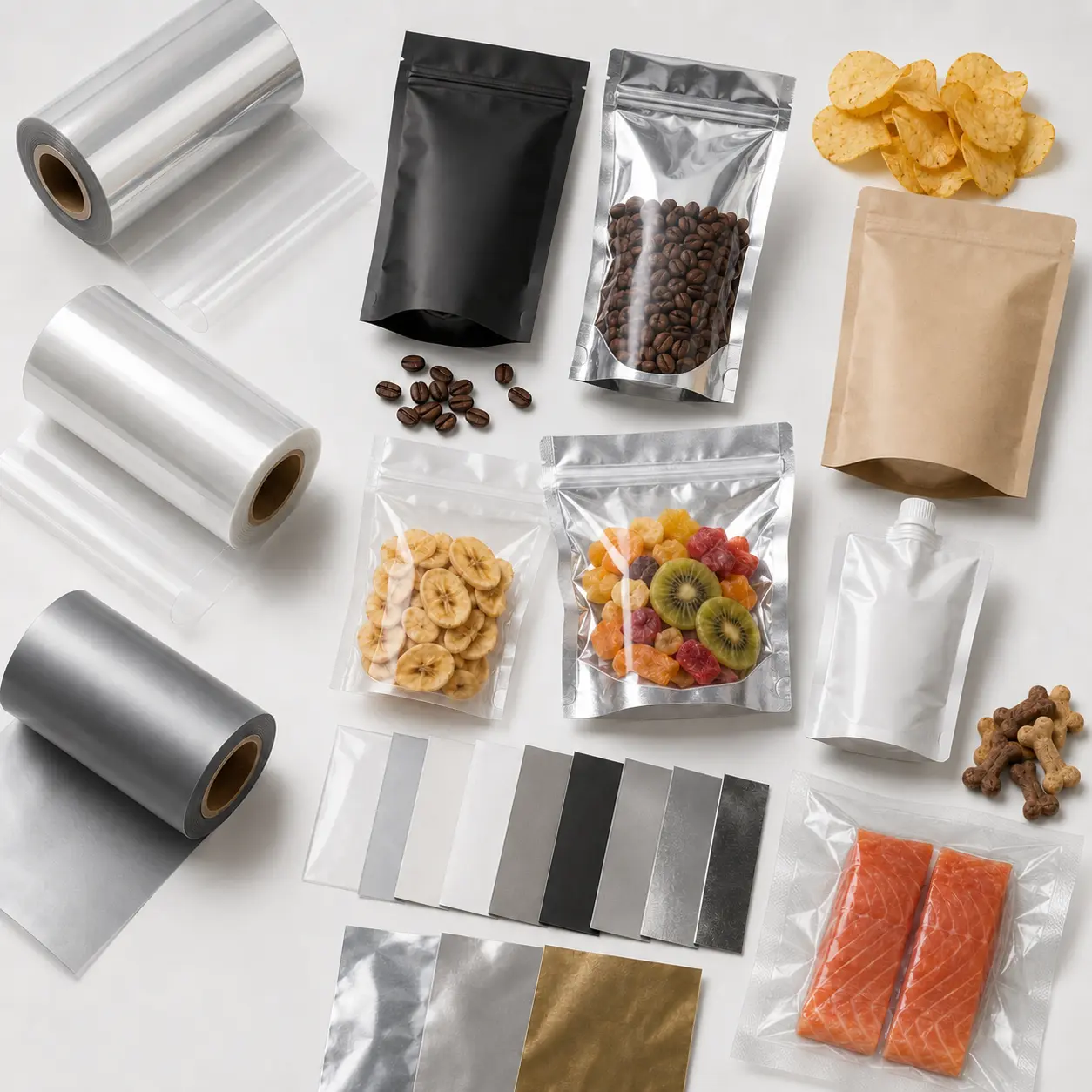
When you're sourcing packaging for a new product line, one of the first questions is which film will actually protect your goods, hold up during shipping, and look good on a retail shelf. Understanding the different flexible packaging film types available makes that decision much easier, and much less risky.
This guide breaks down the most common flexible packaging films used in food, beauty, pet food, and daily necessities packaging today. You'll learn what each material does well, where it falls short, and how experienced buyers match a film to a product before requesting samples or placing a first order. Whether you're an importer comparing flexible packaging film suppliers, a brand owner developing a new SKU, or a procurement manager evaluating a flexible packaging film manufacturer for a long-term contract, this article gives you the practical background to ask the right technical questions.
What Is Flexible Packaging Film?
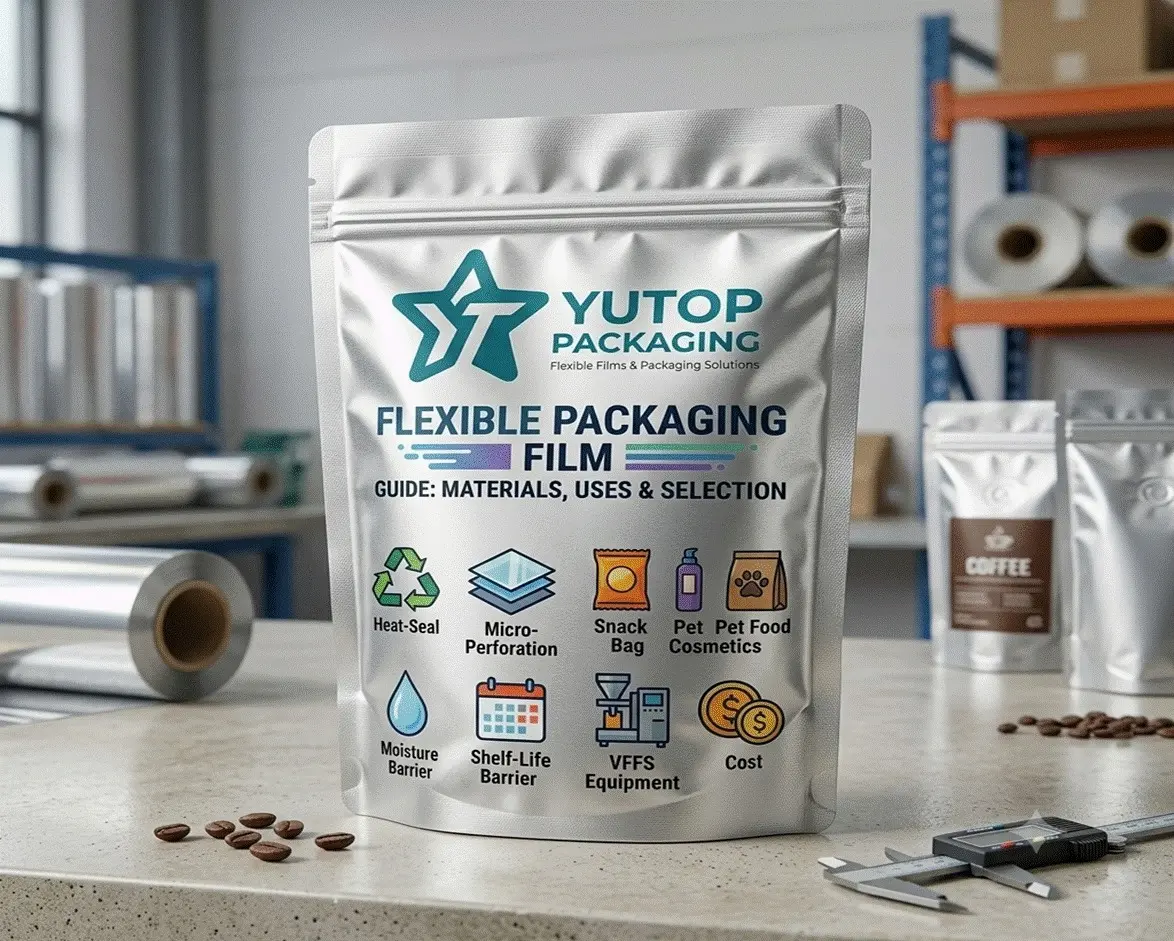
In practice, flexible plastic films for packaging are used to make stand-up pouches, roll film for form-fill-seal machines, side-seal bags, vacuum bags, and laminated pouches. Most of these products are built from one or more plastic layers, sometimes combined with foil or paper, chosen for a specific mix of strength, barrier protection, printability, and cost.
Why Manufacturers Are Switching to Flexible Packaging
Brand owners and manufacturers across food, pet food, beauty, and daily necessities categories are shifting toward flexible packaging for several practical reasons:• Lower shipping and storage costs — flexible films weigh less and stack flat before filling, unlike pre-formed rigid containers.
• Better shelf presence — stand-up pouches and printed flexible film packaging offer more surface area for branding and graphics than a small label on a jar.
• Material efficiency — less plastic is used per unit compared with rigid bottles or tubs, which also lowers unit cost.
• Extended shelf life — multi-layer barrier films protect against moisture, oxygen, and light, which matters for food and pet food products.
• Design flexibility — features like resealable zippers, spouts, tear notches, and matte or gloss finishes are easy to add during production.
These advantages explain why demand across the flexible packaging films market has grown steadily, particularly for pouches replacing cans, jars, and boxes in food and personal care categories.
Main Types of Flexible Packaging Film by Material
Not all flexible packaging film types behave the same way. The base resin, or combination of resins in a laminate, determines strength, clarity, sealing behavior, and barrier performance. Below are the materials buyers ask about most often.PE (Polyethylene) Film: Properties and Best Uses
PE film is the most widely used base layer in flexible packaging. It's valued for:• Strong heat-sealing performance, even through minor contamination like powder or oil
• Good puncture and tear resistance
• Flexibility at low temperatures, which suits frozen food packaging
• Lower cost compared with many other plastic films in flexible packaging
PE is rarely used alone for products that need strong oxygen or aroma barriers. It's most often paired with other films as a sealant layer in multi-layer laminates, and used on its own for vest carrier bags, liner bags, and basic food bags.
BOPP Film: Properties and Best Uses
Biaxially oriented polypropylene (BOPP) film is known for its clarity, stiffness, and moisture resistance. Common uses include:• Snack food bags where a glossy, high-clarity finish is important for shelf appeal
• Labels and overwrap film
• Laminated structures where BOPP forms the outer printed layer
BOPP has a good moisture barrier but a weaker oxygen barrier on its own, so it's typically laminated with other materials when a product needs longer shelf life.
PET Film: Properties and Best Uses
Polyester (PET) film is prized for strength, high-temperature resistance, and excellent printability. It's a common choice for:• The outer layer of laminated pouches, since it protects print quality and resists scuffing
• Retort and steaming pouches that need to survive high-heat sterilization
• Applications requiring a strong, dimensionally stable base film
PET alone doesn't provide a strong gas barrier, so it's usually combined with foil, PE, or specialty barrier coatings in multi-layer film for flexible films for food packaging.
Nylon (BOPA) Film: Properties and Best Uses
Nylon, also called BOPA (biaxially oriented polyamide), is chosen when a package needs high puncture resistance and toughness. Typical applications:• Vacuum bags for meat, cheese, and frozen food, where sharp edges or bones could puncture weaker films
• Products that go through repeated handling or rough transport conditions
• Structures needing good oxygen barrier combined with mechanical strength
Nylon costs more than PE or BOPP, so it's usually reserved for applications where puncture resistance is a functional requirement, not just a nice-to-have.
Aluminum Foil Laminate Film: Properties and Best Uses
When a product needs a complete barrier against light, oxygen, and moisture, aluminum foil laminate is the standard choice. It's used for:• Coffee, tea, and other aroma-sensitive food products
• Pharmaceutical and supplement packaging
• Products requiring a long shelf life without refrigeration
Foil laminate structures typically combine PET (outer, for print and strength), foil (middle, for barrier), and PE (inner, for sealing) into a single multi-layer film.
Single-Layer vs. Multi-Layer Flexible Films
Buyers often ask whether they need a single-layer or multi-layer film. The answer depends on what the product needs to be protected from.Single-layer films are simpler and more cost-effective. They work well for dry, non-perishable goods, short shelf-life products, or internal liner applications where barrier performance isn't critical.
Multi-layer films combine two or more materials, for example PET/PE, BOPP/PE, or PET/AL/PE, to get a combination of properties no single film can offer on its own: print quality on the outside, strength in the middle, and heat-sealing reliability on the inside. Most food, pet food, and beauty products on retail shelves today use multi-layer flexible packaging films because a single material rarely meets every requirement for strength, appearance, and shelf life at once.
Flexible Packaging Film Types by Industry Application
Different industries prioritize different film properties. Here's how it typically breaks down:• Food packaging — needs strong oxygen and moisture barriers, food-grade compliance, and often heat-seal or retort resistance. Common structures: PET/PE, BOPP/PE, PET/AL/PE.
• Pet food packaging — needs puncture resistance for kibble with sharp edges, plus grease and moisture barriers. Common structures: PET/Nylon/PE or BOPP/PE with high seal strength.
• Beauty and personal care — prioritizes print quality, matte or soft-touch finishes, and moderate barrier performance. Common structures: PET/PE or BOPP/PE with custom coatings.
• Daily necessities — generally needs a durable, low-cost film with good tear resistance rather than high barrier performance. Common structures: PE-based single or dual-layer film.
• Garment packaging — prioritizes clarity and puncture resistance over barrier properties. Common structures: PE or BOPP-based bags.
Barrier Properties: Moisture, Oxygen & Light Protection
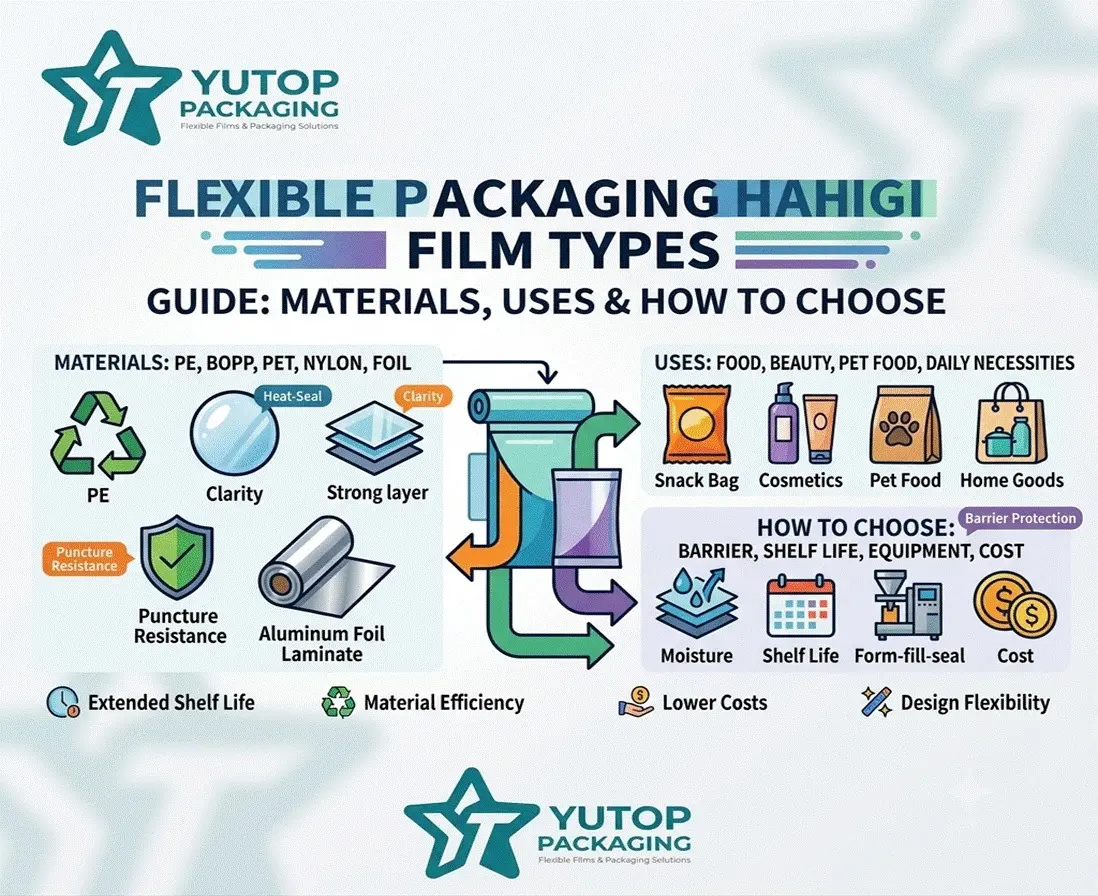
• Moisture barrier — prevents products like snacks, powders, or supplements from absorbing humidity and losing texture or potency.
• Oxygen barrier — slows oxidation, which affects flavor, color, and shelf life in foods and some cosmetic products.
• Light barrier — protects light-sensitive contents like coffee, oils, and certain pharmaceuticals from degradation, usually achieved with foil layers or metallized film.
A useful rule for buyers: the longer the required shelf life and the more sensitive the product, the more layers and barrier materials the film structure will need. This directly affects cost, so it's worth discussing actual shelf-life requirements with your supplier rather than defaulting to the highest-barrier option.
How to Choose the Right Flexible Packaging Film for Your Product
When comparing flexible packaging companies and film options, work through these questions:• What does the product need protection from? Moisture, oxygen, light, punctures, or a combination.
• What is the required shelf life? Longer shelf life generally means more barrier layers.
• How will the package be filled and sealed? Confirm film compatibility with your filling equipment (VFFS, HFFS, hand-fill, etc.).
• What print and finish does the brand need? Matte, gloss, metallized, or transparent windows all affect film choice.
• What's the target unit cost? Multi-layer barrier films cost more than single-layer film — balance protection against budget.
• Does the supplier offer customization? Thickness, size, color, resealable features, and spout options should all be confirmed before ordering.
• What quality control and export documentation does the supplier provide? For international buyers, this includes material certificates, testing reports, and export packing standards.
Working through these points before requesting a quotation helps avoid delays later and gives your flexible packaging film manufacturer the information needed to recommend the right structure the first time.
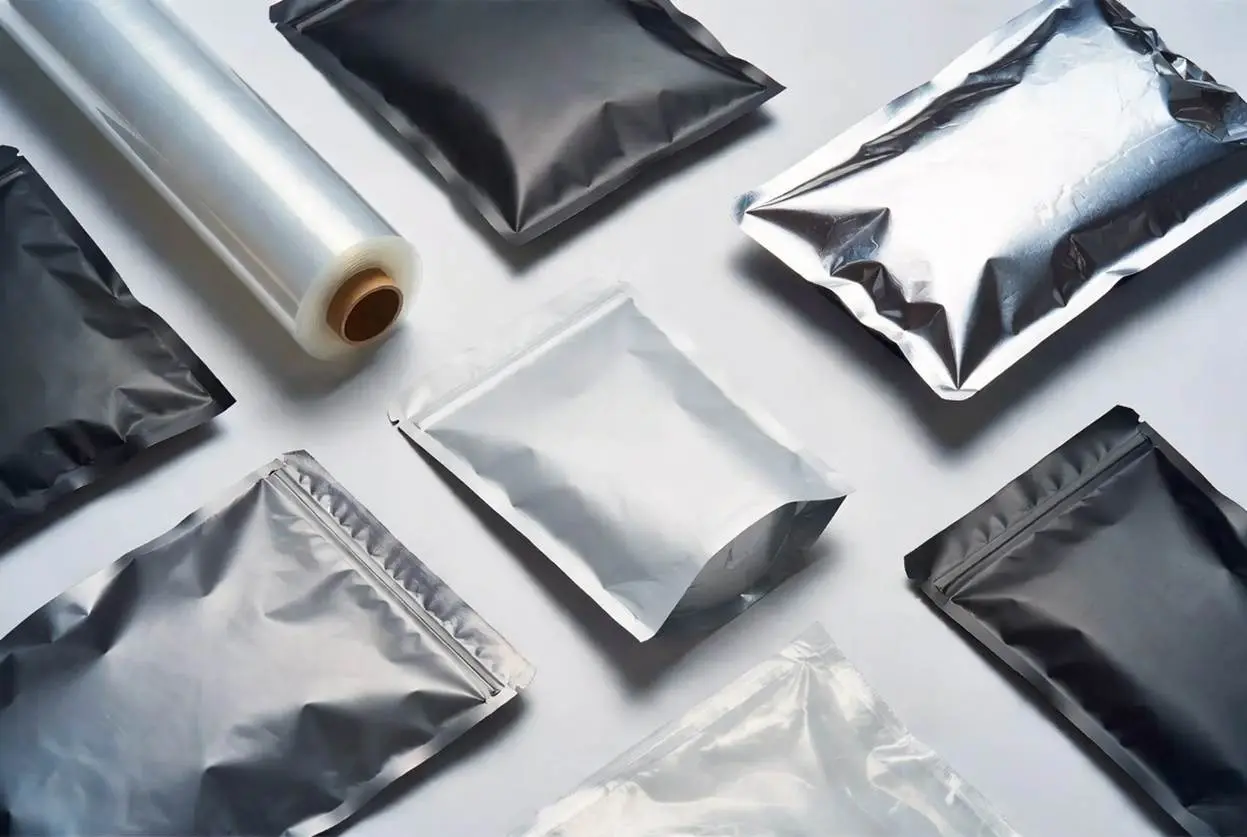
Flexible Packaging Film Types Comparison Table
| Film Type | Key Strength | Oxygen Barrier | Typical Use |
| PE | Heat-seal strength, flexibility | Low | Liner bags, frozen food, sealant layer |
| BOPP | Clarity, moisture resistance | Low–Medium | Snack bags, overwrap, printed outer layer |
| PET | Strength, printability, heat resistance | Low | Outer layer, retort pouches |
| Nylon (BOPA) | Puncture resistance | Medium | Vacuum bags, meat and cheese packaging |
| Aluminum Foil Laminate | Full light/oxygen/moisture barrier | High | Coffee, supplements, long shelf-life food |
FAQs About Flexible Packaging Film Types
What is the most common type of flexible packaging film?PE-based film is the most widely used because of its low cost and reliable heat-sealing performance, though it's often combined with other materials in multi-layer structures for stronger barrier protection.
Which flexible packaging film is best for food products?
It depends on the food. Dry, shelf-stable goods often use BOPP/PE structures, while products needing a long shelf life without refrigeration, such as coffee or freeze-dried food, typically use PET/AL/PE foil laminate.
Is flexible packaging film recyclable?
Some single-material PE or PP films can be recycled through designated plastic film recycling streams. Multi-layer laminates combining different resins are harder to recycle unless designed as mono-material structures. Recyclability depends on local facilities and film composition, so it's worth confirming with your supplier what structures are available.
Can flexible packaging film be customized with my brand's design?
Yes. Most flexible packaging film manufacturers offer custom printing, color matching, matte or gloss finishes, and added features like zippers, spouts, or tear notches.
What's the difference between flexible packaging film and flexible packaging bags?
Film generally refers to the roll-form material used on packaging machines to form and seal bags automatically, while bags are the finished, pre-made product. Many buyers purchase either format depending on their production setup.
How do I know which film thickness I need?
Thickness depends on product weight, sharp edges, and handling conditions. A supplier can recommend thickness based on your product specifications and intended use, and can usually provide sample films for testing before a full order.
Conclusion
Choosing among the many flexible packaging film types available doesn't have to be complicated once you understand what each material does well. Start with your product's protection needs, whether that's moisture, oxygen, light, or puncture resistance, then match that to a single-layer or multi-layer film structure that fits your budget and production setup.If you're comparing flexible packaging film suppliers for an upcoming order, Yutop's team can walk you through material options, share detailed product specifications, and arrange samples so you can test the film against your own product before committing to a production run. Contact us with your product details for a tailored recommendation and quotation.