< Back
Regionally, Asia Pacific dominates theflexible packaging films market, holding a 40.50% share in 2025, thanks to major manufacturing hubs in China, India, and Southeast Asia <superscript:2. North America and Europe follow as key markets, with growing demand for sustainable packaging solutions. Leading flexible packaging films manufacturers, such as Amcor, Berry Global, and Mondi Group, operate global production facilities to cater to regional needs, ensuring stable supply chains and shorter lead times <superscript:5.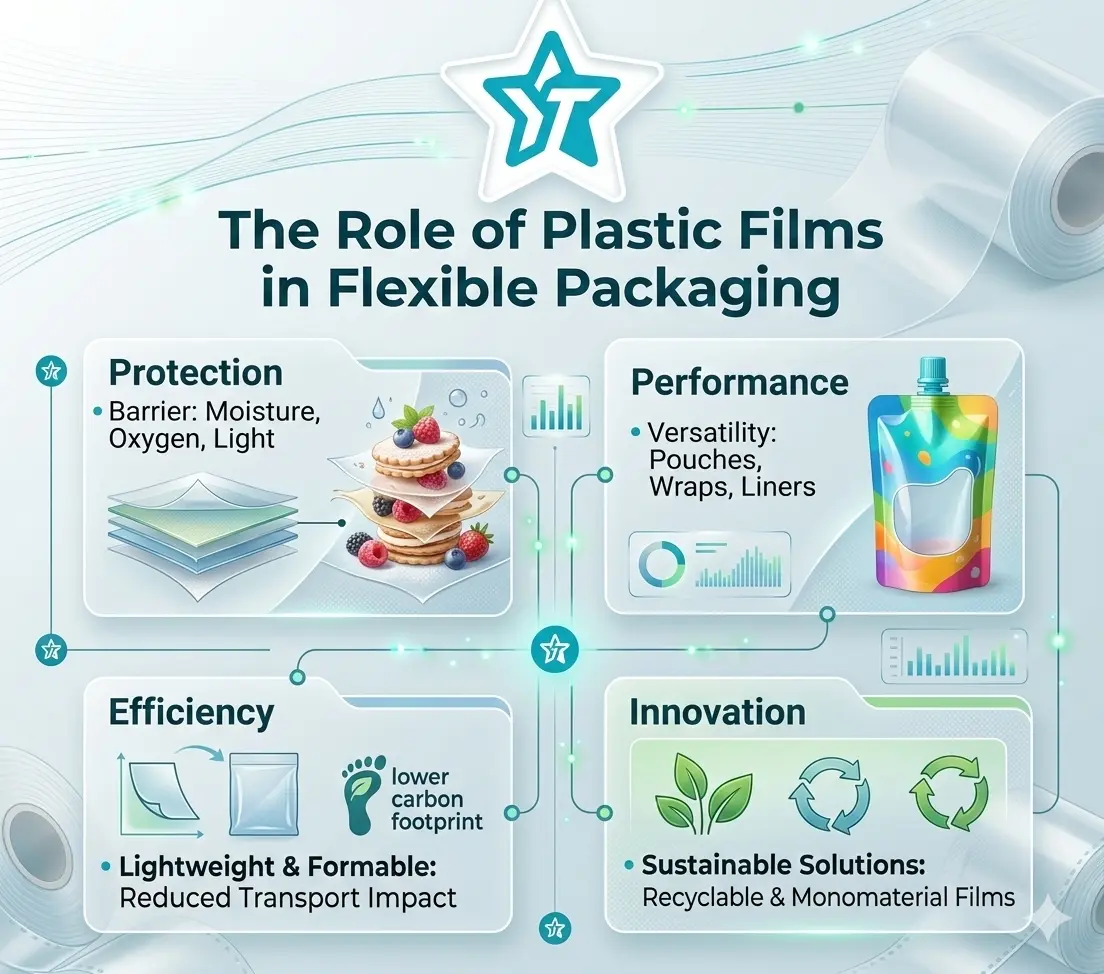
Plastic films in flexible packaging are the most widely used material category, accounting for 68% of the global flexible packaging market in 2025 <superscript:2. Their dominance stems from their unique combination of versatility, performance, and affordability, outperforming alternatives like paper and aluminum foil in most applications. Flexible packaging films manufacturers leverage the properties of plastic to create films that balance protection, processability, and cost-efficiency.
1. Lightweight and Cost-Efficient: Plastic films reduce packaging weight by up to 60% compared to rigid packaging, lowering transportation costs and carbon emissions. For example, Sherwin-Williams’ mono-material polyethylene paint concentrate pouch allows 230% more units to fit on each pallet, significantly cutting logistics costs <superscript:1.
2. Superior Barrier Protection: Advanced plastic films protect products from oxygen, moisture, grease, and light, extending shelf life. High-barrier films can reduce food spoilage rates by up to 30%, a critical benefit for sensitive products like dairy and meat <superscript:6.
3. Processability and Versatility: Plastic films support high-speed printing, lamination, and pouch-making, making them ideal for mass production. They also offer design flexibility, with options for clear, glossy, or metalized finishes to enhance brand visibility <superscript:1.
4. Sustainable Evolution: Leading flexible packaging films manufacturers are developing eco-friendly plastic films, including post-consumer recycled (PCR) films, mono-material structures, and biodegradable options. Kraft Heinz’s recyclable Capri-Sun pouch, made from mono-material polypropylene, reduces carbon emissions by 25% <superscript:1.
flexible packaging films manufacturers produce a wide range of flexible packaging film types, each tailored to specific industry needs. These films are categorized based on their material composition, structure, and performance characteristics, with the two main categories being monolayer and multilayer films <superscript:4.
- Polyethylene (PE) Films: The most widely used, including LDPE (soft, clear, heat-sealable for bags and wraps), LLDPE (high-strength for stretch films), and HDPE (rigid, moisture-resistant for industrial packaging) <superscript:4.
- Polypropylene (PP) Films: BOPP (biaxially oriented PP) offers high gloss and printability for snack packaging, while CPP (cast PP) provides good sealability for food laminates<superscript:3.
- BOPET Films: Biaxially oriented PET films offer exceptional strength and barrier properties. The global BOPET film market for flexible packaging is projected to grow at a CAGR of 5.1% from 2026 to 2035, reaching USD 154.2 billion <superscript:3.
- Nylon (PA) Films: Known for toughness and puncture resistance, ideal for vacuum packaging of meat and seafood.
- High-Barrier Laminates: Combinations like PET/AL/PE or PET/EVOH/PE provide superior protection against oxygen and moisture, critical for pharmaceutical and processed food packaging <superscript:6.

Top flexible packaging films manufacturers distinguish themselves through advanced technology, quality control, and sustainability focus. Key capabilities include:
- Advanced Production Technology: Using multi-layer co-extrusion, biaxial orientation, and vacuum metallization to produce high-performance films <superscript:5.
- Customization: Tailoring film structures, thickness, and barrier levels to meet specific customer needs, such as ProAmpac’s fiber-based recyclable overwrap for paper products <superscript:1.
- Compliance: Adhering to global standards like FDA and EU 10/2011 to ensure safety for food and pharmaceutical applications <superscript:5.
The flexible packaging films market is evolving, with three key trends driving innovation among manufacturers: sustainability, high-performance solutions, and digitalization. Sustainability will remain a top priority, with mono-material and recycled films becoming mainstream <superscript:1. High-performance films, such as active and smart packaging, will grow to reduce food waste, while digitalization and automation will improve production efficiency <superscript:6.
flexible packaging films manufacturers are essential to the global packaging ecosystem, driving growth in the flexible packaging films market through innovation and adaptability.Plastic films in flexible packaging remain the core material, evolving toward more sustainable designs, while a diverse range of flexible packaging film types caters to every industry need. With robust market growth projected through 2035, manufacturers that prioritize sustainability, quality, and customization will continue to lead the industry, supporting brands in meeting consumer demands and environmental goals.
Flexible packaging films manufacturers
flexible packaging films manufacturers – Driving Innovation in the Global Flexible Packaging Industry
flexible packaging films manufacturers are the backbone of the modern packaging sector, supplying high-performance solutions to diverse industries including food and beverage, pharmaceuticals, personal care, and e-commerce. These manufacturers play a pivotal role in shaping the flexible packaging films market, as they continuously innovate to meet evolving consumer demands for convenience, sustainability, and product protection. With a focus on quality, efficiency, and environmental responsibility, flexible packaging films manufacturers bridge the gap between raw materials and end-user needs, making flexible packaging one of the fastest-growing segments in the global packaging industry. This article explores their role, key market data, the importance of plastic films in flexible packaging, major flexible packaging film types, and future industry trends.Overview of the Flexible Packaging Films Market
The global flexible packaging films market is experiencing steady growth, driven by urbanization, changing consumer lifestyles, and the rising demand for lightweight, cost-effective packaging. According to Cervicorn Consulting, the global flexible packaging market (including films) was valued at USD 302.54 billion in 2025 and is projected to reach USD 435.82 billion by 2035, with a compound annual growth rate (CAGR) of 4.6% from 2026 to 2035 <superscript:2. Within this market, films and wraps are the fastest-growing product type, while the food and beverage sector accounts for 42% of total demand, making it the largest end-use industry <superscript:2.Regionally, Asia Pacific dominates theflexible packaging films market, holding a 40.50% share in 2025, thanks to major manufacturing hubs in China, India, and Southeast Asia <superscript:2. North America and Europe follow as key markets, with growing demand for sustainable packaging solutions. Leading flexible packaging films manufacturers, such as Amcor, Berry Global, and Mondi Group, operate global production facilities to cater to regional needs, ensuring stable supply chains and shorter lead times <superscript:5.
The Role of Plastic Films in Flexible Packaging
Plastic films in flexible packaging are the most widely used material category, accounting for 68% of the global flexible packaging market in 2025 <superscript:2. Their dominance stems from their unique combination of versatility, performance, and affordability, outperforming alternatives like paper and aluminum foil in most applications. Flexible packaging films manufacturers leverage the properties of plastic to create films that balance protection, processability, and cost-efficiency.
Key Advantages of Plastic Films in Flexible Packaging
1. Lightweight and Cost-Efficient: Plastic films reduce packaging weight by up to 60% compared to rigid packaging, lowering transportation costs and carbon emissions. For example, Sherwin-Williams’ mono-material polyethylene paint concentrate pouch allows 230% more units to fit on each pallet, significantly cutting logistics costs <superscript:1.2. Superior Barrier Protection: Advanced plastic films protect products from oxygen, moisture, grease, and light, extending shelf life. High-barrier films can reduce food spoilage rates by up to 30%, a critical benefit for sensitive products like dairy and meat <superscript:6.
3. Processability and Versatility: Plastic films support high-speed printing, lamination, and pouch-making, making them ideal for mass production. They also offer design flexibility, with options for clear, glossy, or metalized finishes to enhance brand visibility <superscript:1.
4. Sustainable Evolution: Leading flexible packaging films manufacturers are developing eco-friendly plastic films, including post-consumer recycled (PCR) films, mono-material structures, and biodegradable options. Kraft Heinz’s recyclable Capri-Sun pouch, made from mono-material polypropylene, reduces carbon emissions by 25% <superscript:1.
Key Flexible Packaging Film Types
flexible packaging films manufacturers produce a wide range of flexible packaging film types, each tailored to specific industry needs. These films are categorized based on their material composition, structure, and performance characteristics, with the two main categories being monolayer and multilayer films <superscript:4.
Monolayer Films
Monolayer films are made from a single polymer or polymer blend, offering an economical solution for applications where basic protection is sufficient. Common types include:- Polyethylene (PE) Films: The most widely used, including LDPE (soft, clear, heat-sealable for bags and wraps), LLDPE (high-strength for stretch films), and HDPE (rigid, moisture-resistant for industrial packaging) <superscript:4.
- Polypropylene (PP) Films: BOPP (biaxially oriented PP) offers high gloss and printability for snack packaging, while CPP (cast PP) provides good sealability for food laminates<superscript:3.
Multilayer Films
Multilayer films combine 3 to 20 layers of different materials to achieve maximum barrier performance <superscript:4. They are widely used for high-demand applications like coffee, pharmaceuticals, and frozen food. Key examples include:- BOPET Films: Biaxially oriented PET films offer exceptional strength and barrier properties. The global BOPET film market for flexible packaging is projected to grow at a CAGR of 5.1% from 2026 to 2035, reaching USD 154.2 billion <superscript:3.
- Nylon (PA) Films: Known for toughness and puncture resistance, ideal for vacuum packaging of meat and seafood.
- High-Barrier Laminates: Combinations like PET/AL/PE or PET/EVOH/PE provide superior protection against oxygen and moisture, critical for pharmaceutical and processed food packaging <superscript:6.
Core Capabilities of Leading Flexible Packaging Films Manufacturers
Top flexible packaging films manufacturers distinguish themselves through advanced technology, quality control, and sustainability focus. Key capabilities include:
- Advanced Production Technology: Using multi-layer co-extrusion, biaxial orientation, and vacuum metallization to produce high-performance films <superscript:5.
- Customization: Tailoring film structures, thickness, and barrier levels to meet specific customer needs, such as ProAmpac’s fiber-based recyclable overwrap for paper products <superscript:1.
- Compliance: Adhering to global standards like FDA and EU 10/2011 to ensure safety for food and pharmaceutical applications <superscript:5.