< Back
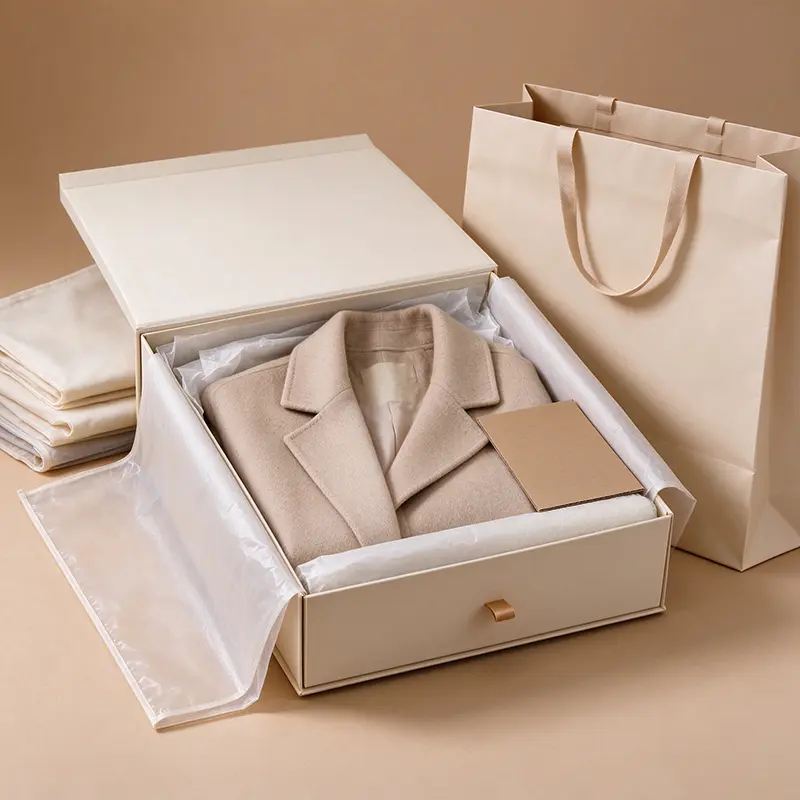
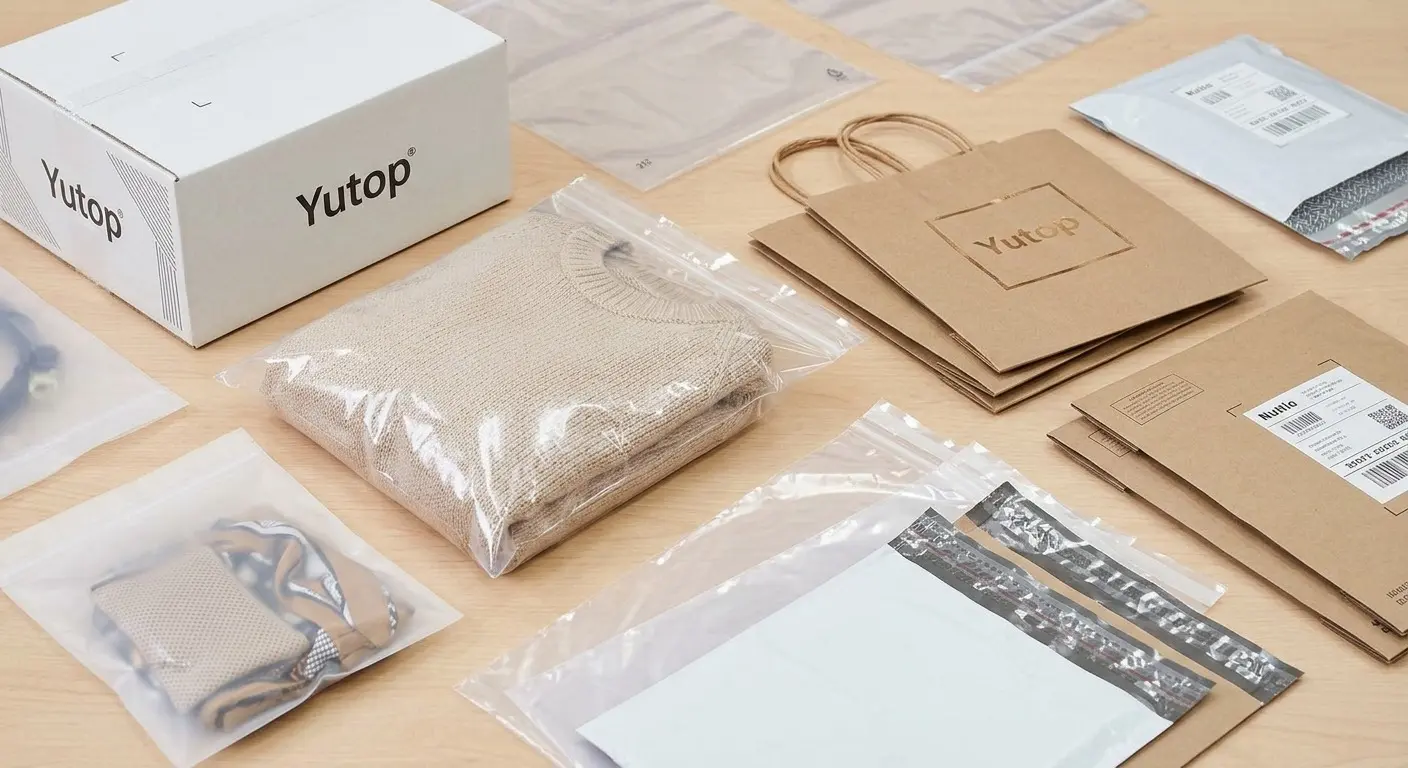
A garment packaging solution is a complete packaging plan for clothing, not just a single bag. It covers bag type, material, size, printing and carton packing, matched to how your garments are made, shipped and sold.
A good plan answers four questions:
• What must the packaging protect against? Dust, moisture, creasing and handling damage.
• How will the garment be sold? On a retail shelf, in a boutique, online or in wholesale cartons.
• What should the buyer see? The garment, the logo, or both.
• What is the cost per piece at your order volume?
Different garments need different answers. A cotton T-shirt sold in bulk needs a simple, low-cost bag. A tailored jacket sold in a boutique needs a premium presentation. Your apparel packaging should reflect that difference.
• Protection. Bags keep out dust, moisture and dirt during storage and sea freight. A sealed pack also stops garments from picking up stains inside the carton.
• Presentation. Clear film lets buyers check color and style without opening the pack. Printed bags and paper totes carry your logo through every touchpoint.
• Efficiency. Right-sized packs reduce carton volume, speed up packing lines and lower freight cost per piece.
For importers and wholesalers, packaging also affects returns and shelf appeal. A torn or dirty pack lowers the perceived value of the garment inside, even when the garment itself is perfect.
• Plastic garment bags: clear or semi-transparent bags in custom sizes, with printed logos.
• Paper tote bags: carry bags in specialty paper for retail and boutique use.
• Self seal bags: adhesive-strip bags for fast closing in factories and e-commerce warehouses.
• Vacuum bags: airtight bags that compress bulky items such as down jackets.
We also make uniquely shaped bags for scarves and accessories, so the pack highlights the product’s design. The sections below explain each type.
Buyers usually ask about four points:
• Size. We make custom garment bags to match your folded garment dimensions and folding style. A snug fit looks neater and uses less film.
• Thickness and clarity. You can choose film thickness and transparency to balance visibility with protection.
• Printing. Logos, brand names and slogans can be printed on the bag for promotion.
• Closure. A self-adhesive strip is a common choice for apparel. Tell us if you need another closure style, and we will confirm what is possible.
Send us the folded length, width and thickness of your garment. Our team will recommend a bag size from that data.
We offer specialty papers such as art paper and pearlized paper. You can add gold or silver stamping to highlight your logo. Bag size depends on how many items your customer usually buys and how thick they are. A bag for one scarf is very different from a bag for two folded sweaters.
Our Kraft Paper Bag range gives you a natural, eco-conscious look. Kraft paper is available from 80 to 200 gsm, in flat, gusseted or tote designs. Flexo printing, embossing and foil stamping are available for branding. An optional PE coating adds moisture resistance.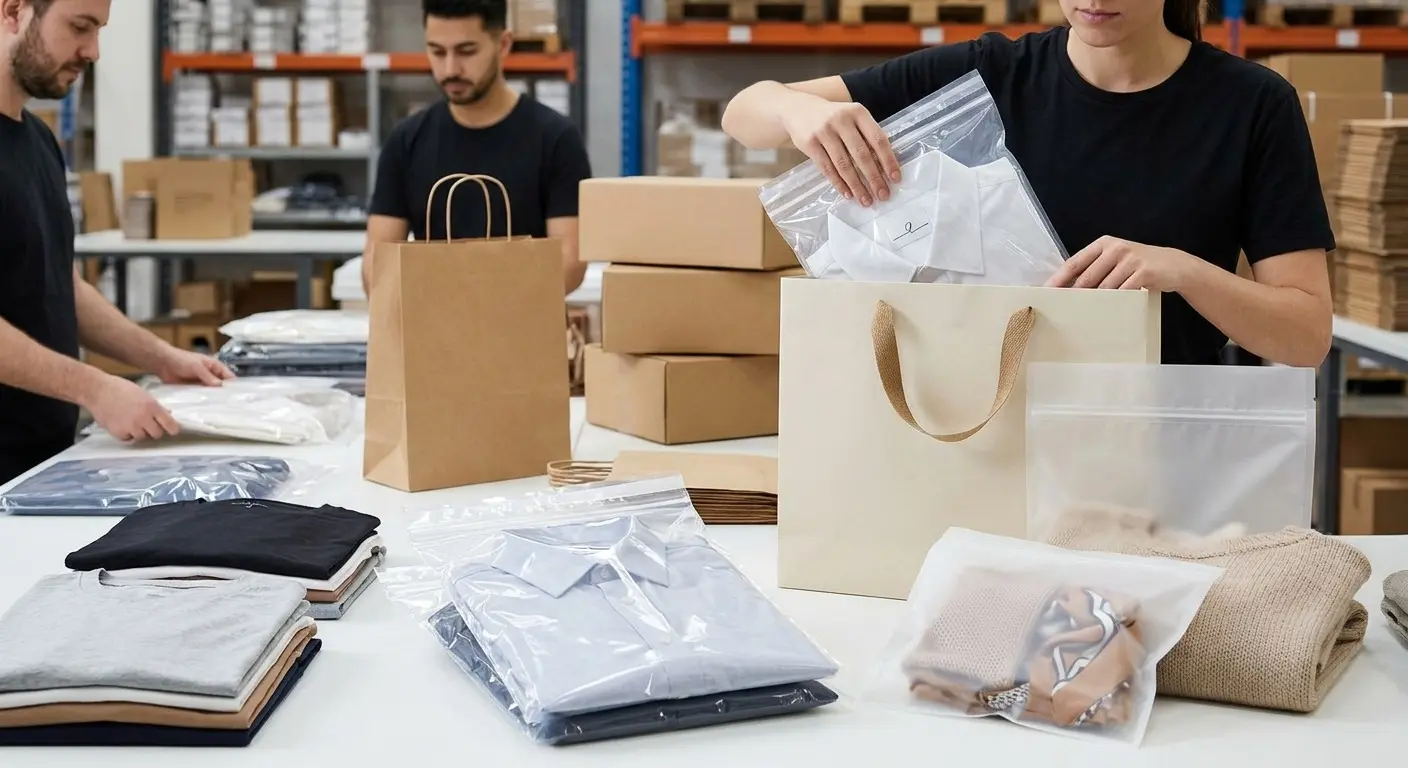
Online orders need packaging that closes fast, stays closed and ships light. Our Self Seal Bag products use a pressure-sensitive adhesive strip. Your packers press the strip once, and no heat sealer or tape is needed. That saves time on busy packing lines.
Material options include:
• LDPE for light, flexible bags.
• HDPE for stiffer bags that hold heavier items.
• Composite films such as PE/PET for higher moisture and puncture resistance.
Films come clear, opaque or colored, in thicknesses from 20 to 100 microns. Offset and flexo printing carry your logo and product information. Self seal bags play the same role as poly mailers in many e-commerce workflows. If you need a mailer-style bag with specific features, send us your requirements and we will confirm what is possible.
They use multi-layer films such as PA/PE and PET/AL/PE, and they work with standard heat-seal vacuum sealers. The films resist punctures and tears during handling. You can order custom sizes and thicknesses from 30 to 150 microns, in clear film for easy checking or opaque film for light protection.
Our customization guide also lists vacuum-sealable bags for puffy items such as down jackets. Tell us the garment’s filling and packed size, and we will help you choose a suitable bag. For long-term storage, confirm the compression level with your garment supplier.
PO (polyolefin) and CPP (cast polypropylene) films are also common in the apparel industry for high-clarity packs. Availability depends on the bag type, so ask our team when you send your inquiry.
If you need biodegradable or compostable plastic, tell us early. Kraft paper is a recyclable, biodegradable option on our product list, and recyclable material options are available for self seal bags. Share the rules of your target market, and we will discuss which materials can meet them.
• Plastic bags: logo, brand name, slogan, size marks and product information. Offset and flexo printing are available on our self seal bags.
• Paper bags: flexo printing, embossing, and gold or silver foil stamping.
• Special finishes: ask our team whether effects such as matte printing or spot UV suit your bag type.
• T-shirts and polos: clear plastic bags or self seal bags sized to the folded shirt. Printed size marks help warehouse teams. Cost per piece matters most here.
• Suits and jackets: larger clear bags for factory packing, or premium paper tote bags for retail. Give us the folded dimensions, including thickness.
• Dresses and delicate fabrics: smooth, clear film with a loose enough fit to avoid creases. Add a paper tote bag for gifting.
• Knitwear and winter wear: vacuum bags to cut volume, in thicker film for puncture resistance.
• Underwear and socks: small clear self seal bags with printed size and product information. They are easy to open and close during restocking.
• Scarves and accessories: uniquely shaped bags that show off the product.
1. Define the sales channel. Retail, boutique, e-commerce and wholesale each need a different pack.
2. Measure the folded garment. Record length, width and thickness for each style.
3. Choose the material. Match film or paper to the protection you need and the image you want.
4. Plan the printing. Decide logo position, colors and any text or size marks.
5. Check your volume. Our product pages list a minimum order of 500 units for custom packaging. Confirm the exact quantity for your bag type.
6. Request samples. Approve a sample before mass production begins.
• Will you make a sample before mass production?
• What do you inspect during and after production?
• What is the minimum order quantity for my bag type?
• How do you handle repeat orders and batch changes?
1. Needs communication. Share your product, market, budget and packaging goals.
2. Solution design. We recommend materials, dimensions, bag styles and production techniques.
3. Sample production. We make samples to the confirmed specification for your review.
4. Mass production. Production starts after you approve the sample.
5. Quality inspection and delivery. We inspect the order and arrange delivery.
6. After-sales service. We answer questions and handle batch adjustments for repeat orders.
• Use kraft paper bags and totes, which are recyclable and biodegradable.
• Choose recyclable plastic options where available.
• Size each bag to the garment, so you use less material.
• Select reusable self seal bags for customers who keep and reuse them.
We do not make environmental claims without evidence. Tell us the standards your market requires, and we will say which materials we can offer.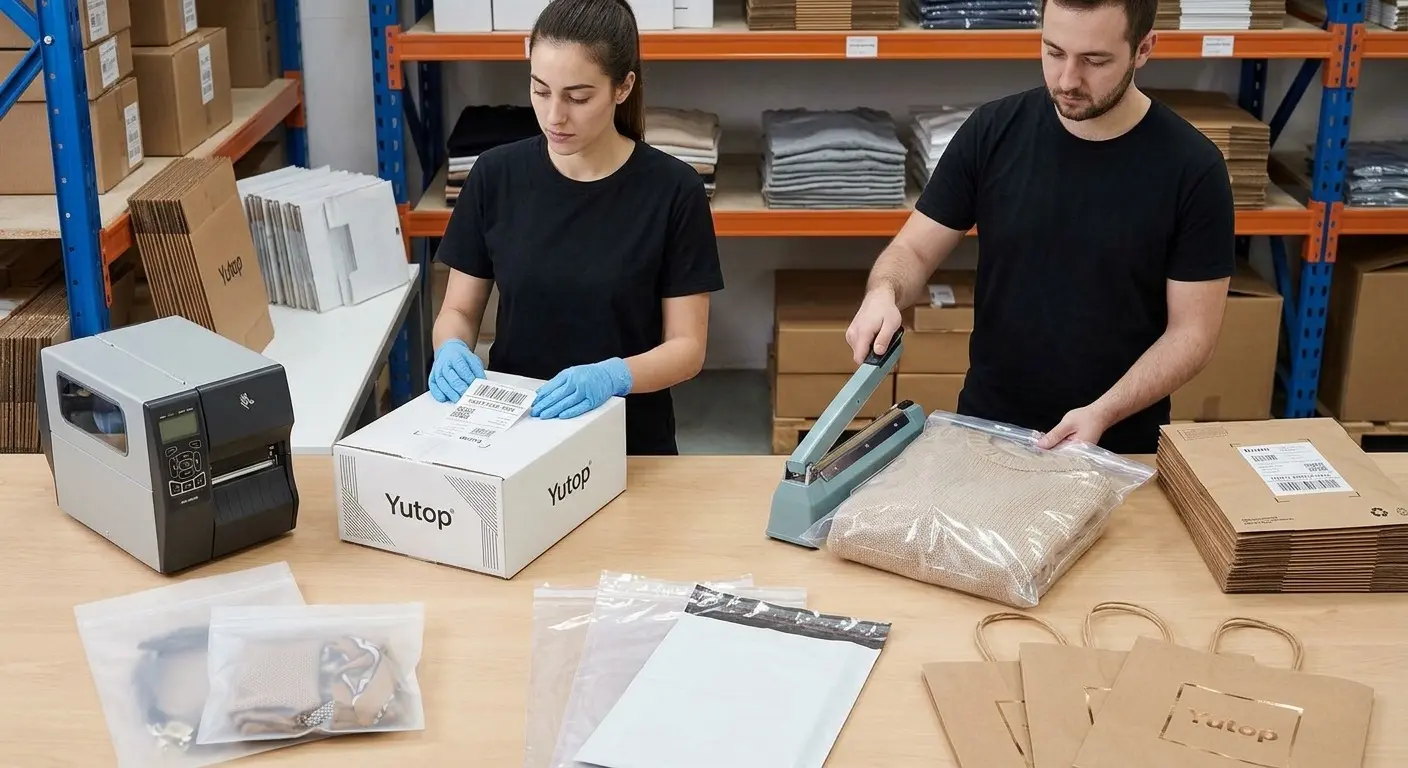
Our garment packaging solutions suit a wide range of B2B buyers:
• Apparel brand owners and private-label brands.
• Garment factories and OEM clothing manufacturers.
• Importers, distributors and wholesalers.
• Boutique chains and retail buyers.
• E-commerce sellers and exporters.
We welcome inquiries from buyers in North America, Europe, the Middle East, Asia-Pacific, South America and Africa.
Ready to move forward? Contact Yutop for product details, a quotation, customization or samples. Send your garment type, folded size, material preference, printing needs and estimated quantity to yutoppack@163.com, or request a quote through our How To Order page. Our team will reply with practical recommendations for your garment packaging project.
Garment Packaging Solution: Protect & Showcase Your Apparel Brand
Packaging is the first thing your customer touches. For apparel brands, it also has to survive factory floors, container ships and courier hubs. A well-planned garment packaging solution does both jobs: it keeps clothing clean, dry and neat, and it shows your brand from the moment a parcel arrives.
Yutop is a flexible packaging manufacturer in China with over 20 years of experience in custom processing. We make plastic garment bags, paper tote bags, self seal bags and vacuum bags for clothing brands, garment factories and wholesalers. This guide explains the main options, materials and printing methods. It also shows how to choose the right garment packaging solution before you send an inquiry.
What Is a Garment Packaging Solution?
A garment packaging solution is a complete packaging plan for clothing, not just a single bag. It covers bag type, material, size, printing and carton packing, matched to how your garments are made, shipped and sold.
A good plan answers four questions:
• What must the packaging protect against? Dust, moisture, creasing and handling damage.
• How will the garment be sold? On a retail shelf, in a boutique, online or in wholesale cartons.
• What should the buyer see? The garment, the logo, or both.
• What is the cost per piece at your order volume?
Different garments need different answers. A cotton T-shirt sold in bulk needs a simple, low-cost bag. A tailored jacket sold in a boutique needs a premium presentation. Your apparel packaging should reflect that difference.
Why Garment Packaging Matters for Apparel Brands
Clothing is easy to mark and hard to resell once it is damaged. Good garment packaging reduces those losses in three ways.• Protection. Bags keep out dust, moisture and dirt during storage and sea freight. A sealed pack also stops garments from picking up stains inside the carton.
• Presentation. Clear film lets buyers check color and style without opening the pack. Printed bags and paper totes carry your logo through every touchpoint.
• Efficiency. Right-sized packs reduce carton volume, speed up packing lines and lower freight cost per piece.
For importers and wholesalers, packaging also affects returns and shelf appeal. A torn or dirty pack lowers the perceived value of the garment inside, even when the garment itself is perfect.
Types of Garment Packaging We Offer for Clothing Brands
Yutop supplies four main types of garment packaging. Each one fits a different stage of the supply chain.• Plastic garment bags: clear or semi-transparent bags in custom sizes, with printed logos.
• Paper tote bags: carry bags in specialty paper for retail and boutique use.
• Self seal bags: adhesive-strip bags for fast closing in factories and e-commerce warehouses.
• Vacuum bags: airtight bags that compress bulky items such as down jackets.
We also make uniquely shaped bags for scarves and accessories, so the pack highlights the product’s design. The sections below explain each type.
Custom Plastic Garment Bags: Clear Protection for Every Style
Plastic garment bags are the most common choice for factory packing and retail display. Transparent or semi-transparent film shows the style and color at once, so buyers do not need to open the pack.Buyers usually ask about four points:
• Size. We make custom garment bags to match your folded garment dimensions and folding style. A snug fit looks neater and uses less film.
• Thickness and clarity. You can choose film thickness and transparency to balance visibility with protection.
• Printing. Logos, brand names and slogans can be printed on the bag for promotion.
• Closure. A self-adhesive strip is a common choice for apparel. Tell us if you need another closure style, and we will confirm what is possible.
Send us the folded length, width and thickness of your garment. Our team will recommend a bag size from that data.
Paper Tote Bags for Premium Apparel and Boutique Retail
Retail customers carry your brand out of the store. Paper tote bags turn that moment into marketing. They suit boutiques, flagship stores and higher-priced apparel.We offer specialty papers such as art paper and pearlized paper. You can add gold or silver stamping to highlight your logo. Bag size depends on how many items your customer usually buys and how thick they are. A bag for one scarf is very different from a bag for two folded sweaters.
Our Kraft Paper Bag range gives you a natural, eco-conscious look. Kraft paper is available from 80 to 200 gsm, in flat, gusseted or tote designs. Flexo printing, embossing and foil stamping are available for branding. An optional PE coating adds moisture resistance.
Self Seal Bags and Poly Mailers for E-Commerce Clothing Orders
Online orders need packaging that closes fast, stays closed and ships light. Our Self Seal Bag products use a pressure-sensitive adhesive strip. Your packers press the strip once, and no heat sealer or tape is needed. That saves time on busy packing lines.
Material options include:
• LDPE for light, flexible bags.
• HDPE for stiffer bags that hold heavier items.
• Composite films such as PE/PET for higher moisture and puncture resistance.
Films come clear, opaque or colored, in thicknesses from 20 to 100 microns. Offset and flexo printing carry your logo and product information. Self seal bags play the same role as poly mailers in many e-commerce workflows. If you need a mailer-style bag with specific features, send us your requirements and we will confirm what is possible.
Vacuum Bags for Compact Storage and Shipping of Bulky Garments
Winter jackets, quilts and knitwear take up a lot of carton space. Our Vacuum Bag products compress that bulk, so you can store more units per shelf and fit more per carton.They use multi-layer films such as PA/PE and PET/AL/PE, and they work with standard heat-seal vacuum sealers. The films resist punctures and tears during handling. You can order custom sizes and thicknesses from 30 to 150 microns, in clear film for easy checking or opaque film for light protection.
Our customization guide also lists vacuum-sealable bags for puffy items such as down jackets. Tell us the garment’s filling and packed size, and we will help you choose a suitable bag. For long-term storage, confirm the compression level with your garment supplier.
Garment Packaging Materials Compared: PE, PO, CPP, Kraft Paper and Biodegradable Options
The right material depends on what you sell and how you ship it. This table compares the main options for garment packaging.| Material / bag type | Key strengths | Typical garment use | Notes for buyers |
| PE film (LDPE / HDPE) | Flexible, clear, moisture and dust resistant, low cost | Everyday garment bags, self seal bags | LDPE is lighter and softer; HDPE is stiffer. |
| Composite film (PE/PET) | Higher puncture and moisture resistance | Heavier garments, premium packs | Confirm thickness and printing options. |
| Vacuum film (PA/PE, PET/AL/PE) | Airtight, puncture and tear resistant | Jackets, quilts, knitwear, bulk storage | Needs a vacuum sealer; opaque option blocks light. |
| Kraft paper (80–200 gsm) | Natural look, recyclable, printable, embossing and foil stamping | Retail tote bags, boutique bags | Optional PE coating adds moisture resistance. |
| Art paper / pearlized paper | Premium texture and finish | High-end apparel tote bags | Pair with gold or silver stamping for branding. |
PO (polyolefin) and CPP (cast polypropylene) films are also common in the apparel industry for high-clarity packs. Availability depends on the bag type, so ask our team when you send your inquiry.
If you need biodegradable or compostable plastic, tell us early. Kraft paper is a recyclable, biodegradable option on our product list, and recyclable material options are available for self seal bags. Share the rules of your target market, and we will discuss which materials can meet them.
Custom Printing Options: Logos, Slogans, Colors and Special Finishes
Custom printing turns a plain bag into a brand asset. Options depend on the bag type:• Plastic bags: logo, brand name, slogan, size marks and product information. Offset and flexo printing are available on our self seal bags.
• Paper bags: flexo printing, embossing, and gold or silver foil stamping.
• Special finishes: ask our team whether effects such as matte printing or spot UV suit your bag type.
Artwork Requirements
Most clients send finished artwork. We can make minor text changes, but we do not create or change graphics. Send print-ready files in vector format where possible, and mark your brand colors clearly. Approve the sample before mass production starts.Garment Packaging Solutions for T-Shirts, Suits, Dresses, Knitwear and Underwear
Every garment type has different packing needs. These are typical matches:• T-shirts and polos: clear plastic bags or self seal bags sized to the folded shirt. Printed size marks help warehouse teams. Cost per piece matters most here.
• Suits and jackets: larger clear bags for factory packing, or premium paper tote bags for retail. Give us the folded dimensions, including thickness.
• Dresses and delicate fabrics: smooth, clear film with a loose enough fit to avoid creases. Add a paper tote bag for gifting.
• Knitwear and winter wear: vacuum bags to cut volume, in thicker film for puncture resistance.
• Underwear and socks: small clear self seal bags with printed size and product information. They are easy to open and close during restocking.
• Scarves and accessories: uniquely shaped bags that show off the product.
How to Choose the Right Garment Packaging Solution for Your Brand
Follow these six steps to define your needs before you ask for a quotation.1. Define the sales channel. Retail, boutique, e-commerce and wholesale each need a different pack.
2. Measure the folded garment. Record length, width and thickness for each style.
3. Choose the material. Match film or paper to the protection you need and the image you want.
4. Plan the printing. Decide logo position, colors and any text or size marks.
5. Check your volume. Our product pages list a minimum order of 500 units for custom packaging. Confirm the exact quantity for your bag type.
6. Request samples. Approve a sample before mass production begins.
What to Ask a Garment Packaging Supplier
• Can you confirm material, size and thickness in writing?• Will you make a sample before mass production?
• What do you inspect during and after production?
• What is the minimum order quantity for my bag type?
• How do you handle repeat orders and batch changes?
OEM and ODM Garment Packaging: From Design to Delivery
Yutop supports OEM garment packaging for brands, factories and wholesalers. Our team recommends materials, sizes, bag styles and production methods for your product. Most clients bring finished artwork, because we do not design graphics from scratch. Our six-step process keeps each project clear:1. Needs communication. Share your product, market, budget and packaging goals.
2. Solution design. We recommend materials, dimensions, bag styles and production techniques.
3. Sample production. We make samples to the confirmed specification for your review.
4. Mass production. Production starts after you approve the sample.
5. Quality inspection and delivery. We inspect the order and arrange delivery.
6. After-sales service. We answer questions and handle batch adjustments for repeat orders.
Quality Control
We run multi-round inspections during and after production. The checks cover material strength, print clarity and seal integrity. These three points decide whether a bag survives transport and looks right on arrival.Eco-Friendly Garment Packaging for Sustainable Fashion Brands
More buyers now ask for eco-friendly garment packaging. You can reduce environmental impact in several practical ways:• Use kraft paper bags and totes, which are recyclable and biodegradable.
• Choose recyclable plastic options where available.
• Size each bag to the garment, so you use less material.
• Select reusable self seal bags for customers who keep and reuse them.
We do not make environmental claims without evidence. Tell us the standards your market requires, and we will say which materials we can offer.
Who We Serve: Apparel Brands, Garment Factories, Wholesalers and Exporters
Our garment packaging solutions suit a wide range of B2B buyers:
• Apparel brand owners and private-label brands.
• Garment factories and OEM clothing manufacturers.
• Importers, distributors and wholesalers.
• Boutique chains and retail buyers.
• E-commerce sellers and exporters.
We welcome inquiries from buyers in North America, Europe, the Middle East, Asia-Pacific, South America and Africa.
Garment Packaging Solution FAQs
1. What is a garment packaging solution?
It is a complete packaging plan for clothing. It includes the bag type, material, size, printing and carton packing, chosen to protect garments and support your brand.2. What is the minimum order quantity for custom garment bags?
Our product pages list a minimum order of 500 units for custom packaging. The final quantity depends on bag type, size and printing, so send your specification for confirmation.3. Can you print my logo on garment bags?
Yes. We print logos, brand names and slogans on plastic and paper bags. Please send finished, print-ready artwork. We can adjust minor text but do not create or change graphics.4. Do you make samples before mass production?
Yes. Sample production is part of our process, and mass production starts after you approve the sample. Ask our team about sample timing and cost for your project.5. Which bag works best for e-commerce clothing orders?
Self seal bags are a practical choice. They close with an adhesive strip, need no heat sealer and ship light. Choose LDPE for light garments or a composite film for extra puncture and moisture resistance.6. Can you supply eco-friendly garment packaging?
Kraft paper bags are recyclable and biodegradable, and recyclable material options are available for self seal bags. Tell us your market’s requirements so we can discuss suitable materials.Conclusion
A strong garment packaging solution protects your clothing, supports your brand and keeps costs under control. The right choice depends on your garment type, sales channel and order volume. Start with the folded garment size, choose a material that fits your needs, and approve a sample before mass production.Ready to move forward? Contact Yutop for product details, a quotation, customization or samples. Send your garment type, folded size, material preference, printing needs and estimated quantity to yutoppack@163.com, or request a quote through our How To Order page. Our team will reply with practical recommendations for your garment packaging project.