< Back
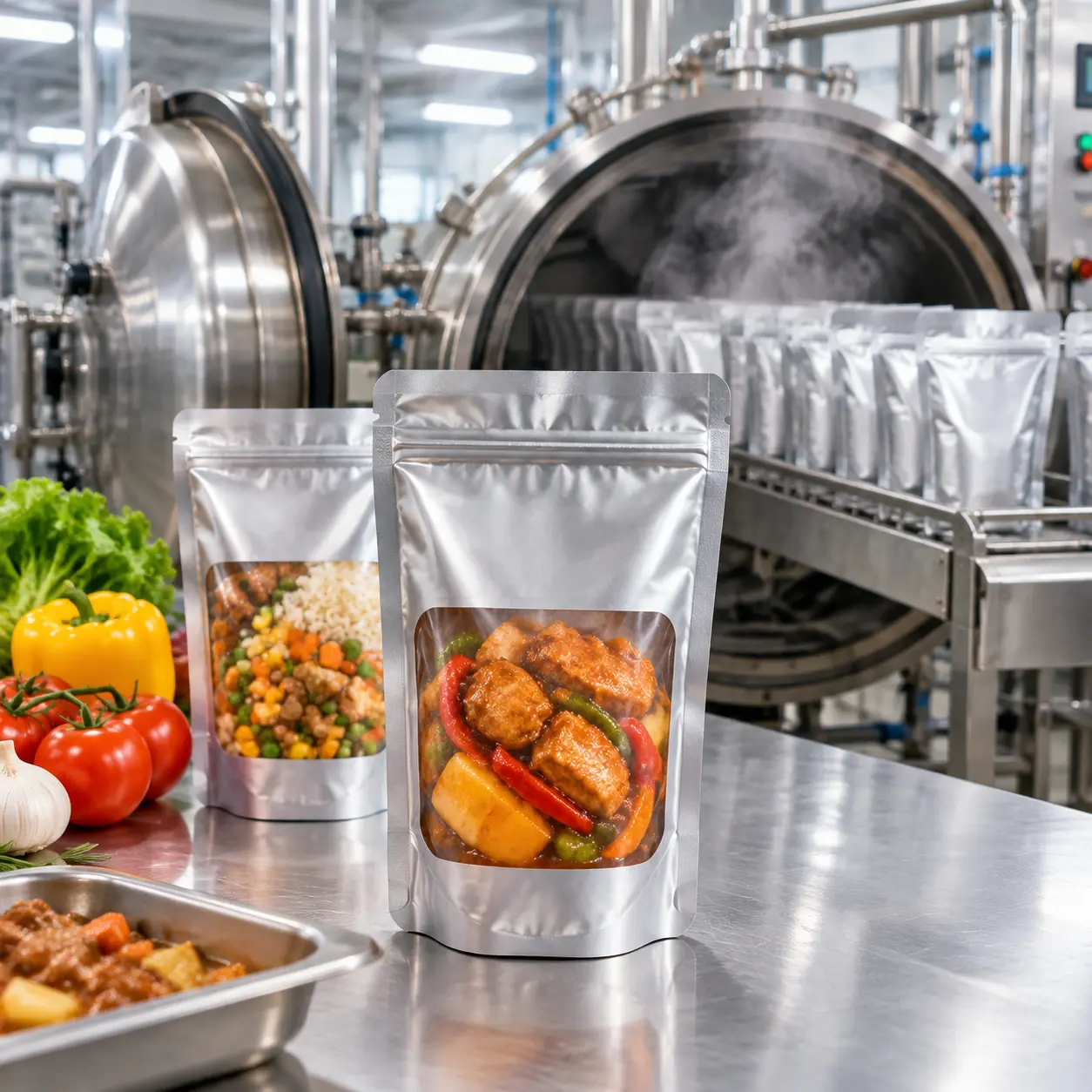
This guide is written for international buyers — importers, OEM/ODM brand owners, distributors, and procurement managers — who are comparing suppliers and need to understand what actually separates a reliable steaming heated packaging bag from one that fails during retort processing. We'll cover the materials, the temperature ratings, customization options, quality checkpoints, and the questions buyers ask most before placing a first order.
Yutop manufactures steaming heated packaging bags in China, working with food processors and brand owners across North America, Europe, the Middle East, Asia-Pacific, South America, and Africa.
Because the sterilization happens after sealing, the pouch has to do two jobs at once: survive the heat and pressure of the retort chamber, and keep the seal completely airtight afterward. That combination is what separates a steaming heated packaging bag from ordinary food packaging film.
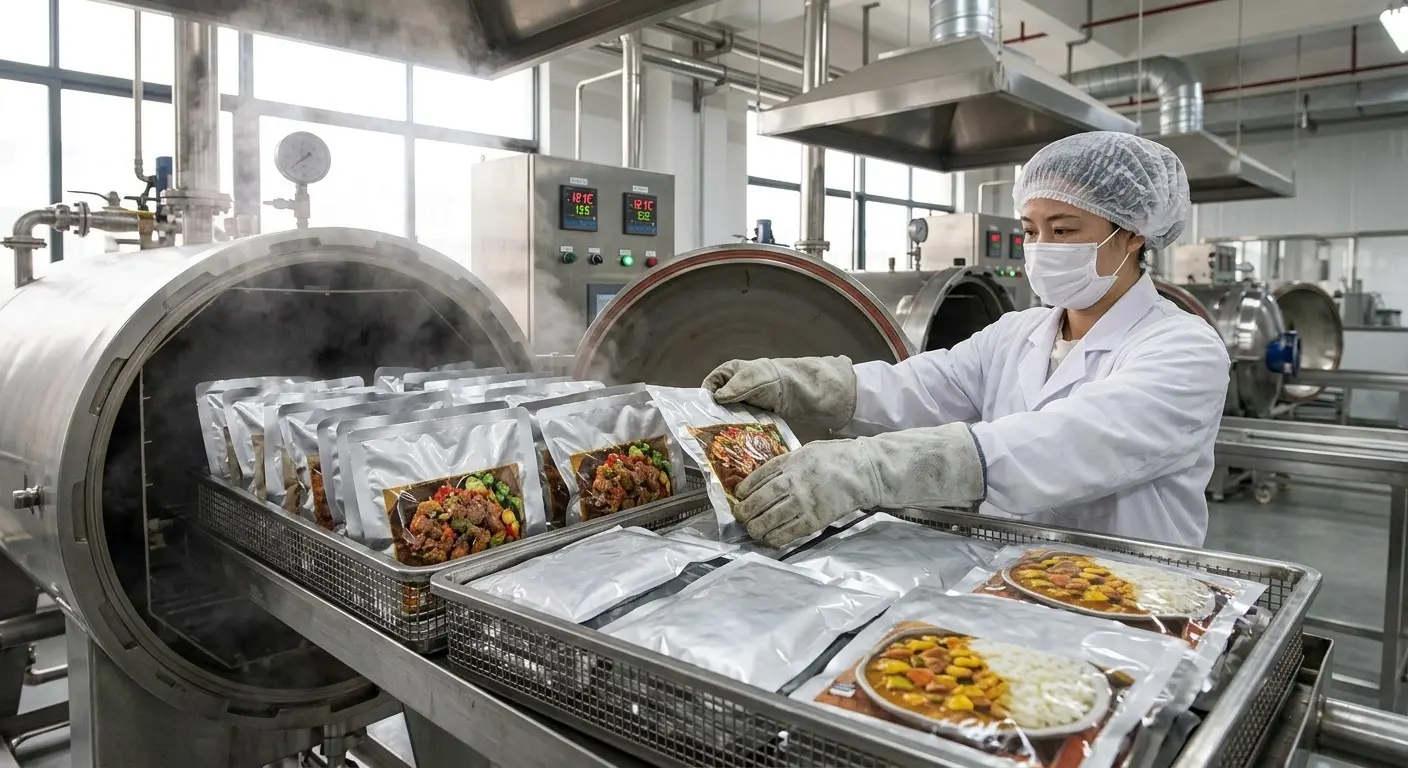
• Standard retort — around 121°C, typically used for most shelf-stable ready meals and meat products.
• High-temperature short-time (HTST) processing — up to 135°C, used when processors want shorter cycle times.
A properly engineered steaming heated packaging bag holds its shape and seal strength across this full range. If the film or seal weakens even slightly at peak temperature, the pouch can bulge, leak, or fail post-processing — which means a rejected batch. This is why temperature rating isn't a marketing spec; it's a production requirement buyers should confirm with test data or a sample run before committing to volume.
This PET/AL/PA/RCPP structure is the standard configuration for opaque, high-barrier retort pouches. For lighter or smaller-format products, a transparent structure (without the aluminum layer) is also possible, though it generally suits contents under 300g due to slower heat penetration during sterilization.
• Flat pouches — for smaller, single-serve portions
• Gusseted pouches — for bulkier or irregularly shaped contents
• Stand-up pouches — for retail shelf display and consumer convenience
Sizing generally ranges from small, portioned meals (around 200g) up to bulk food-service packaging (up to 5kg or more), with custom printing available for branding, nutrition labeling, and tamper-evident features like tear notches.
• Ready-to-eat meals and rice or grain products
• Processed and cooked meat products
• Seafood requiring shelf stability without refrigeration
• Pet food, particularly wet or semi-moist formats
• Sauces, soups, and condiments packed for extended shelf life
If your business also sources general food packaging bag formats beyond retort applications, it's worth reviewing a supplier's full Food Packaging Solution range so materials and lead times can be coordinated across your full product line.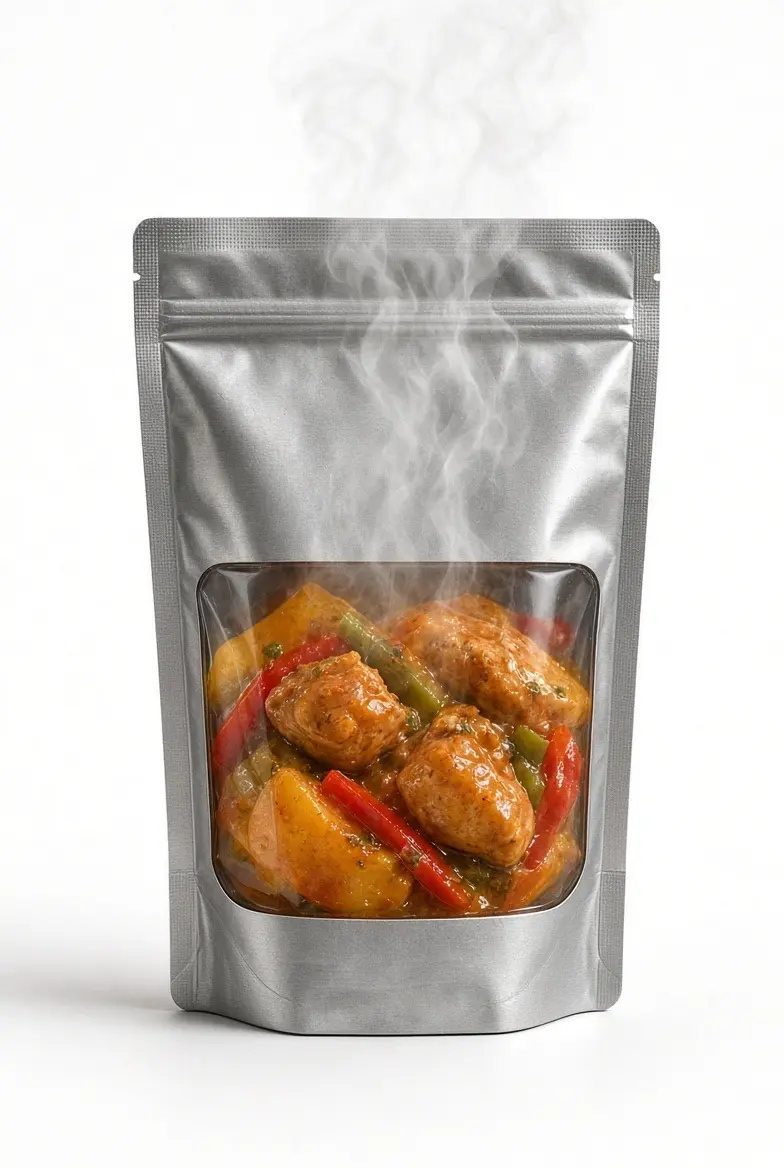
Yes. "Steaming heated packaging bag" and "retort pouch" describe the same category of product — a flexible, heat- and pressure-resistant pouch used for retort or steam sterilization of food. Buyers researching suppliers may see either term used, sometimes interchangeably, depending on the manufacturer or region.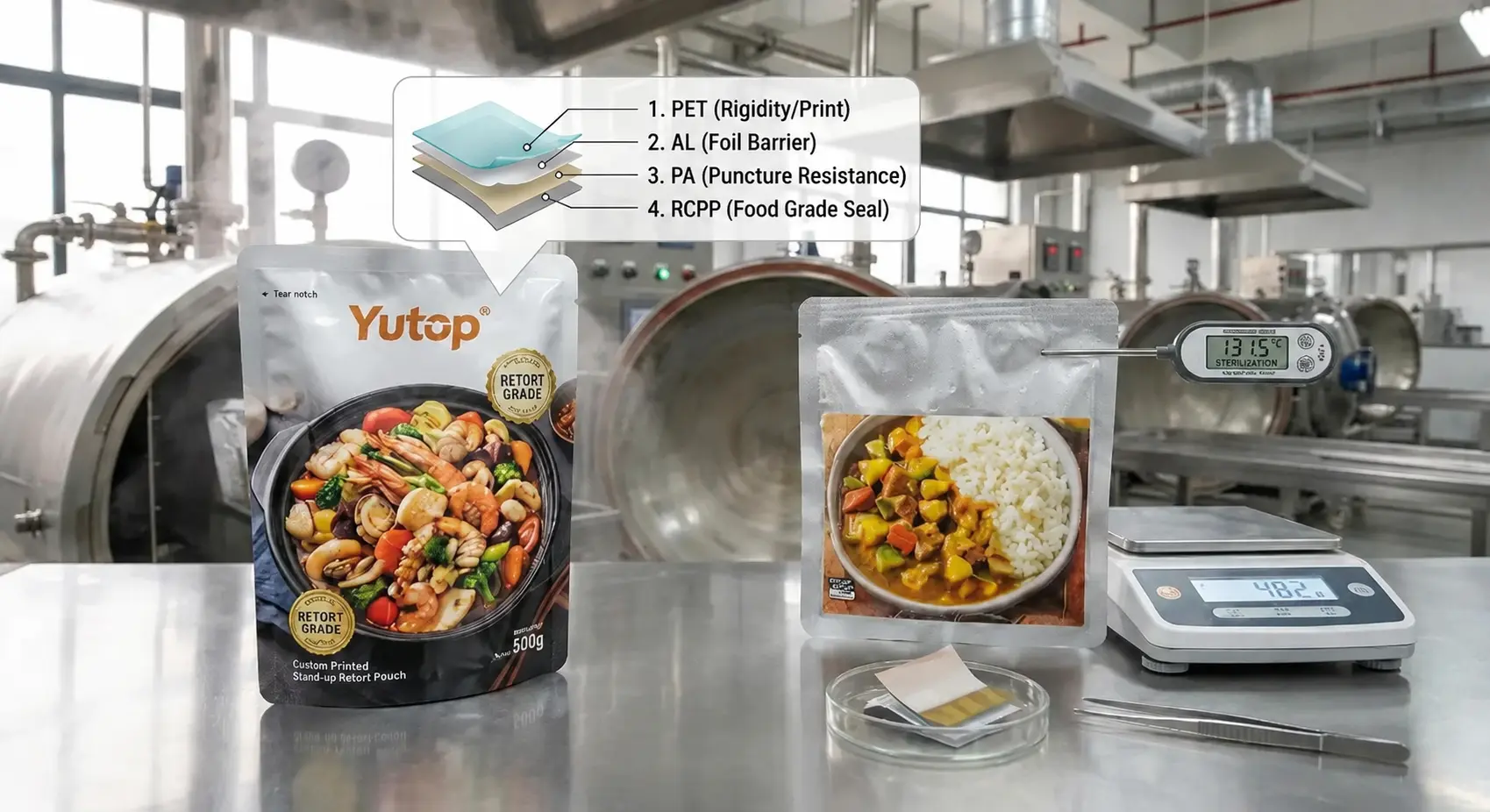
Compared to rigid cans or glass jars, flexible retort pouches offer several practical advantages for food processors and brand owners:
• Lighter weight, which reduces shipping and freight costs
• Faster, more even heat penetration during sterilization
• Less storage and shelf space required
• Easier and safer for end consumers to open
• More printable surface area for branding and labeling
These advantages are one reason more food processors are shifting portions of their production from rigid packaging to flexible retort formats, particularly for export-oriented products where shipping weight and volume affect cost.
For buyers evaluating a new supplier, Yutop supports sample requests, custom sizing and printing, and technical consultation on material selection for specific retort or steam sterilization requirements. Full details on placing a first order are available on the How To Order page.
It's used to package food that will be sterilized after sealing, through retort or steam processing — common for ready meals, meat, seafood, and pet food that need a long shelf life without refrigeration.
2. What temperature does a retort pouch need to withstand?
Typically 121°C for standard retort processing, up to 135°C for high-temperature short-time processing, depending on the product and sterilization method.
3. Are steaming heated packaging bags food-safe?
Yes, when manufactured to recognized food-contact standards such as China's GB standards, with FDA or regional equivalents available depending on the export market.
4. Can I get custom sizes and printing on my retort pouches?
Yes. Sizes, shapes (flat, gusseted, or stand-up), and printed branding or labeling can be customized based on your product and order volume.
5. What is the minimum order quantity for custom steaming heated packaging bags?
MOQs vary by size, material structure, and printing requirements. It's best to confirm current MOQ and lead time directly with the supplier for your specific specification.
6. How do I know if a supplier's retort pouches are reliable?
Ask for test reports on seal strength and temperature resistance, request physical samples before committing to a production run, and confirm food-contact compliance documentation for your target export market.
If you're evaluating suppliers for retort pouches or other composite packaging formats, Yutop can provide product specifications, samples, and a quotation based on your fill weight, sterilization temperature, and target market requirements. Contact Yutop through the Contact Us page to discuss your project and request a sample.
Steaming Heated Packaging Bag (Retort Pouch) – 121-135°C Food Grade | Yutop Packaging
Introduction
If you import or distribute ready meals, processed meat, seafood, or pet food, you already know that packaging failure during sterilization is not an option. A Steaming Heated Packaging Bag — also known in the industry as a retort pouch — is built specifically to survive that process: high-pressure steam at 121°C to 135°C, without leaking, deforming, or losing its seal.This guide is written for international buyers — importers, OEM/ODM brand owners, distributors, and procurement managers — who are comparing suppliers and need to understand what actually separates a reliable steaming heated packaging bag from one that fails during retort processing. We'll cover the materials, the temperature ratings, customization options, quality checkpoints, and the questions buyers ask most before placing a first order.
Yutop manufactures steaming heated packaging bags in China, working with food processors and brand owners across North America, Europe, the Middle East, Asia-Pacific, South America, and Africa.
What Is a Steaming Heated Packaging Bag (Retort Pouch)?
A steaming heated packaging bag is a flexible, multi-layer pouch designed to hold food while it's sterilized inside the bag itself, using a retort (industrial autoclave) or a high-temperature steam process. Instead of cooking food and then packaging it, the food is sealed inside the pouch first, then heated under pressure to kill bacteria and extend shelf life — similar in principle to canning, but in a flexible format.Because the sterilization happens after sealing, the pouch has to do two jobs at once: survive the heat and pressure of the retort chamber, and keep the seal completely airtight afterward. That combination is what separates a steaming heated packaging bag from ordinary food packaging film.
High-Temperature Resistance: 121°C–135°C Retort & Steam Processing
Retort processing runs at two general levels:• Standard retort — around 121°C, typically used for most shelf-stable ready meals and meat products.
• High-temperature short-time (HTST) processing — up to 135°C, used when processors want shorter cycle times.
A properly engineered steaming heated packaging bag holds its shape and seal strength across this full range. If the film or seal weakens even slightly at peak temperature, the pouch can bulge, leak, or fail post-processing — which means a rejected batch. This is why temperature rating isn't a marketing spec; it's a production requirement buyers should confirm with test data or a sample run before committing to volume.
Multi-Layer Barrier Structure: PET/AL/PA/RCPP Explained
Most retort-grade pouches use a laminate of four material layers, and each one does a specific job:| Layer | Material | Function |
| Outer layer | PET (Polyester) | Rigidity, print quality, heat resistance |
| Barrier layer | AL (Aluminum foil) | Blocks light, oxygen, and moisture completely |
| Puncture layer | PA (Nylon) | Adds strength and resistance to punctures during handling |
| Seal layer | RCPP ( Retort Cast Polyolefin) | Creates a strong, consistent heat seal |
Heat-Seal Integrity for Industrial Retort Sterilization
The seal is usually the first point of failure in a poorly made pouch. During retort processing, pressure inside the autoclave pushes against the pouch from all sides, and the seal has to hold under that pressure while also staying flexible enough not to crack. A consistent, validated seal strength — checked across every production batch, not just samples — is one of the most important quality indicators a buyer should ask a supplier about directly.Food-Grade Compliance & Safety Standards (GB / FDA)
Any pouch coming into direct contact with food for retort processing needs to meet recognized food-safety standards. In China, that means compliance with GB (Guobiao) national food-contact material standards. Buyers exporting to the US, EU, or other regulated markets should also confirm FDA or equivalent regional compliance documentation before finalizing an order, and request the relevant test reports as part of due diligence.Customizable Sizes, Shapes & Pouch Styles
Steaming heated packaging bags are not one-size-fits-all. Depending on the product and portion size, buyers typically choose between:• Flat pouches — for smaller, single-serve portions
• Gusseted pouches — for bulkier or irregularly shaped contents
• Stand-up pouches — for retail shelf display and consumer convenience
Sizing generally ranges from small, portioned meals (around 200g) up to bulk food-service packaging (up to 5kg or more), with custom printing available for branding, nutrition labeling, and tamper-evident features like tear notches.
Applications: Ready Meals, Meat, Seafood & Pet Food Packaging
Steaming heated packaging bags are used across a wide range of food categories, including:• Ready-to-eat meals and rice or grain products
• Processed and cooked meat products
• Seafood requiring shelf stability without refrigeration
• Pet food, particularly wet or semi-moist formats
• Sauces, soups, and condiments packed for extended shelf life
If your business also sources general food packaging bag formats beyond retort applications, it's worth reviewing a supplier's full Food Packaging Solution range so materials and lead times can be coordinated across your full product line.
Shelf Life: How Retort Pouches Extend Product Freshness
Because the retort process sterilizes food inside a sealed, oxygen- and moisture-proof barrier, properly processed steaming heated packaging bags typically support a shelf life of 6 to 18 months at ambient temperature, without refrigeration. Actual shelf life depends on the food type, fill weight, and processing parameters, so it's worth confirming expected shelf life with your supplier based on your specific product formulation rather than relying on a general figure.What's the Difference Between a Steaming Heated Packaging Bag and a Regular Pouch?
A regular flexible pouch is built mainly for containment and moisture protection at room temperature or under light refrigeration. A steaming heated packaging bag is built to survive sustained high heat and pressure without losing seal strength or barrier integrity — a regular pouch will typically deform, weaken, or fail if put through a retort cycle.Is a Steaming Heated Packaging Bag the Same as a Retort Pouch?
Yes. "Steaming heated packaging bag" and "retort pouch" describe the same category of product — a flexible, heat- and pressure-resistant pouch used for retort or steam sterilization of food. Buyers researching suppliers may see either term used, sometimes interchangeably, depending on the manufacturer or region.
Can Steaming Heated Packaging Bags Be Microwaved?
Many retort pouches are microwave-safe after processing, since the multi-layer laminate is designed to withstand additional heat exposure during reheating. However, microwave compatibility should be confirmed for the specific laminate structure being used, since transparent and foil-based (opaque) pouches can behave differently under microwave conditions.How Long Do Retort Pouches Last on the Shelf?
Properly sealed and processed retort pouches generally offer a shelf life of 6 to 18 months at ambient storage temperature. This range depends on the food product, fill weight, and the specific barrier structure used, so buyers should validate expected shelf life through supplier testing before scaling to full production volume.What Temperature Can a Retort Pouch Withstand?
Standard retort pouches are rated for around 121°C, while high-temperature short-time (HTST) processing can reach up to 135°C. The exact rating depends on the laminate structure and seal design, so buyers should confirm the temperature specification in writing before running a full production batch.Why Choose Steaming Heated Packaging Bags Over Cans or Jars?
Compared to rigid cans or glass jars, flexible retort pouches offer several practical advantages for food processors and brand owners:
• Lighter weight, which reduces shipping and freight costs
• Faster, more even heat penetration during sterilization
• Less storage and shelf space required
• Easier and safer for end consumers to open
• More printable surface area for branding and labeling
These advantages are one reason more food processors are shifting portions of their production from rigid packaging to flexible retort formats, particularly for export-oriented products where shipping weight and volume affect cost.
Why Choose Yutop as Your Steaming Heated Packaging Bag Manufacturer
Yutop has over 20 years of experience in custom flexible packaging processing, working with food, pet food, and daily necessity brands across international markets. Alongside steaming heated packaging bags, Yutop also produces related composite packaging formats — including Pasteurized Packaging Bags for lower-temperature sterilization needs and Eight Side Seal Bags for premium stand-up retail packaging — so buyers can source multiple packaging formats from a single supplier rather than managing several vendors.For buyers evaluating a new supplier, Yutop supports sample requests, custom sizing and printing, and technical consultation on material selection for specific retort or steam sterilization requirements. Full details on placing a first order are available on the How To Order page.
Quick Specification Reference
| Specification | Typical Range |
| Temperature resistance | 121°C – 135°C |
| Common laminate structure | PET / AL / PA / PE |
| Shelf life (ambient) | 6 – 18 months |
| Fill weight range | 200g – 5kg |
| Pouch styles | Flat, gusseted, stand-up |
| Compliance | GB food-contact standards; FDA/regional compliance available on request |
Frequently Asked Questions
1. What is a steaming heated packaging bag used for?It's used to package food that will be sterilized after sealing, through retort or steam processing — common for ready meals, meat, seafood, and pet food that need a long shelf life without refrigeration.
2. What temperature does a retort pouch need to withstand?
Typically 121°C for standard retort processing, up to 135°C for high-temperature short-time processing, depending on the product and sterilization method.
3. Are steaming heated packaging bags food-safe?
Yes, when manufactured to recognized food-contact standards such as China's GB standards, with FDA or regional equivalents available depending on the export market.
4. Can I get custom sizes and printing on my retort pouches?
Yes. Sizes, shapes (flat, gusseted, or stand-up), and printed branding or labeling can be customized based on your product and order volume.
5. What is the minimum order quantity for custom steaming heated packaging bags?
MOQs vary by size, material structure, and printing requirements. It's best to confirm current MOQ and lead time directly with the supplier for your specific specification.
6. How do I know if a supplier's retort pouches are reliable?
Ask for test reports on seal strength and temperature resistance, request physical samples before committing to a production run, and confirm food-contact compliance documentation for your target export market.
Conclusion
Choosing the right steaming heated packaging bag supplier comes down to a few non-negotiables: verified temperature resistance, a barrier structure suited to your product, consistent seal quality, and documented food-safety compliance for your target market. Getting these details confirmed upfront — through test data and physical samples — saves significant cost and risk compared to discovering a problem after a production run.If you're evaluating suppliers for retort pouches or other composite packaging formats, Yutop can provide product specifications, samples, and a quotation based on your fill weight, sterilization temperature, and target market requirements. Contact Yutop through the Contact Us page to discuss your project and request a sample.