< Back
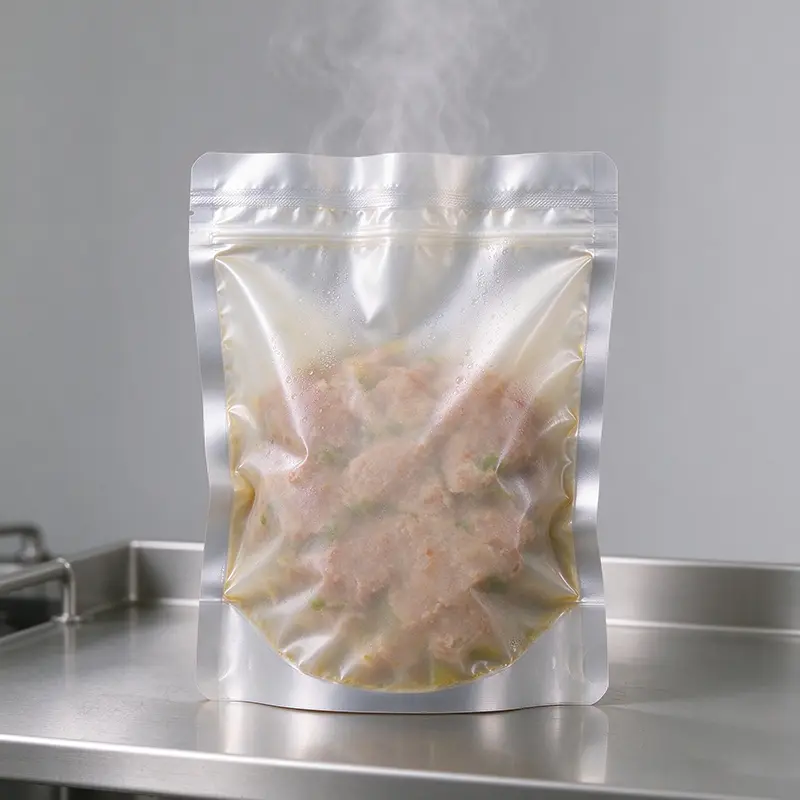
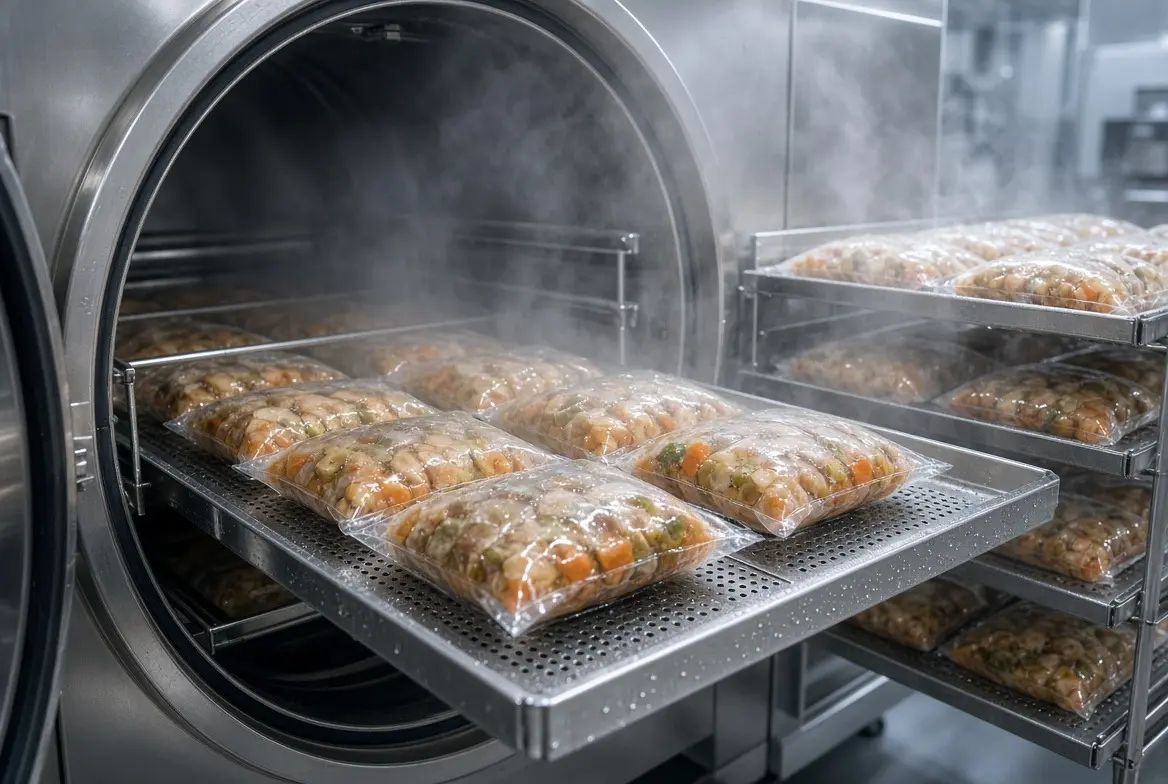
A steaming heated packaging bag is a multi-layer laminated pouch designed for steam and retort sterilization. The factory fills and seals the food inside the bag. The sealed bag then goes into a retort or steam sterilizer, where heat kills microorganisms. After processing, the food can stay safe at room temperature for months.
Buyers use several names for this product: retort pouch, retort bag, high-temperature sterilization bag, and steam-resistant food bag. The names differ by market, but the requirement is the same. The bag must not leak, delaminate, or burst during heat processing.
• Structure: PET / AL / PA / RCPP laminate
• Bag formats: flat, gusseted, and stand-up
• Sizes: from about 200 g portions to 5 kg bulk packs
• Printing: heat-stable flexo or gravure printing, with optional tear notches
• Food contact: meets GB standards for direct contact with processed foods
• Custom order MOQ: 500 units
A steaming heated packaging bag supports this model. The food is filled and sealed first, then sterilized inside the bag. After sterilization, the sealed pouch blocks oxygen, moisture, and microbes, so the food stays protected until the consumer opens it.
Typical products packed this way include:
• Ready-to-eat meals, curries, and rice dishes
• Cooked meat products
• Seafood products
• Soups, sauces, and other wet foods
• Wet pet food
• Lower weight. A pouch weighs far less than a can or jar, so freight cost per unit drops.
• Less storage space. Flat pouches pack tightly into cartons and pallets.
• Faster heat transfer. A thin pouch heats through faster than a thick can, which can shorten the sterilization cycle. Your food safety team still sets the final process.
• More print area. A pouch gives you a large surface for branding and nutrition labels.
• Easy opening. Tear notches let consumers open the bag without tools.
Pouches do not suit every product. Foods with sharp bones or hard edges may need extra puncture protection. Tell us about your filling when you request a sample.
• 121°C standard retort: the common setting for ready meals, meat products, and wet foods
• 135°C high-temperature short-time processing: used when the process needs higher heat for a shorter time
The bag keeps its shape and does not leak or deform at these temperatures. The correct temperature and time for your food depend on its acidity, density, and fill weight. Your food safety team or process authority should set these values. Share them with us so we can match the bag structure to your process.
• Retort type: steam, water spray, water immersion, or steam-air
• Whether overpressure is used during heating and cooling
• Product type, fill weight, and fill temperature
• Target shelf life
If your product uses gentler heat, such as pasteurization for milk or juice, see our Pasteurized Packaging Bag. It suits lower-temperature processing.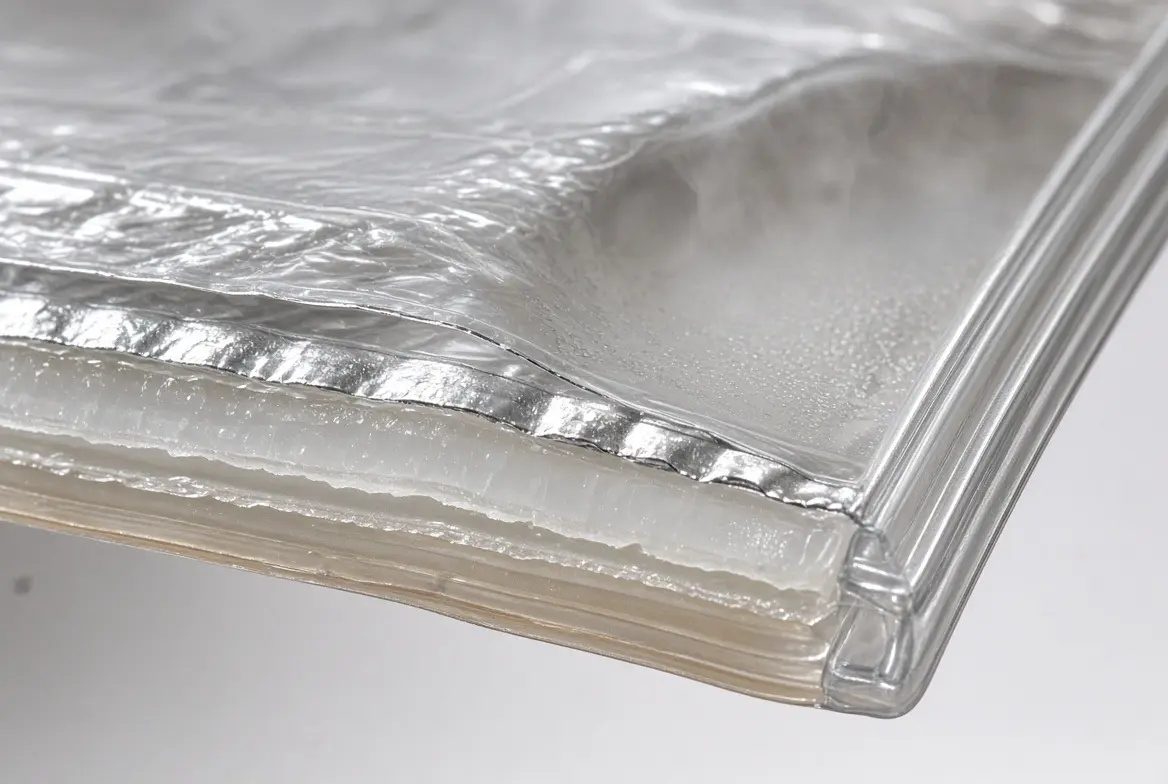
The laminate structure decides how the bag performs. Our steaming heated packaging bag uses four layers, and each layer has a clear job.
The layers are bonded with adhesives that must also tolerate retort heat. Ask your supplier to confirm that the adhesive and film grades suit your cycle.
One note for consumer products: foil pouches are not microwave-safe. If end users will heat the food, print clear opening and heating instructions on the bag. You can also ask our team whether a transparent or foil-free structure fits your temperature and shelf-life target.
Each factor affects food quality in a different way:
• Oxygen causes fat oxidation, color change, and flavor loss.
• Moisture exchange changes texture and taste.
• Light speeds up vitamin loss and color fading.
A high-barrier laminate slows all three. Shelf life depends on barrier quality, seal integrity, and the food itself. Yutop’s pouches support a shelf life of 6–18 months for processed foods. Your actual result depends on your recipe, filling process, and storage conditions, so run your own shelf-life test.
A good retort seal needs the right seal width, temperature, pressure, and dwell time. Yutop focuses on consistent heat-seal quality. Our inspections cover material strength, print clarity, and seal integrity during and after production.
Ask any supplier for these checks before you place a bulk order:
• Seal strength test
• Burst or pressure test
• Leak test after retort
• Delamination check after retort
• Visual check for wrinkles, bubbles, and contamination in the seal area
Always run a trial with your own product and your own retort cycle. Lab data helps, but your production line is the real test.
• Ready meals: rice dishes, curries, noodles, and prepared entrees
• Meat products: cooked chicken, beef, and pork products
• Seafood: cooked fish and shellfish products
• Soups, sauces, and wet foods: liquid and semi-liquid recipes
• Pet food: wet food, gravy-style recipes, and treats
Pet food brands often need strong seals, puncture resistance, and easy-tear features for owners. See our Pet Food Packaging Solution for more on pet food formats.
Distributors and importers can also use this product for customers who pack ready meals or processed protein for retail, foodservice, or export.
Before you import, check these points:
• Shelf life: confirm the 6–18 month range fits your product and sales cycle.
• Food-contact rules: each market sets its own requirements, such as FDA rules in the USA and food-contact regulations in the EU. Ask Yutop which test reports are available and confirm they match your market.
• Labeling: check the required label content for your country.
• Cartons and pallets: discuss packing method and carton size with our sales team during quotation.
• Shipping terms: confirm the trade terms, port, and delivery schedule in writing.
These checks take little time. They also help your quality team and customs broker approve the product smoothly.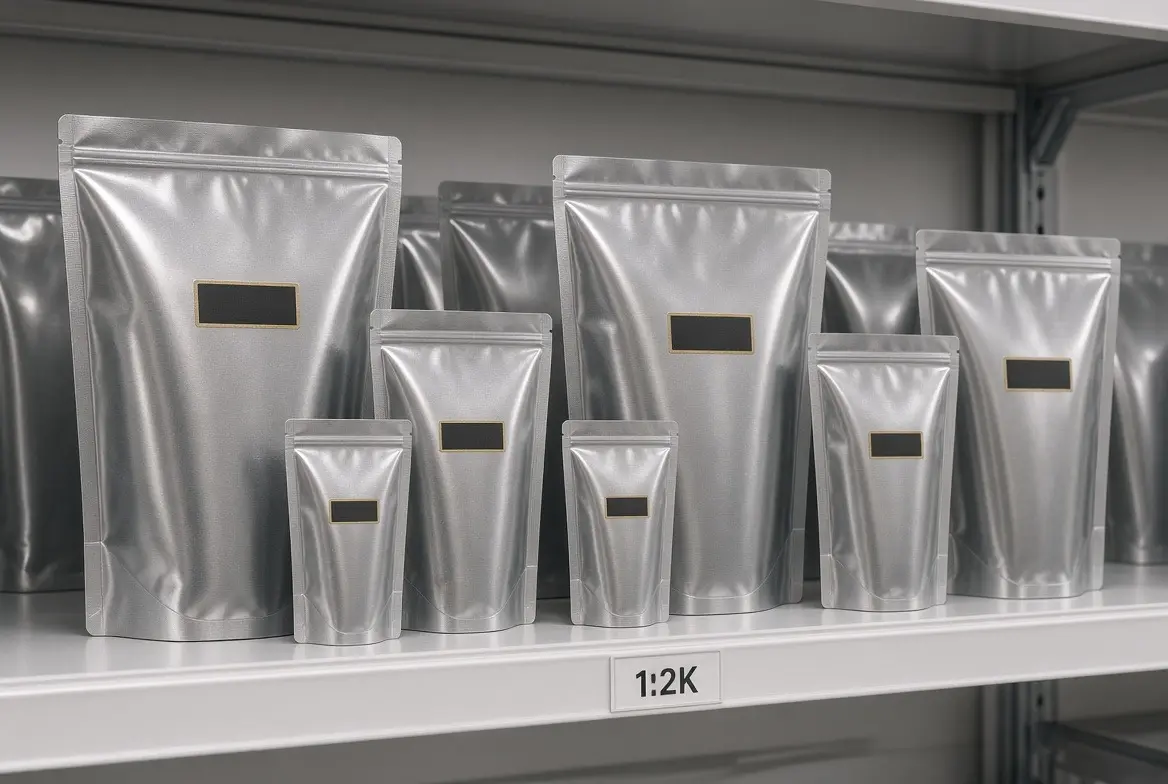
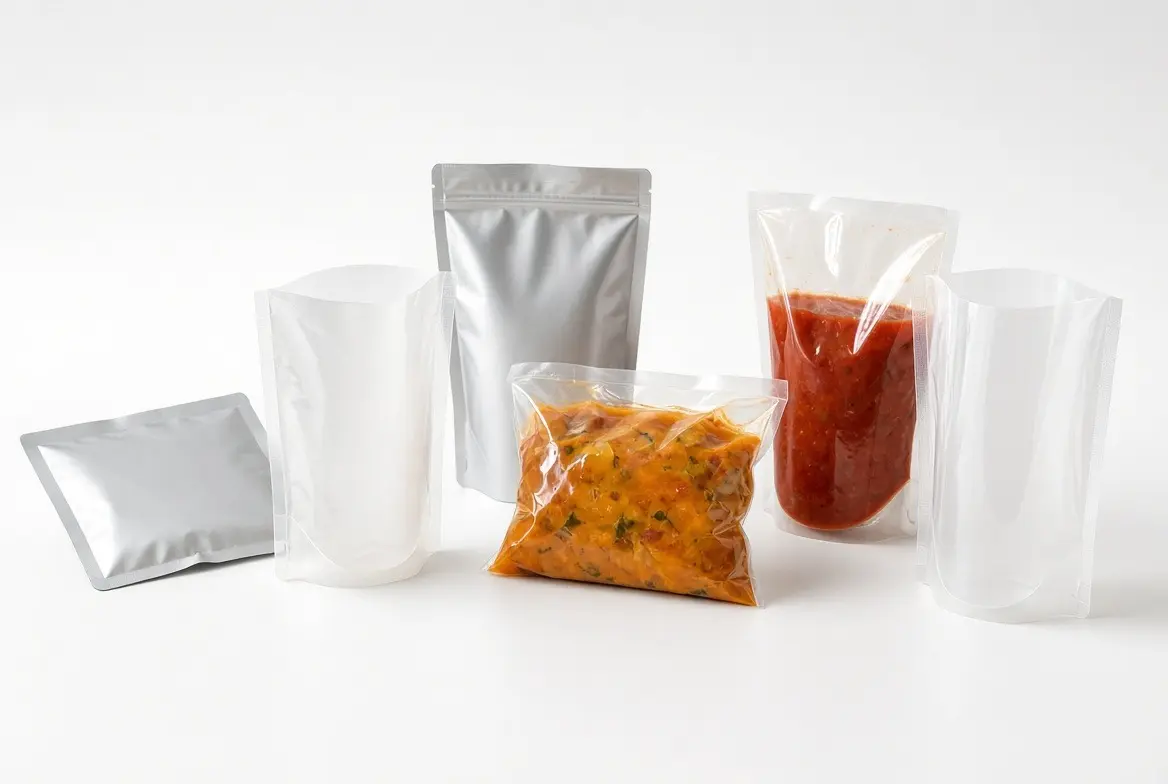
Yutop supplies three main bag formats for this product:
• Flat pouches: simple and cost-effective, and a good fit for portioned meals
• Gusseted pouches: more fill capacity with a flatter profile
• Stand-up pouches: strong shelf display and easy handling. For general stand-up bag options, see our Standup Pouch page.
Sizes range from small portions near 200 g to bulk packs of 5 kg. Tell us your fill weight, product density, and headspace needs. Our team will recommend the bag width, length, and gusset depth.
Available options include:
• Brand colors and logo printing
• Nutrition labels and barcodes
• Tear notches for easy opening
• Tamper-evident features
A note on artwork: most Yutop clients send finished designs. We do not offer full design services or graphic changes, but we can make minor text revisions. Send final artwork files and your bag size when you request a quotation.
Our ordering process has six steps:
1. Needs communication
2. Solution and material recommendation
3. Sample production
4. Mass production
5. Quality inspection and delivery
6. After-sales service
Read the full How To Order guide for details on each step.
• Retort temperature, time, and retort type
• Bag type and size
• Printing colors and final artwork
• Order quantity and destination port
Use this checklist when you evaluate any retort pouch supplier, including us:
• Ask for material information and available test reports.
• Request current certificates and confirm the issue date and scope.
• Order samples and run your own retort and shelf-life trials.
• Confirm the laminate structure in writing.
• Check seal quality, print quality, and delamination after retort.
• Ask how the supplier inspects each batch.
• Notice how fast and clearly the supplier answers technical questions.
A reliable supplier answers these questions directly. If a supplier avoids them, treat that as a warning sign.
A normal bag costs less, but it cannot protect sterilized food. The wrong bag risks leaks, spoilage, and returns. The extra cost of a proper retort pouch is small compared with a failed production batch.
Yutop is a retort pouch manufacturer with over 20 years of custom processing experience. If you are comparing suppliers, send us your product type, fill weight, sterilization conditions, and target quantity. Our team can reply with a suitable structure, a quotation, and sample arrangements.
For product details, customization, or technical support, email yutoppack@163.com or use the contact form on our website.
Steaming Heated Packaging Bag | Retort Pouch Manufacturer – Yutop
Food brands that sell shelf-stable meals need packaging that survives sterilization. A steaming heated packaging bag, also called a retort pouch, is made for that job. It handles steam and pressure at 121–135°C, keeps its seals tight, and protects food long after processing.
Yutop is a flexible packaging manufacturer in China with over 20 years of custom processing experience. This guide explains how our steaming heated packaging bag is built, where buyers use it, what you can customize, and what to check before you send an inquiry. Importers, distributors, brand owners, and factory purchasing teams can use it as a practical checklist.
What Is a Steaming Heated Packaging Bag (Retort Pouch)?
A steaming heated packaging bag is a multi-layer laminated pouch designed for steam and retort sterilization. The factory fills and seals the food inside the bag. The sealed bag then goes into a retort or steam sterilizer, where heat kills microorganisms. After processing, the food can stay safe at room temperature for months.
Buyers use several names for this product: retort pouch, retort bag, high-temperature sterilization bag, and steam-resistant food bag. The names differ by market, but the requirement is the same. The bag must not leak, delaminate, or burst during heat processing.
Quick product facts
• Heat resistance: 121°C standard retort, up to 135°C high-temperature processing• Structure: PET / AL / PA / RCPP laminate
• Bag formats: flat, gusseted, and stand-up
• Sizes: from about 200 g portions to 5 kg bulk packs
• Printing: heat-stable flexo or gravure printing, with optional tear notches
• Food contact: meets GB standards for direct contact with processed foods
• Custom order MOQ: 500 units
Steaming Heated Packaging Bag for Shelf-Stable Food
Shelf-stable food stays safe at room temperature, so brands can ship and store it without a cold chain. That lowers logistics cost and opens longer distribution routes. This matters most for exporters and distributors who serve distant markets.A steaming heated packaging bag supports this model. The food is filled and sealed first, then sterilized inside the bag. After sterilization, the sealed pouch blocks oxygen, moisture, and microbes, so the food stays protected until the consumer opens it.
Typical products packed this way include:
• Ready-to-eat meals, curries, and rice dishes
• Cooked meat products
• Seafood products
• Soups, sauces, and other wet foods
• Wet pet food
Why Food Brands Choose Retort Pouches Over Cans and Jars
Cans and glass jars still work well for many products. But many brands now move portioned foods into a retort pouch for practical reasons:• Lower weight. A pouch weighs far less than a can or jar, so freight cost per unit drops.
• Less storage space. Flat pouches pack tightly into cartons and pallets.
• Faster heat transfer. A thin pouch heats through faster than a thick can, which can shorten the sterilization cycle. Your food safety team still sets the final process.
• More print area. A pouch gives you a large surface for branding and nutrition labels.
• Easy opening. Tear notches let consumers open the bag without tools.
Pouches do not suit every product. Foods with sharp bones or hard edges may need extra puncture protection. Tell us about your filling when you request a sample.
High-Temperature Retort Pouch: 121°C–135°C Sterilization Resistance
Heat resistance is the first thing to check. Yutop’s steaming heated packaging bag is designed for two common processing levels:• 121°C standard retort: the common setting for ready meals, meat products, and wet foods
• 135°C high-temperature short-time processing: used when the process needs higher heat for a shorter time
The bag keeps its shape and does not leak or deform at these temperatures. The correct temperature and time for your food depend on its acidity, density, and fill weight. Your food safety team or process authority should set these values. Share them with us so we can match the bag structure to your process.
What to tell your supplier
• Sterilization temperature and holding time• Retort type: steam, water spray, water immersion, or steam-air
• Whether overpressure is used during heating and cooling
• Product type, fill weight, and fill temperature
• Target shelf life
If your product uses gentler heat, such as pasteurization for milk or juice, see our Pasteurized Packaging Bag. It suits lower-temperature processing.
Multi-Layer Laminate Structure: PET / AL / PA / RCPP Explained
The laminate structure decides how the bag performs. Our steaming heated packaging bag uses four layers, and each layer has a clear job.
| Layer | Material | Function |
| Outer layer | PET | Gives rigidity and a smooth surface for printing |
| Barrier layer | AL (aluminum foil) | Blocks light, oxygen, and gases |
| Strength layer | PA (nylon) | Improves puncture and flex resistance |
| Inner layer | RCPP | Forms the heat seal that closes the pouch |
One note for consumer products: foil pouches are not microwave-safe. If end users will heat the food, print clear opening and heating instructions on the bag. You can also ask our team whether a transparent or foil-free structure fits your temperature and shelf-life target.
Hermetic Barrier Against Oxygen, Moisture and Microbes
Sterilization kills microbes inside the bag, but the bag must keep new ones out. A hermetic barrier does this job. In our structure, the aluminum layer blocks oxygen, moisture, and light, while sealed edges stop contamination from outside.Each factor affects food quality in a different way:
• Oxygen causes fat oxidation, color change, and flavor loss.
• Moisture exchange changes texture and taste.
• Light speeds up vitamin loss and color fading.
A high-barrier laminate slows all three. Shelf life depends on barrier quality, seal integrity, and the food itself. Yutop’s pouches support a shelf life of 6–18 months for processed foods. Your actual result depends on your recipe, filling process, and storage conditions, so run your own shelf-life test.
Heat-Seal Strength That Holds Up During Steam Processing
Most retort failures start at the seal, not the film. Steam builds internal pressure inside the bag, and a weak seal opens under that stress.A good retort seal needs the right seal width, temperature, pressure, and dwell time. Yutop focuses on consistent heat-seal quality. Our inspections cover material strength, print clarity, and seal integrity during and after production.
Ask any supplier for these checks before you place a bulk order:
• Seal strength test
• Burst or pressure test
• Leak test after retort
• Delamination check after retort
• Visual check for wrinkles, bubbles, and contamination in the seal area
Always run a trial with your own product and your own retort cycle. Lab data helps, but your production line is the real test.
Retort Pouch Applications: Ready Meals, Meat, Seafood and Pet Food
Food manufacturers use our steaming heated packaging bag across several product groups:• Ready meals: rice dishes, curries, noodles, and prepared entrees
• Meat products: cooked chicken, beef, and pork products
• Seafood: cooked fish and shellfish products
• Soups, sauces, and wet foods: liquid and semi-liquid recipes
• Pet food: wet food, gravy-style recipes, and treats
Pet food brands often need strong seals, puncture resistance, and easy-tear features for owners. See our Pet Food Packaging Solution for more on pet food formats.
Distributors and importers can also use this product for customers who pack ready meals or processed protein for retail, foodservice, or export.
Steam-Sterilized Packaging for Export and Long Shelf Life (6–18 Months)
Export shipments face long transit times, temperature changes, and rough handling. A steaming heated packaging bag helps because the PA layer resists punctures and the aluminum layer protects the food during storage and shipping.Before you import, check these points:
• Shelf life: confirm the 6–18 month range fits your product and sales cycle.
• Food-contact rules: each market sets its own requirements, such as FDA rules in the USA and food-contact regulations in the EU. Ask Yutop which test reports are available and confirm they match your market.
• Labeling: check the required label content for your country.
• Cartons and pallets: discuss packing method and carton size with our sales team during quotation.
• Shipping terms: confirm the trade terms, port, and delivery schedule in writing.
These checks take little time. They also help your quality team and customs broker approve the product smoothly.
Custom Retort Pouch Sizes and Shapes: Flat, Gusseted and Stand-Up
Yutop supplies three main bag formats for this product:
• Flat pouches: simple and cost-effective, and a good fit for portioned meals
• Gusseted pouches: more fill capacity with a flatter profile
• Stand-up pouches: strong shelf display and easy handling. For general stand-up bag options, see our Standup Pouch page.
Sizes range from small portions near 200 g to bulk packs of 5 kg. Tell us your fill weight, product density, and headspace needs. Our team will recommend the bag width, length, and gusset depth.
Heat-Stable Printing and Tear Notch Options for Your Brand
Your bag is also your brand. Our steaming heated packaging bag supports heat-stable flexo and gravure printing. Inks and laminates are chosen to survive sterilization, so colors and text stay sharp after processing.Available options include:
• Brand colors and logo printing
• Nutrition labels and barcodes
• Tear notches for easy opening
• Tamper-evident features
A note on artwork: most Yutop clients send finished designs. We do not offer full design services or graphic changes, but we can make minor text revisions. Send final artwork files and your bag size when you request a quotation.
OEM Retort Pouch Manufacturer: MOQ, Lead Time and Ordering Process
Yutop is an OEM retort pouch manufacturer. Custom orders start at a minimum of 500 units. Lead time depends on bag structure, printing method, and order quantity, and we confirm it in your quotation.Our ordering process has six steps:
1. Needs communication
2. Solution and material recommendation
3. Sample production
4. Mass production
5. Quality inspection and delivery
6. After-sales service
Read the full How To Order guide for details on each step.
What to send for an accurate quotation
• Product type and fill weight• Retort temperature, time, and retort type
• Bag type and size
• Printing colors and final artwork
• Order quantity and destination port
Food-Grade Materials and Quality Standards for Direct Food Contact
Retort pouches touch food directly, so material safety matters. Yutop’s steaming heated packaging bag uses food-grade materials that meet GB standards for direct contact with processed foods. Standards differ by country, so check what your market requires.Use this checklist when you evaluate any retort pouch supplier, including us:
• Ask for material information and available test reports.
• Request current certificates and confirm the issue date and scope.
• Order samples and run your own retort and shelf-life trials.
• Confirm the laminate structure in writing.
• Check seal quality, print quality, and delamination after retort.
• Ask how the supplier inspects each batch.
• Notice how fast and clearly the supplier answers technical questions.
A reliable supplier answers these questions directly. If a supplier avoids them, treat that as a warning sign.
Retort Pouch vs Normal Packaging Bag: What Is the Difference?
Many buyers ask why they cannot use a normal packaging bag for sterilized food. The table below shows the main differences.| Feature | Retort Pouch (Steaming Heated Packaging Bag) | Normal Packaging Bag |
| Heat resistance | 121–135°C sterilization | Not designed for sterilization heat |
| Structure | Multi-layer laminate (PET / AL / PA / RCPP) | Often a single-layer or simple two-layer film |
| Barrier | High barrier against oxygen, moisture, and light | Low to medium barrier |
| Seal under heat | Built to hold under steam and pressure | May open or leak |
| Shelf life | 6–18 months for processed food | Short; often needs refrigeration or fast sale |
| Typical use | Ready meals, meat, seafood, wet pet food | Dry snacks and general retail items |
| Unit cost | Higher | Lower |
Steaming Heated Packaging Bag FAQ: Temperature, Shelf Life and Customization
What temperature can a steaming heated packaging bag withstand?
Yutop’s bags withstand 121°C standard retort and 135°C high-temperature processing without deformation or leakage. Please confirm your exact cycle with our team before ordering.Is a steaming heated packaging bag the same as a retort pouch?
In practice, yes. Both terms describe a multi-layer pouch built for steam or retort sterilization. Buyers use different names in different markets.What shelf life can I expect?
Yutop’s pouches support a shelf life of 6–18 months for processed foods. The real result depends on your recipe, process, seal quality, and storage conditions.What is the minimum order quantity?
The minimum order for custom bags is 50000 units. Contact us with your size and printing needs for a detailed quotation.Can I customize size, shape, and printing?
Yes. You can choose flat, gusseted, or stand-up formats, sizes from about 200 g to 5 kg, heat-stable printing, and tear notches. Please send finished artwork, because we do not offer full design services.Can I request samples before a bulk order?
Sample production is part of our ordering process. Send us your product details and bag specifications, and our team will discuss sample arrangements with you.Conclusion: Choose the Right Steaming Heated Packaging Bag
The right steaming heated packaging bag protects your food, your brand, and your margins. Check the heat resistance, laminate structure, seal strength, and food-contact compliance. Then test samples with your own retort cycle before you commit to volume.Yutop is a retort pouch manufacturer with over 20 years of custom processing experience. If you are comparing suppliers, send us your product type, fill weight, sterilization conditions, and target quantity. Our team can reply with a suitable structure, a quotation, and sample arrangements.
For product details, customization, or technical support, email yutoppack@163.com or use the contact form on our website.