< Back
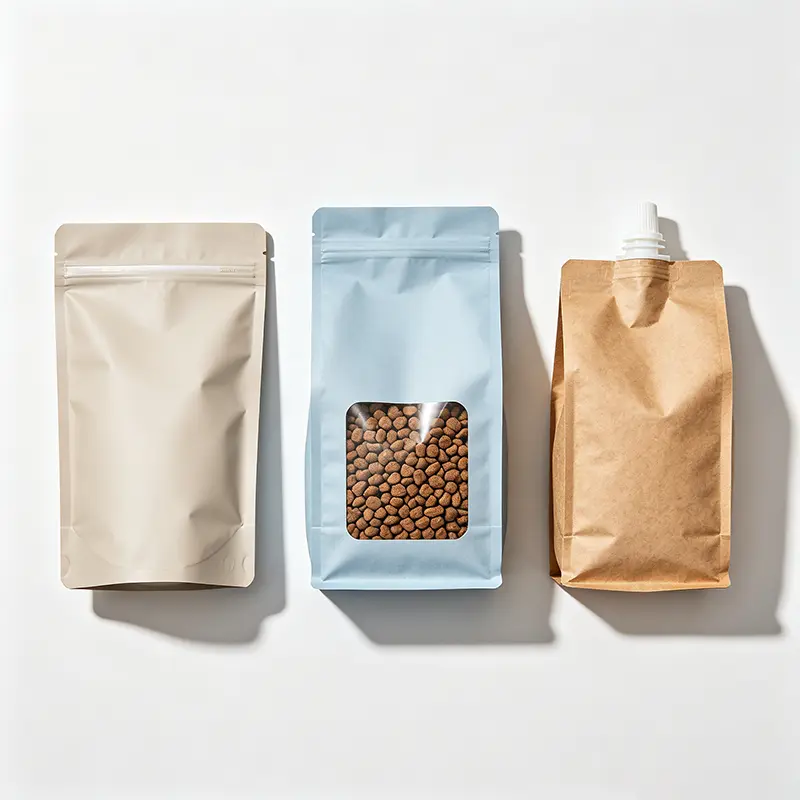
Industry data shows that the global flexible packaging market will exceed USD 250 billion in 2026, maintaining a stable growth rate. For B2B brand owners, distributors, and packaging procurers, customized functional food packaging is no longer a marginal accessory but a core tool to optimize logistics costs, enhance shelf competitiveness, and comply with global environmental and safety regulations.
Unlike standardized retail packaging, B2B-end custom food bags focus on scenario-based customization, batch scalability, and compliance stability. Different food categories have exclusive demands for packaging barrier properties, sealing technology, material composition, and appearance design. Among them, pet food packaging represented by cat food bags and liquid/granule packaging represented by coffee spout pouches have formed mature segmented supply chains and strict industry technical standards, becoming the most demanded customized packaging categories for cross-border and domestic food brands in 2026.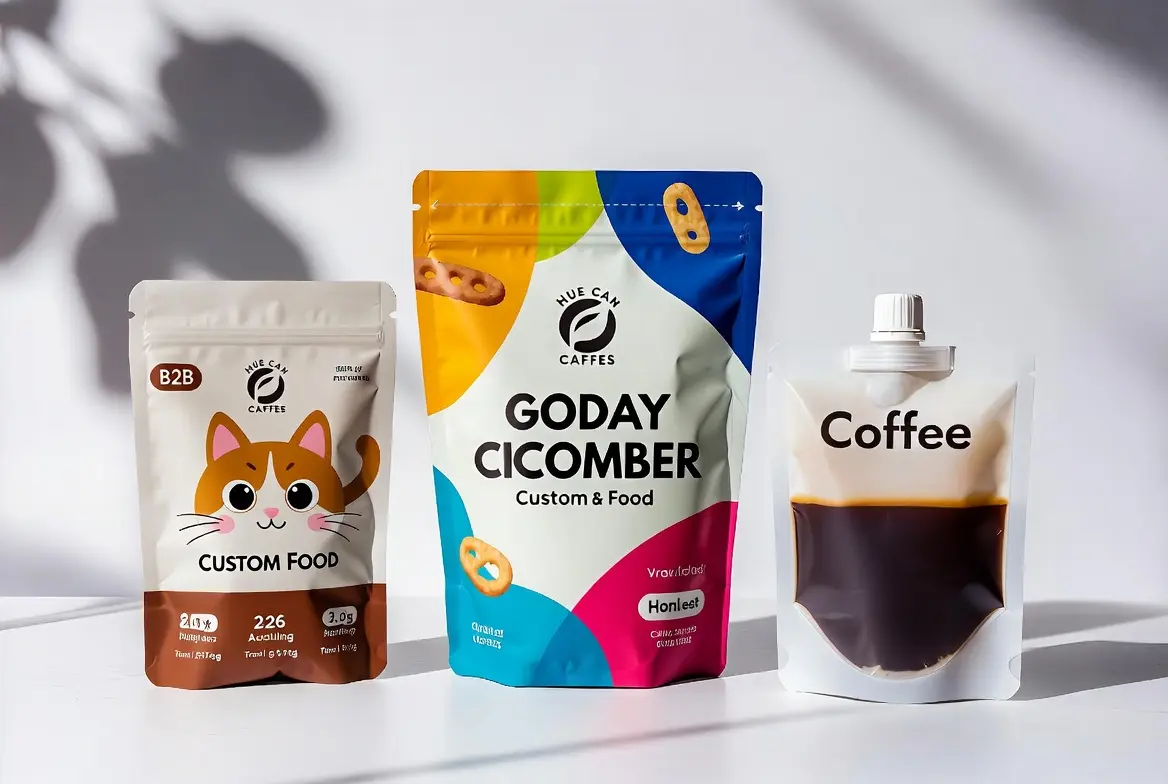 Custom food bags refer to personalized flexible packaging products customized according to brand positioning, product attributes, sales scenarios, and regulatory requirements, covering snack food, grain products, baked goods, and other categories. In the B2B market, the core competitiveness of custom food bags lies in "functional matching + brand differentiation + cost optimization". Compared with universal stock packaging, customized products can precisely adapt to product shelf life requirements, transportation environments, and consumer usage habits, effectively reducing product damage rates and return rates for food brands.
2026 B2B procurement data shows that over 70% of medium and large food enterprises have completely abandoned single-standard packaging and adopted differentiated custom solutions. Flexible custom food bags use 70%-80% less raw materials than traditional glass and plastic rigid packaging, significantly reducing transportation volume and logistics costs, which perfectly matches the lightweight and low-consumption needs of e-commerce logistics and cross-border shipping. In addition, customized printing, size adjustment, and functional upgrades such as moisture-proof, oxygen-barrier, and anti-extrusion can help brands form unique visual recognition on retail shelves and e-commerce detail pages.
Sustainable customization has become a rigid new trend in 2026. More than 60% of European and American food brands require custom food bags to use degradable materials, recycled PE, and low-carbon ink printing to adapt to regional carbon tariffs and environmental protection policies. For B2B packaging manufacturers, the ability to provide one-stop customized services including design proofing, material selection, batch production, and compliance testing has become the core standard for winning long-term enterprise orders.
Premium cat food brands have put forward higher requirements for packaging functionality. High-grade cat food packaging bag adopts multi-layer composite structures such as PET/NY/PE and PET/AL/PE, which can effectively isolate oxygen and moisture, prevent cat food from rancidity and mildew, and extend the shelf life of dry food and wet food. At the same time, more than 65% of pet owners prefer zippered, easy-tear, and portable independent small packages, forcing B2B packaging suppliers to adjust their customized production lines to meet the market's refined consumption needs.
In addition, anti-counterfeiting packaging and portable packaging have become new customized hotspots in 2026. Premium cat food products add laser anti-counterfeiting marks and variable QR code printing on packaging bags to help brands combat counterfeiting and track product circulation. Portable small-batch customized cat food packaging is widely used in trial packaging and subscription sales scenarios, effectively helping brands improve user repurchase rates and customer loyalty.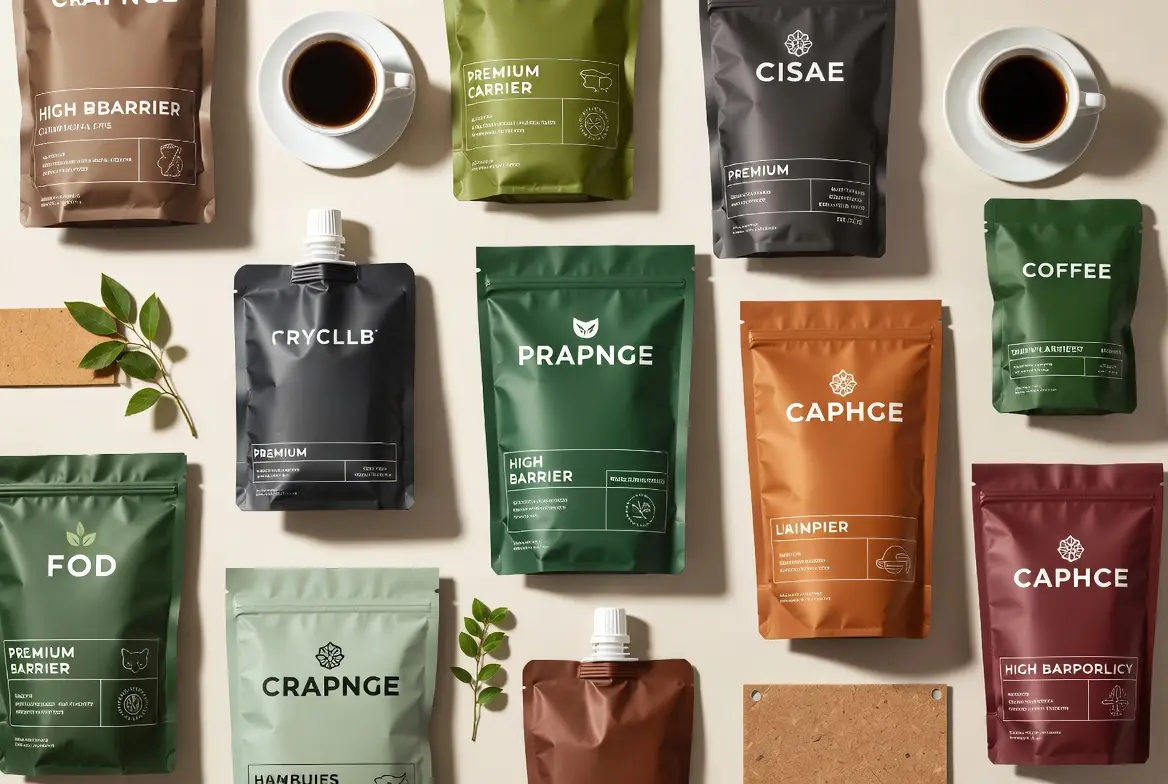
Coffee spout pouch is a typical representative of functional customized flexible packaging, mainly used for liquid coffee, cold brew coffee, coffee concentrate, and other products. The global spout pouch market will reach USD 6.768 billion in 2026, with a steady annual growth rate of 3.9%. Compared with traditional glass bottles and aluminum cans, coffee spout pouches have obvious B2B procurement advantages: light weight, low transportation loss, strong sealing performance, and reusable spout design, which perfectly adapt to the portable and fresh-preservation needs of specialty coffee products.
For coffee brands, coffee spout pouch solves the core pain points of liquid coffee packaging. The sealed spout structure can effectively isolate air, avoid coffee oxidation and flavor loss, and maintain the pure taste of cold brew coffee for a long time. At the same time, the flexible pouch body saves storage and transportation space, reduces the overall logistics cost by 20%-30% compared with rigid packaging, and is more in line with the lightweight development trend of food e-commerce logistics.
In addition, sustainable customization is also penetrating the coffee spout pouch track. More cross-border coffee brands choose recyclable composite materials and biodegradable spout accessories to meet EU and US environmental protection certification requirements. In terms of brand customization, personalized color matching, logo embossing, and texture printing have become standard configurations of high-end coffee spout pouches, helping brands build a premium product image and achieve a 20%-30% premium space in the market.
Affected by the year-on-year increase in polymer raw material costs and stricter global food packaging regulations in 2026, standardized customized bulk procurement has become the optimal choice to control costs. Enterprises can choose targeted customized solutions according to product attributes: select multi-functional barrier custom food bags for conventional food products, adopt high-standard multi-layer composite cat food packaging bags for pet food, and equip professional leak-proof and fresh-keeping coffee spout pouches for liquid coffee products, so as to realize the dual improvement of product quality and market competitiveness.
B2B Market Analysis of Custom Food Bags, Cat Food Packaging Bags and Coffee Spout Pouches in 2026
Overview: Flexible Custom Food Packaging Becomes a Core B2B Competitive Track
The global food flexible packaging industry is undergoing a comprehensive structural upgrade in 2026, with custom food bags, cat food packaging bag, and coffee spout pouch emerging as three high-growth segmentation tracks for B2B procurement. Driven by the booming food e-commerce, premium pet consumption, and specialty coffee markets, traditional rigid packaging is rapidly being replaced by lightweight, customizable, and functional flexible packaging solutions.Industry data shows that the global flexible packaging market will exceed USD 250 billion in 2026, maintaining a stable growth rate. For B2B brand owners, distributors, and packaging procurers, customized functional food packaging is no longer a marginal accessory but a core tool to optimize logistics costs, enhance shelf competitiveness, and comply with global environmental and safety regulations.
Unlike standardized retail packaging, B2B-end custom food bags focus on scenario-based customization, batch scalability, and compliance stability. Different food categories have exclusive demands for packaging barrier properties, sealing technology, material composition, and appearance design. Among them, pet food packaging represented by cat food bags and liquid/granule packaging represented by coffee spout pouches have formed mature segmented supply chains and strict industry technical standards, becoming the most demanded customized packaging categories for cross-border and domestic food brands in 2026.
1. Custom Food Bags: Standardized Customization Leads B2B Procurement Trends
1.1 Core B2B Value of Custom Food Bags
Custom food bags refer to personalized flexible packaging products customized according to brand positioning, product attributes, sales scenarios, and regulatory requirements, covering snack food, grain products, baked goods, and other categories. In the B2B market, the core competitiveness of custom food bags lies in "functional matching + brand differentiation + cost optimization". Compared with universal stock packaging, customized products can precisely adapt to product shelf life requirements, transportation environments, and consumer usage habits, effectively reducing product damage rates and return rates for food brands.2026 B2B procurement data shows that over 70% of medium and large food enterprises have completely abandoned single-standard packaging and adopted differentiated custom solutions. Flexible custom food bags use 70%-80% less raw materials than traditional glass and plastic rigid packaging, significantly reducing transportation volume and logistics costs, which perfectly matches the lightweight and low-consumption needs of e-commerce logistics and cross-border shipping. In addition, customized printing, size adjustment, and functional upgrades such as moisture-proof, oxygen-barrier, and anti-extrusion can help brands form unique visual recognition on retail shelves and e-commerce detail pages.
1.2 Main B2B Customization Requirements and Industry Standards
Current B2B customers’ core customization demands for custom food bags focus on three dimensions: safety compliance, functional upgrading, and sustainable environmental protection. In terms of safety, all customized food packaging must meet FDA food contact standards in the US, EU food-grade regulations, and domestic food safety certification, which is the primary threshold for B2B supplier screening. In terms of functionality, high-barrier packaging for high-oil and high-sugar snacks, fresh-keeping packaging for short-shelf-life products, and resealable stand-up packaging for daily food have become mainstream customized demands.Sustainable customization has become a rigid new trend in 2026. More than 60% of European and American food brands require custom food bags to use degradable materials, recycled PE, and low-carbon ink printing to adapt to regional carbon tariffs and environmental protection policies. For B2B packaging manufacturers, the ability to provide one-stop customized services including design proofing, material selection, batch production, and compliance testing has become the core standard for winning long-term enterprise orders.
2. Cat Food Packaging Bag: High-Barrier Customization Empowers the Premium Pet Food Market
2.1 Market Growth Drives Professional Packaging Demand
The global pet food packaging market is booming, with a market size of USD 4.75 billion in 2026 and an expected growth to USD 8.95 billion by 2033, at a CAGR of 7.15%. As the most segmented and high-demanded category, cat food packaging bag has extremely strict technical requirements due to the high protein and fat content of cat food, which is prone to oxidation, moisture deterioration, and nutrient loss. In the B2B market, cat food packaging has completely moved out of the era of ordinary plastic bags, and professional customized high-barrier flexible packaging has become the industry standard.Premium cat food brands have put forward higher requirements for packaging functionality. High-grade cat food packaging bag adopts multi-layer composite structures such as PET/NY/PE and PET/AL/PE, which can effectively isolate oxygen and moisture, prevent cat food from rancidity and mildew, and extend the shelf life of dry food and wet food. At the same time, more than 65% of pet owners prefer zippered, easy-tear, and portable independent small packages, forcing B2B packaging suppliers to adjust their customized production lines to meet the market's refined consumption needs.
2.2 B2B Customization Pain Points and Solution Trends
At present, the main pain points of B2B procurement of cat food packaging bag include unstable barrier performance of low-end products, single design, and long customized proofing cycles. Many small and medium-sized pet food brands face the dilemma of balancing cost and quality in procurement. In response to industry pain points, leading packaging suppliers have launched standardized customized solutions: modular size customization, unified high-barrier material standards, and personalized brand printing, which shorten the proofing cycle from 7-15 days to 3-5 days and reduce the comprehensive procurement cost by 10%-15% for customers.In addition, anti-counterfeiting packaging and portable packaging have become new customized hotspots in 2026. Premium cat food products add laser anti-counterfeiting marks and variable QR code printing on packaging bags to help brands combat counterfeiting and track product circulation. Portable small-batch customized cat food packaging is widely used in trial packaging and subscription sales scenarios, effectively helping brands improve user repurchase rates and customer loyalty.
3. Coffee Spout Pouch: Functional Flexible Packaging Opens New B2B Scenarios
3.1 Industry Advantages and Market Scale of Coffee Spout Pouches
Coffee spout pouch is a typical representative of functional customized flexible packaging, mainly used for liquid coffee, cold brew coffee, coffee concentrate, and other products. The global spout pouch market will reach USD 6.768 billion in 2026, with a steady annual growth rate of 3.9%. Compared with traditional glass bottles and aluminum cans, coffee spout pouches have obvious B2B procurement advantages: light weight, low transportation loss, strong sealing performance, and reusable spout design, which perfectly adapt to the portable and fresh-preservation needs of specialty coffee products.
For coffee brands, coffee spout pouch solves the core pain points of liquid coffee packaging. The sealed spout structure can effectively isolate air, avoid coffee oxidation and flavor loss, and maintain the pure taste of cold brew coffee for a long time. At the same time, the flexible pouch body saves storage and transportation space, reduces the overall logistics cost by 20%-30% compared with rigid packaging, and is more in line with the lightweight development trend of food e-commerce logistics.
3.2 B2B Customization Characteristics and Application Scenarios
B2B customized demands for coffee spout pouch are highly scenario-oriented. For commercial bulk coffee concentrate, customers customize large-capacity spout pouches with high-temperature resistance and compression resistance to meet catering and chain store supply needs; for retail portable cold brew coffee, small-capacity, transparent window, and anti-slip customized spout pouches are mainstream, which enhance product aesthetics and consumer use experience.In addition, sustainable customization is also penetrating the coffee spout pouch track. More cross-border coffee brands choose recyclable composite materials and biodegradable spout accessories to meet EU and US environmental protection certification requirements. In terms of brand customization, personalized color matching, logo embossing, and texture printing have become standard configurations of high-end coffee spout pouches, helping brands build a premium product image and achieve a 20%-30% premium space in the market.
4. 2026 B2B Packaging Procurement Comprehensive Strategy
From the overall B2B market trend, custom food bags, cat food packaging bag, and coffee spout pouch share three core development directions: functional refinement, sustainable environmental protection, and efficient customization. For food brand purchasers and distributors, supplier selection should focus on material compliance certification, customized production capacity, batch quality stability, and after-sales service response speed.Affected by the year-on-year increase in polymer raw material costs and stricter global food packaging regulations in 2026, standardized customized bulk procurement has become the optimal choice to control costs. Enterprises can choose targeted customized solutions according to product attributes: select multi-functional barrier custom food bags for conventional food products, adopt high-standard multi-layer composite cat food packaging bags for pet food, and equip professional leak-proof and fresh-keeping coffee spout pouches for liquid coffee products, so as to realize the dual improvement of product quality and market competitiveness.