< Back
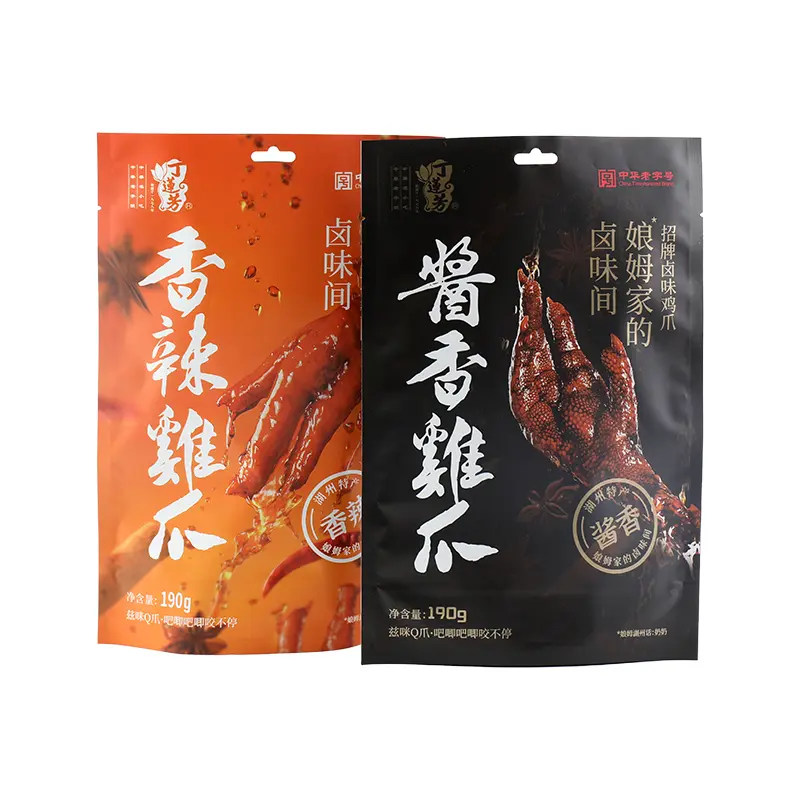
The global food packaging industry is growing steadily, driven by increasing demand for convenience, food safety, and sustainability. According to Global Market Insights, the global food packaging market was valued at USD 458.6 billion in 2024 and is projected to grow at a CAGR of 5.6% from 2025 to 2034, reaching USD 794.4 billion by 2034. Within this market, plastic film packaging for food and specialized bags like eight side sealing bag and custom food packaging bag hold significant shares due to their versatility and cost-effectiveness.
Key growth drivers include the expansion of e-commerce, rising consumer preference for premium and personalized packaging, and stringent food safety regulations (such as FDA’s FCM regulations in the U.S. and EFSA guidelines in the EU). Below is a table showing the market size and growth projection of core packaging types:
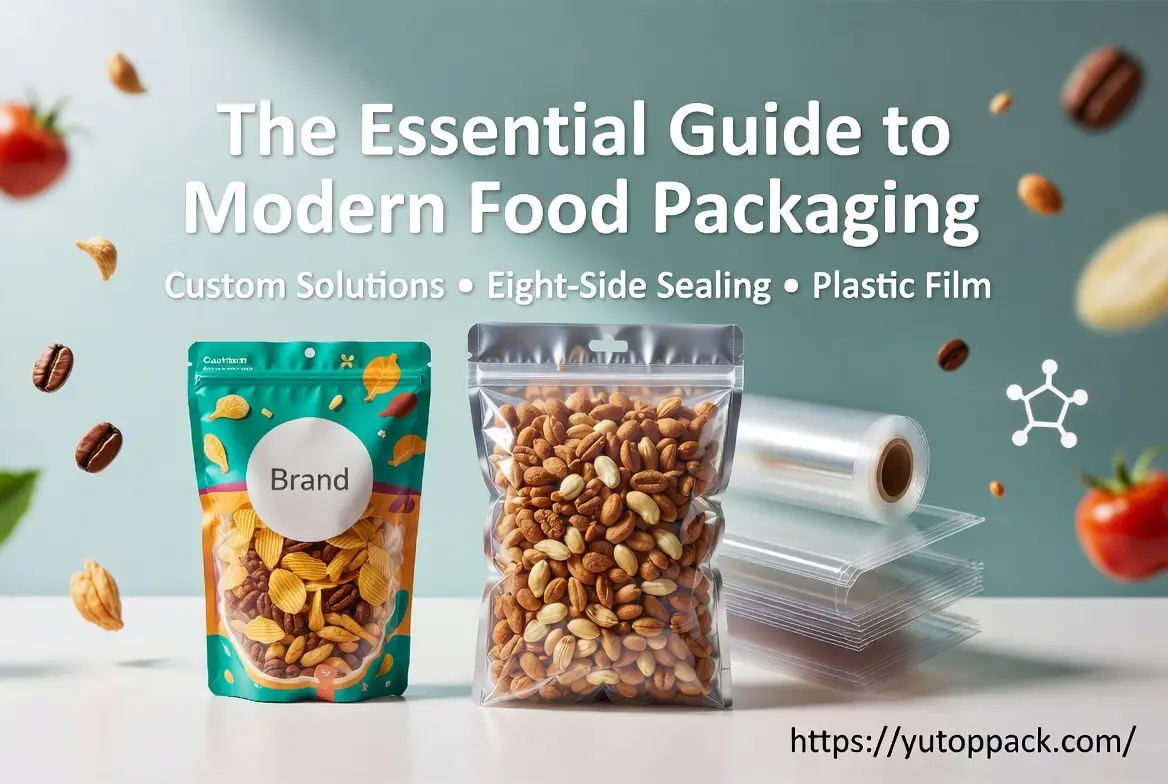
Common materials for custom food packaging bags include polyethylene (PE), polyethylene terephthalate (PET), polyamide (PA), and biodegradable materials like PLA/PHA. For example, snacks like chips often use PE-based custom bags for flexibility and cost-effectiveness, while high-end coffee uses custom bags with PA layers and degassing valves to preserve freshness. The global custom food packaging market is also driven by digital printing technology, which allows small-batch, personalized designs at a lower cost.
Key advantages of eight side sealing bags include strong load-bearing capacity (able to hold 1-10kg of products), excellent barrier properties against oxygen, moisture, and light, and leak-proof sealing. They are widely used for high-end snacks (e.g., organic nuts), pet food, and bulk food products. However, due to their complex manufacturing process, their unit price is 2-3 times that of three-side sealing bags, with a higher scrap rate of 20-50% during production.
Below is a comparison of common food-grade plastic films, their properties, and applications:
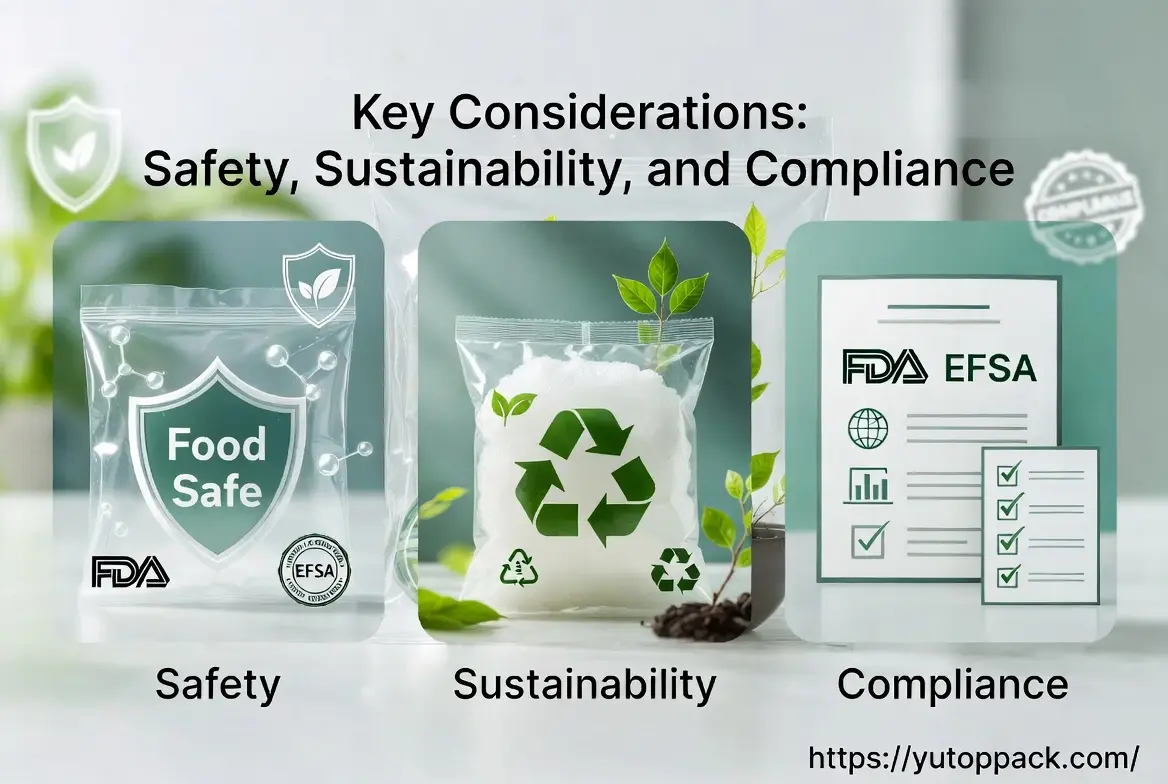
When using custom food packaging bag, eight side sealing bag, and plastic film packaging for food, three critical factors must be prioritized: food safety, sustainability, and regulatory compliance.
Food safety is paramount—all materials must be food-grade and comply with international standards. For example, in the U.S., food contact materials must meet FDA’s CFR regulations, which limit harmful migrations (e.g., heavy metals, toxic additives) to ensure no risk to human health. Total migration limits are typically ≤ 0.8 mg/dm², with strict restrictions on heavy metals like lead (≤ 0.01 mg/L).
Sustainability is another key trend, with brands shifting to biodegradable plastics (e.g., PLA, PHA) and recyclable materials to reduce environmental impact. The global market for biodegradable packaging materials is growing three times faster than traditional plastics, with food packaging accounting for over 40% of this growth. Innovations like edible packaging films, made from natural polysaccharides or proteins, are also emerging as eco-friendly alternatives.
Custom food packaging bag, eight side sealing bag, and plastic film packaging for food are indispensable in modern food industry. Custom bags offer personalization and brand differentiation, eight side sealing bags provide superior stability and protection, and plastic films serve as the foundation of flexible packaging. As the industry evolves, balancing functionality, safety, and sustainability will remain the core focus, driving innovations in materials and design to meet the changing needs of consumers and the planet.
Market Applications and Scientific Analysis of Customized Food Packaging
The Essential Guide to Modern Food Packaging: Custom Solutions, Eight-Side Sealing, and Plastic Film
Food packaging is more than just a container—it is a critical barrier that protects food safety, extends shelf life, and enhances brand value. Among the most widely used solutions are custom food packaging bag, eight side sealing bag, and plastic film packaging for food. Each serves unique purposes, leveraging scientific principles and market demands to meet the diverse needs of food manufacturers and consumers. This article explores their characteristics, applications, market data, and key considerations, providing a comprehensive科普 (popular science) overview.
1. Market Overview: Growth and Key Drivers of Food Packaging
The global food packaging industry is growing steadily, driven by increasing demand for convenience, food safety, and sustainability. According to Global Market Insights, the global food packaging market was valued at USD 458.6 billion in 2024 and is projected to grow at a CAGR of 5.6% from 2025 to 2034, reaching USD 794.4 billion by 2034. Within this market, plastic film packaging for food and specialized bags like eight side sealing bag and custom food packaging bag hold significant shares due to their versatility and cost-effectiveness.Key growth drivers include the expansion of e-commerce, rising consumer preference for premium and personalized packaging, and stringent food safety regulations (such as FDA’s FCM regulations in the U.S. and EFSA guidelines in the EU). Below is a table showing the market size and growth projection of core packaging types:
| Packaging Type | 2024 Market Size (USD) | CAGR (2025-2034) | 2034 Projected Size (USD) |
| Custom Food Packaging Bag | 13.93 billion | 5.3% | 22.11 billion |
| Eight Side Sealing Bag | 8.24 billion | 6.8% | 15.9 billion |
| Plastic Film Packaging for Food | 89.6 billion | 4.9% | 142.3 billion |
2. Core Packaging Solutions: Characteristics and Applications
2.1 Custom Food Packaging Bag: Personalization Meets Functionality
A custom food packaging bag is a tailor-made solution designed to fit the specific needs of food products, brands, and consumers. It offers flexibility in material, size, design, and functionality, making it a key tool for brand differentiation. Unlike standard bags, custom options can be customized with brand logos, colors, and functional features (e.g., resealable zippers, tear notches, degassing valves) to enhance user experience and product protection.Common materials for custom food packaging bags include polyethylene (PE), polyethylene terephthalate (PET), polyamide (PA), and biodegradable materials like PLA/PHA. For example, snacks like chips often use PE-based custom bags for flexibility and cost-effectiveness, while high-end coffee uses custom bags with PA layers and degassing valves to preserve freshness. The global custom food packaging market is also driven by digital printing technology, which allows small-batch, personalized designs at a lower cost.
2.2 Eight Side Sealing Bag: Superior Sealing and Stability
The eight side sealing bag is a specialized type of flexible packaging known for its robust sealing and excellent standing stability. It is manufactured by sealing eight sides (four at the bottom and two on each side), creating a cube-like shape that stands firmly on shelves—even when partially empty. This design provides 40% more display area than traditional stand-up bags, making it ideal for premium products.Key advantages of eight side sealing bags include strong load-bearing capacity (able to hold 1-10kg of products), excellent barrier properties against oxygen, moisture, and light, and leak-proof sealing. They are widely used for high-end snacks (e.g., organic nuts), pet food, and bulk food products. However, due to their complex manufacturing process, their unit price is 2-3 times that of three-side sealing bags, with a higher scrap rate of 20-50% during production.
2.3 Plastic Film Packaging for Food: The Foundation of Flexible Packaging
Plastic film packaging for food is the most basic and widely used food packaging material, serving as the core component of most food bags (including custom and eight side sealing bags). It is made from food-grade plastic resins through extrusion and casting processes, with different films offering varying barrier, flexibility, and heat-resistance properties.Below is a comparison of common food-grade plastic films, their properties, and applications:
| Plastic Film Type | Key Properties | Barrier Performance (Oxygen/Water Vapor) | Typical Applications |
| PE (Polyethylene) | Flexible, cost-effective, heat-sealable, non-toxic | Low-Medium | Snacks, frozen foods, fresh produce |
| PET (Polyethylene Terephthalate) | High clarity, strong tensile strength, recyclable | Medium-High | Beverages, dried fruits, ready-to-eat meals |
| PA (Polyamide/Nylon) | Puncture-resistant, heat-resistant | Medium | Meat, cheese, vacuum-sealed products |
| PVDC (Polyvinylidene Chloride) | Excellent barrier, heat-resistant | High | Cooked food, sausage casings |
| Biodegradable PLA | Compostable, plant-based, eco-friendly | Low-Medium | Eco-friendly brands, fresh produce |
3. Key Considerations: Safety, Sustainability, and Compliance
When using custom food packaging bag, eight side sealing bag, and plastic film packaging for food, three critical factors must be prioritized: food safety, sustainability, and regulatory compliance.
Food safety is paramount—all materials must be food-grade and comply with international standards. For example, in the U.S., food contact materials must meet FDA’s CFR regulations, which limit harmful migrations (e.g., heavy metals, toxic additives) to ensure no risk to human health. Total migration limits are typically ≤ 0.8 mg/dm², with strict restrictions on heavy metals like lead (≤ 0.01 mg/L).
Sustainability is another key trend, with brands shifting to biodegradable plastics (e.g., PLA, PHA) and recyclable materials to reduce environmental impact. The global market for biodegradable packaging materials is growing three times faster than traditional plastics, with food packaging accounting for over 40% of this growth. Innovations like edible packaging films, made from natural polysaccharides or proteins, are also emerging as eco-friendly alternatives.